




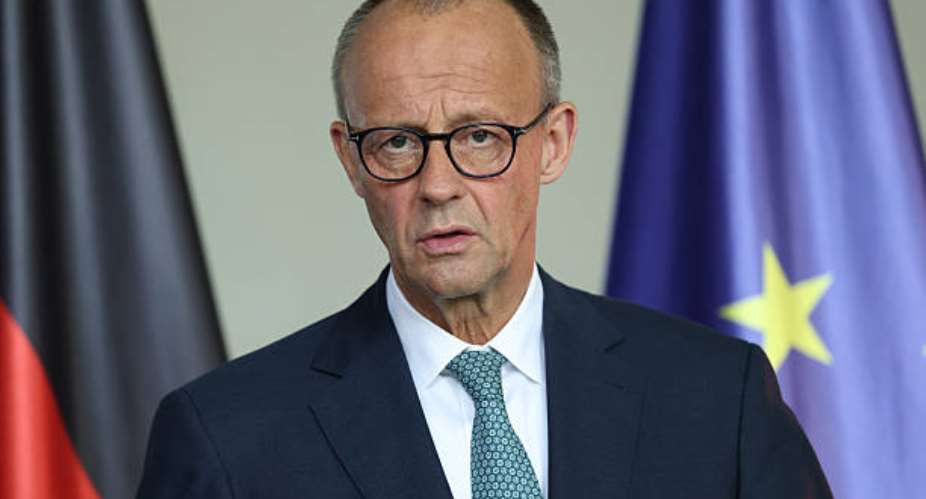
For decades, Germany stood as the West’s moral compass on international law, a nation that emerged from the ruins of fascism and genocide to champion rules, norms and global justice. Its postwar identity was inextricably tied to defending a rules-based order, promoting multilateralism and ensuring that power never again dictated right. Yet that image is now cracking, not because Germany has lost influence, but because the rules themselves appear increasingly hollow in the face of repeated violations by major powers. This week, German Chancellor Friedrich Merz delivered remarks that puncture the comforting narrative of European legal authority: international law, he argued, has lost its meaning when it is consistently ignored, and Europe should stop lecturing the United States or Israel on legality following their strikes on Iran. The bluntness of Merz’s critique does not simply challenge international law; it exposes the widening gap between norms on paper and power in practice, forcing a confrontation with the uncomfortable realities of global politics.
Merz’s statement comes at a moment when the traditional tools of European diplomacy: sanctions, condemnation and appeals to international legal mechanisms, have yielded little in practical terms. For decades, Europe has attempted to constrain Iran’s nuclear ambitions and regional behaviour through a combination of legal instruments and economic pressure, yet Tehran has repeatedly defied these measures, advancing its missile programmes, enriching uranium beyond agreed limits and expanding its influence through proxy networks. If decades of sanctions and legal appeals fail to compel behaviour, Merz argues, the concept of international law begins to unravel: norms lose their force when compliance is optional and enforcement selective. This is not a theoretical argument; it is a stark recognition that the postwar international order, built on law and mutual restraint, is being tested in ways that demand urgent strategic reflection.
Merz’s Argument
Merz’s basic claim is stark and unsettling: years of European sanctions, diplomacy and condemnation have had limited tangible effect on Iran. Despite repeated efforts to curb Tehran’s nuclear programme and restrain its regional interventions, the Iranian state has remained resilient and adaptive. European sanctions over the past two decades, from financial restrictions and trade embargoes to targeted punitive measures against key industrial sectors, have occasionally inflicted economic hardship, but they have not fundamentally altered Tehran’s strategic calculus. Iran has expanded its missile capabilities, maintained regional influence through militias in Iraq, Syria, Lebanon and Yemen, and continued nuclear enrichment beyond the thresholds established in the 2015 Joint Comprehensive Plan of Action (JCPOA). For Merz, this is a practical demonstration that international law, without credible enforcement, is inherently limited.
He goes further, implicitly critiquing Europe’s moral posture. By lecturing allies like the US and Israel on legality while acknowledging the limited effect of sanctions and diplomacy on Iran, Europe risks eroding its own credibility. According to Merz, if norms cannot compel compliance, powerful states will act according to their strategic imperatives, and Europe must reckon with the reality that moral persuasion alone is insufficient. His perspective is rooted in realism: in a system where enforcement is inconsistent and consequences uneven, legal norms are aspirational at best, fragile tools at worst. The implication is clear: Europe must reconcile its commitment to law with the practical realities of power politics, or risk becoming irrelevant on the global stage.
The Crisis That Brought This Reckoning
Merz’s remarks did not emerge in a vacuum. They were precipitated by a sharp escalation in US and Israeli operations against Iran. Over the past ten days, joint military strikes targeted Iran’s nuclear infrastructure and key military leadership positions. Independent reporting indicates that these operations disrupted critical command structures, killed senior officials, and provoked retaliatory attacks on US and allied assets in the Gulf. Washington justified its actions as preemptive self-defense against what it described as imminent threats posed by Iran’s nuclear and missile programmes. Israel framed the strikes as necessary to prevent Tehran from achieving a strategic capability that could endanger regional stability and Israeli security.
Yet these strikes raise serious questions under international law. The United Nations Charter prohibits the use of force except in cases of self-defense or with Security Council authorization. Observers, including UN officials and independent legal scholars, have warned that the US and Israeli operations fall outside these exceptions. In this context, Merz’s candid acknowledgment that international law is limited is not just a critique of Iran, but also a commentary on the inconsistencies in global enforcement: when the rules are flouted by powerful states without consequence, their authority diminishes for everyone. By highlighting this disconnect, Merz forces Europe and the broader international community, to confront a central tension in contemporary geopolitics: legal norms are only as powerful as the mechanisms enforcing them.
“If You Can’t Enforce It, You Don’t Respect It”
At the heart of Merz’s argument is a fundamental observation about the relationship between law and power: if legal norms cannot be enforced, they are ultimately symbolic rather than constraining. Europe’s decades-long sanctions regime illustrates this principle. Targeted financial restrictions, trade embargoes and prohibitions on technology transfers have, at times, constrained Iran’s economy, but they have not produced permanent compliance. Real GDP in Iran has rebounded periodically despite heavy sanctions, and nuclear enrichment programmes have continued largely unabated. The JCPOA, once hailed as the cornerstone of nonproliferation diplomacy, collapsed in 2018 when the US withdrew, highlighting Europe’s inability to enforce compliance unilaterally.
Merz’s perspective reflects a realist approach to international relations. He is not denying the moral or strategic value of law; he is arguing that legal instruments without credible enforcement are insufficient to shape state behavior. In his view, Europe cannot rely solely on appeals to legality when the global order permits unilateral action by the strongest states. If a law is violated repeatedly without consequence, its prescriptive authority erodes, and selective enforcement breeds cynicism among both allies and adversaries. This recognition, while uncomfortable, underscores a broader truth: norms matter only if they are backed by tangible capabilities and credible consequences.
The Strategic Costs of Merz’s Logic
Merz’s realism carries consequences that extend beyond Iran. If Europe signals that law is secondary to power, three immediate risks emerge:
Erosion of Europe’s moral authority: Europe has long positioned itself as the bridge between American assertiveness and authoritarian revisionism. By acknowledging that legal norms may be optional, it undermines its own diplomatic credibility and diminishes its capacity to mediate international disputes.
Encouraging legal cynicism among authoritarians: When states like China, Russia and North Korea see major powers flouting rules with impunity, they gain justification for similar behaviour. The selective application of law emboldens revisionist states, eroding the global commitment to shared norms.
Weakening global governance: Multilateral cooperation on existential challenges, from climate change to cybersecurity, relies on trust in the rules-based order. Undermining legal norms diminishes confidence in institutions like the UN, reducing the effectiveness of global responses when coordinated action is essential.
Merz’s remarks underscore a stark truth: the postwar international order is no longer anchored in principle alone. Survival and security often dictate behaviour, and Europe must grapple with the tension between aspiration and reality.
Europe’s Limited Effectiveness with Iran
History supports Merz’s critique. Sanctions over the past twenty years, from EU financial restrictions to trade embargoes and the temporary 2015 JCPOA agreement, inflicted periodic economic pain but did not fundamentally alter Tehran’s strategic trajectory. The Iranian state has demonstrated remarkable resilience, maintaining nuclear development, expanding regional influence and surviving periods of intense economic pressure. Even when sanctions temporarily depressed GDP or restricted key industries, Iran adapted through regional trade, clandestine networks and domestic economic measures.
The collapse of the JCPOA in 2018, following the US withdrawal and the resumption of sanctions, further illustrates Europe’s constrained leverage. Despite repeated efforts to enforce compliance diplomatically, Iran continued to pursue strategic programmes, highlighting the limits of legal and economic tools when they are not underpinned by credible enforcement. Merz’s logic is clear: if sanctions and diplomacy repeatedly fail to achieve results, law alone cannot be assumed to restrain behaviour in an era of asymmetrical threats and unilateral action.
The US and Israeli Strikes
Merz’s critique of Europe’s moral posture is reinforced by the US and Israeli strikes. These operations highlight a crucial tension in modern international law: the gap between legal principle and strategic necessity. According to the UN Charter, force is permissible only in self-defense or with Security Council authorization. Independent legal experts have argued that the recent strikes against Iran do not clearly meet either threshold, raising questions about the legitimacy of unilateral military action.
European reactions illustrate the challenge. French President Emmanuel Macron publicly stated the strikes were “outside international law”, while Germany’s vice chancellor expressed “considerable doubts”. Yet the power imbalance in enforcement means that Europe’s criticism carries limited weight. Merz’s argument reframes the discussion: when enforcement is uneven and sanctions ineffective, legality becomes a tool of debate rather than a constraint on action, and states will act based on their strategic imperatives rather than abstract norms.
Why Now?
Several factors explain Merz’s timing and framing:
Geopolitical anxiety: Conflict in Iran threatens regional stability, energy markets and migration flows that would directly impact Europe. A realist approach, acknowledging enforcement limits, may be intended to preserve strategic flexibility.
Transatlantic alignment: By acknowledging US and Israeli prerogatives, Germany signals continued strategic partnership with its most influential allies, maintaining leverage despite legal ambiguities.
Domestic politics: Merz represents a conservative bloc that favours realist foreign policy over moralist diplomacy. Endorsing a pragmatic, power-centered posture aligns with domestic expectations and signals a generational shift in German foreign policy thinking.
These calculations reveal a Europe navigating between aspiration and survival, seeking influence in a world where legal norms are increasingly optional.
Global Implications
Merz’s remarks indicate a potential Hobbesian turn in international relations, where law bows to power. Several consequences are likely:
Great powers may increasingly ignore legal constraints, citing precedent in the US and Israeli actions against Iran.
Without military or economic leverage, states may find no recourse in an order where rules are selectively enforced.
The selective application of norms diminishes the UN’s authority as the arbiter of sovereignty and peace, reducing its relevance in mediating disputes and enforcing accountability.
Already, states like China and Russia cite Western inconsistencies to justify their own unilateral actions, from maritime claims to territorial expansion, illustrating how selective enforcement emboldens revisionism.
Conclusion
Friedrich Merz’s remarks are more than commentary; they constitute a manifesto for a new European posture: legal norms are aspirational, enforcement is inconsistent and strategic imperatives override moral prescriptions. The implications are profound. Europe risks weakening its own influence while contributing to a world in which the strongest, not the most just, dictate outcomes.
The question is no longer whether international law will survive, but how it will function in an era where enforcement is inconsistent, rules are selectively applied and survival often trumps principle. Merz has signaled that the old rules may no longer apply, forcing the global community to confront a stark reality: in a world where power defines legality, trust in norms is fragile, credibility is scarce, and Europe must navigate a fine line between moral authority and strategic realism.
The writer is a journalist, journalism lecturer, and a member of the Ghana Journalists Association, the Society of Professional Journalists, Investigative Reporters and Editors and the African Journalism Education Network. Email: [email protected]


 We have cut cost of capital by more than half since Mahama took office – Ato For...
 Dr Bertha Ayi on how parents hurt children by raising them only on English
 Customs intercepts three firearms, 610 rounds of ammunition at Tema Port
 NDC to open nominations for 2026 regional executive elections on October 6
 Africa will be mostly self-sufficient in fuel by 2030: Dangote to AFP
 PRETAG threatens to intensify strike over unpaid teacher entitlements
 Lands Minister exits GoldBod Board as Minister's Chief Director takes over
 Court refuses bail for six accused in 3.9-tonne cocaine shipment case
 Philippines to open first-ever embassy in Ghana
 1992 Constitution review: Prof. Atsu Ayee and Dr Osae-Kwapong explain why Consti...


