




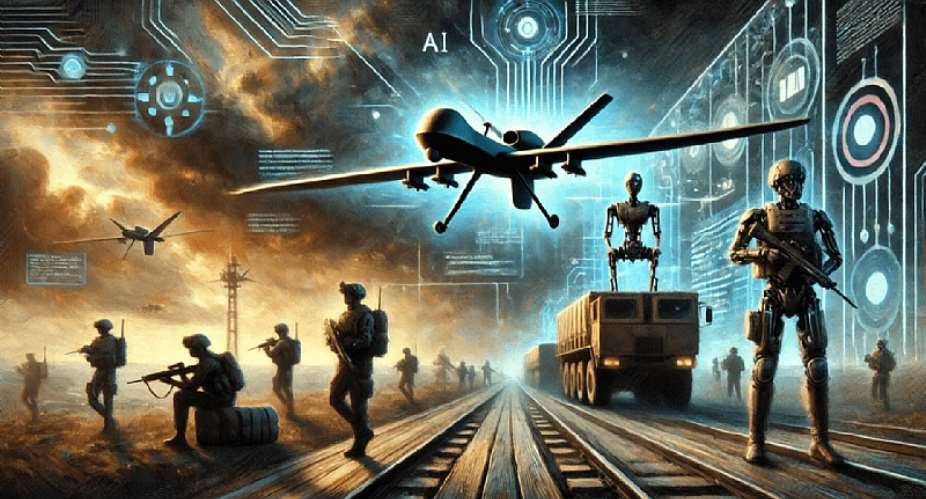
The Middle East is no longer just a region of conventional military conflict it has become a testing ground for the integration of artificial intelligence in warfare. From battlefield targeting and intelligence analysis, to cyber defense and information operations, AI technologies are influencing the conduct, scale and morale of conflicts in unprecedented ways.
AI on the Battlefield: Targeting, Intelligence & Command-and-Control
Modern military forces increasingly rely on AI systems to interpret massive volumes of data quickly from satellite imagery to intercepted communications.
U.S. Central Command (CENTCOM) has publicly acknowledged using machine-learning tools like computer vision to identify targets for air strikes in Iraq and Syria, enhancing precision and responsiveness in dynamic combat environments. Algorithms can scan footage and sensor feeds to locate threats faster than traditional methods.
Israel’s military has reportedly incorporated AI-driven target generation systems, using databases and analytical tools that rapidly match surveillance data with potential targets. This helps military planners sift through huge data sets to prioritize strikes.
In a recent escalation against Iran in 2026, U.S. forces reportedly used powerful commercial AI tools for battlefield simulations and intelligence analysis despite political controversy over such tools’ employment.
These uses illustrate a shift from purely human decision-making to human-machine collaboration, but they also raise serious ethical and legal questions about how targets are chosen and who bears responsibility for mistakes.
Autonomous Systems and Robot Soldiers
Artificial intelligence is not only processing data it’s being embedded into physical machines:
Iran unveiled its Aria combat robot, an AI-enhanced unmanned ground vehicle designed for reconnaissance and combat roles. Such robots, while still remote-controlled, indicate how armed forces are beginning to incorporate autonomous platforms into frontline operations.
Elsewhere, AI-powered autonomous or semi-autonomous drones have been deployed in Middle Eastern conflict zones for surveillance and reconnaissance, notably by U.S. forces.
Cyber and AI-Enabled Defense
Cyberwarfare is now a core front of Middle Eastern tensions, and AI plays a dual role in both offense and defense:
Officials in the United Arab Emirates reported foiling AI-enabled cyberattacks aimed at critical infrastructure, including phishing and ransomware attacks that leveraged machine learning to adapt and evade security systems. The UAE’s cybersecurity authorities have invested heavily in AI defenses to protect national networks and systems amid rising geopolitical friction.
This underscores how AI is a strategic asset far beyond kinetic warfare protecting hospitals, energy grids, and government systems becomes a priority in times of heightened war-related tension.
The Information War: Disinformation and Narrative Battles
War today isn’t fought only with bombs and missiles it is also waged through perception.
AI-generated content including fake videos, images, and narratives has been a force multiplier in information operations:
Studies show that a significant portion of misinformation disseminated during the Iran-Israel escalation was generated or amplified using AI tools, from deepfake videos to AI-scripted propaganda.
Governments and militias alike deploy AI-driven social media bots and automated message campaigns to shape public opinion, polarize audiences or manipulate international perception.
This AI-enabled information warfare complicates the conflict’s human and diplomatic dimensions, obscuring truth and prolonging hostility.
Ethical and Legal Dilemmas
The deployment of AI in active combat raises tough questions about international law and civilian protection:
Researchers warn that AI systems especially autonomous or semi-autonomous targeting tools may struggle to distinguish reliably between military targets and civilian infrastructure, raising the risk of unintended civilian harm.
Academics argue that using algorithmic systems in war complicates accountability, as it may be unclear whether responsibility for a wartime decision rests with a programmer, commander or the AI itself.
There’s growing global debate about whether existing humanitarian law adequately governs AI in war and if new legal frameworks are needed to avoid abuses and protect non-combatants.
Conclusion
The Middle East’s current wave of war isn’t just about soldiers and missiles it reflects a broader transformation in how warfare is conducted. Artificial intelligence is now deeply embedded in:
Combat operations and targeting
Military planning and data analysis
Cyber defense and offense
Narrative shaping and propaganda
Autonomous physical platforms
While AI offers strategic advantages, it also magnifies risks from civilian harm to legal ambiguity and global escalations of conflict. The challenge ahead is not merely technological, but moral: how to harness AI in ways that reduce suffering rather than amplify it.
Mustapha Bature Sallama.
Medical/ Science Communicator,
Private Investigator, Criminal investigation and Intelligence Analysis.
International Conflict Management and Peace Building.USIP
[email protected]
+233-555-275-880


 GoldBod’s gains must be weighed against full cost to Ghana – Prof. Bokpin
 ‘Afenyo-Markin’s smear campaign against me is about extortion’ – Sammy Gyamfi
 August 22: Cedi sells at GHS12.30 on forex market, GHS11.13 on BoG interbank
 There is a deliberate smear campaign against GoldBod from Minority – Sammy Gyamf...
 ‘If GoldBod wants credit, it must accept blame for losses’ – Dr Owusu Sarkodie
 Akosombo control system to be restored next month – Energy Minister
 ‘Temporary Akosombo system not very robust’ – Energy Minister on recent power ou...
 Mike Ocquaye Jr reacts to Adwoa Safo’s reported return to NPP Dome-Kwabenya race
 Foreign Affairs Ministry urges Tijjaniya pilgrims to Senegal to travel by air ov...
 Bono Police Arrest 36‑Year‑Old in GH¢1.1M Fake Gold Deal; Hunt for Three Others ...

