




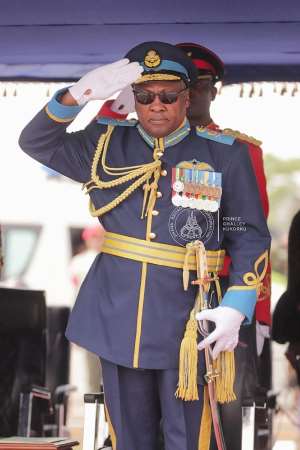
Beautifully done, Mr President. 👏❤️ With respect to this picture and the attire for the ceremony, I must say it fits you well. Handsome, charismatic, and composed. I give it to you.
My first and only personal encounter with you was when you, as Vice President, represented the late President Prof. John Atta Mills, may his soul continue to rest in peace, at the University for Development Studies, Tamale campus, during my graduation ceremony. I had just completed my first degree. It was at the point when we were called to walk onto the stage, shake hands with the invited guests and school leaders, and receive our certificates that this happened. As I reached you and we shook hands, you gently pulled me back. Your aide immediately rose to ask if something was wrong. You smiled, reassured him, and put me at ease. Until today, I still do not really know why you pulled me back, but perhaps my face looked familiar. Some mistaken identity possibly 😅. That moment stayed with me and shaped how I see leadership and politics.
It reminded me that politics does not have to be hostile or demeaning. It can be grounded in respect, humility, and service to country. It taught me that one can hold strong political views while remaining fair minded, honest, and open to dialogue. This is the kind of political engagement I believe Ghana needs, and it is from this place that I write.
Your humility, calmness, and patience, even in the face of pressure and harsh commentary, deserve recognition. Leadership often shows itself most clearly during difficult moments. Reaching one year in office is worth acknowledging, and your measured approach has provided a sense of continuity for a nation that values stability and reassurance in uncertain times.
On the economic front, the reduction in fuel prices is welcome, and credit is due, even while recognizing the influence of external factors. While some sectors, particularly transport, are yet to fully feel the impact, households and businesses have experienced some relief. The continued focus on road infrastructure through the Big Push Agenda is visible in many parts of the country, including where I live, and this consistency in infrastructure development deserves acknowledgment.
There are many other positives worth noting, including the conscious effort to give opportunities and positions that would traditionally go to the elderly to younger people. This sends a strong signal of confidence in the youth and offers hope to a generation that often feels overlooked. I intend to speak more on this in a subsequent post. For now, since I have this opportunity, permit me to draw attention to some pressing concerns that matter deeply to many citizens.
Responsible citizenship requires honesty about areas that need improvement. Illegal mining continues to pose a serious threat to our environment, water bodies, and rural livelihoods. This is not a partisan issue but a national one with long lasting consequences. It affects public health, food production, and water security. Beyond enforcement, there is a need for better coordination among institutions, stronger community level accountability, and practical economic alternatives for those whose survival currently depends on these activities.
Education remains another sensitive and deeply important matter. The Free Senior High School policy is dear to many of us because it opened doors for children who might otherwise never have had the chance to continue their education. While no policy is without challenges, any review must strengthen inclusion and fairness. Approaches that separate students into those who can pay and those who cannot risk reopening old wounds and deepening inequality. Education must remain a tool for opportunity, dignity, and national cohesion.
The health sector also requires steady attention. Challenges with staffing, funding, and access to care, especially in rural and underserved areas, continue to affect ordinary Ghanaians. Delays in National Health Insurance Scheme reimbursements place significant pressure on health facilities and workers. Strengthening primary healthcare, improving conditions of service, and investing in preventive care will reduce long term strain on families and the public health system.
Youth unemployment remains a pressing concern. Many young people are educated, skilled, and eager to work, yet opportunities remain limited. Beyond job creation, there is a need to better align education with labour market needs, support innovation, and reduce barriers to starting small businesses. When young people feel excluded from economic progress, frustration grows, and that has wider social consequences.
On this matter, I must also express concern about situations where people were laid off simply because they were recruited under a previous administration or perceived to have affiliations with the opposition. This is painful and unfortunate. Our politics must rise above such practices. Additionally, it is deeply troubling to see graduate nurses and teachers who have completed their national service remain unemployed for three to four years, even when there is clear evidence of shortages in schools and health facilities. This challenge cuts across other sectors as well. One can only imagine the pain and sacrifice involved when parents sell property or exhaust their savings to educate their children, only for them to return home unemployed and dependent. Of what benefit is such an outcome. I do not pin this solely on your administration, as successive governments have struggled with this issue. I sincerely hope that within this tenure, with three more years to go, a lasting solution will be found.
Energy reliability and utility costs continue to affect households and small businesses. Stable electricity supply and predictable pricing are necessary for productivity and planning. While fuel prices have reduced, rising water and electricity tariffs place additional burdens on citizens. These increases tend to weaken the relief gained from lower fuel costs and make daily living more difficult for many families. Addressing inefficiencies in the sector, improving maintenance, and communicating clearly with the public will help restore confidence.
Agriculture, which supports millions of families and feeds the nation, must remain central. Smallholder farmers continue to struggle with access to affordable inputs, credit, storage facilities, and reliable markets. Climate variability is increasing risk and uncertainty. Expanding irrigation, strengthening extension services, improving access to ready markets, and ensuring good road networks to farming areas will support farmers and help stabilize food prices across the country.
Local governance and decentralization also deserve renewed focus. Many district assemblies lack the resources and authority to respond effectively to the needs of their communities. Strengthening local governance will improve service delivery, deepen accountability, and bring development closer to the people.
Public trust in institutions is another area that requires careful attention. Transparency in decision making, clear communication, and consistent application of the law help build confidence in governance. When citizens trust institutions, national unity is strengthened and reforms are more likely to endure.
Mr President, this reflection is written in respect and good faith. It is not an attempt to diminish your office or your efforts, nor is it meant to weaken any political tradition. Ghana’s democracy grows stronger when leaders are encouraged, questioned, and supported to do better.
As a committed supporter of the New Patriotic Party, my belief in the party’s values and my hope for its future, including the aspiration that Dr. Mahamudu Bawumia leads Ghana as President, remain firm. That belief does not prevent me from acknowledging good leadership where it exists or speaking honestly about national concerns.
Ghana comes first. When leaders are praised for what they do well and guided on what needs attention, the entire nation benefits. My hope is that this spirit of respect, accountability, and unity continues to shape our politics today and in the years ahead, as we work collectively toward a stronger, fairer, and more prosperous Ghana.
By Victor Raul Puobabangna Plance from Eggu in the Upper West Region of Ghana 🇬🇭
#Puobabangna

 Mysterious illness leaves children struggling to walk, hear in Mafi Kope
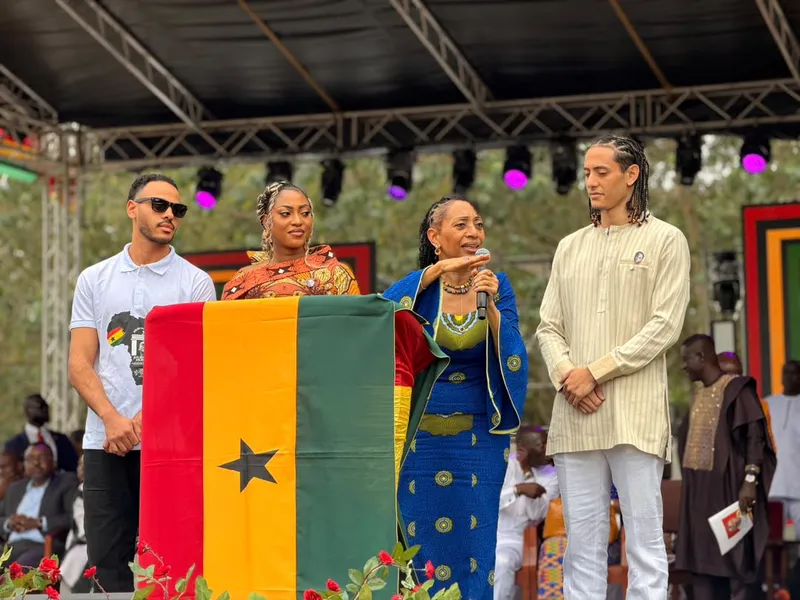 ‘We’ve come back to make sure our father's ideas never die’ – Nkrumah family
 Ghana Jollof: Akosua Manu appeals to Naana Jane to use her influence to free Sal...
 Yellow fever confirmed in Sissala East after 21 mysterious deaths
 Kenyasi man allegedly attacked by prison officers and inmates over yam theft cla...
 Germany’s far-right AfD makes strong gains in two state elections
 Savannah Regional Minister, IGP Yohuno visit Gbindabuor following lynching of po...
 Jehovah's Witnesses make blood component decisions a matter of personal conscien...
 Road contractors fed on contracts for years without completing projects – Alhass...
 Ghana Jollof saga: ‘She has no right to do what she’s doing’ – Inusah Fuseini


