



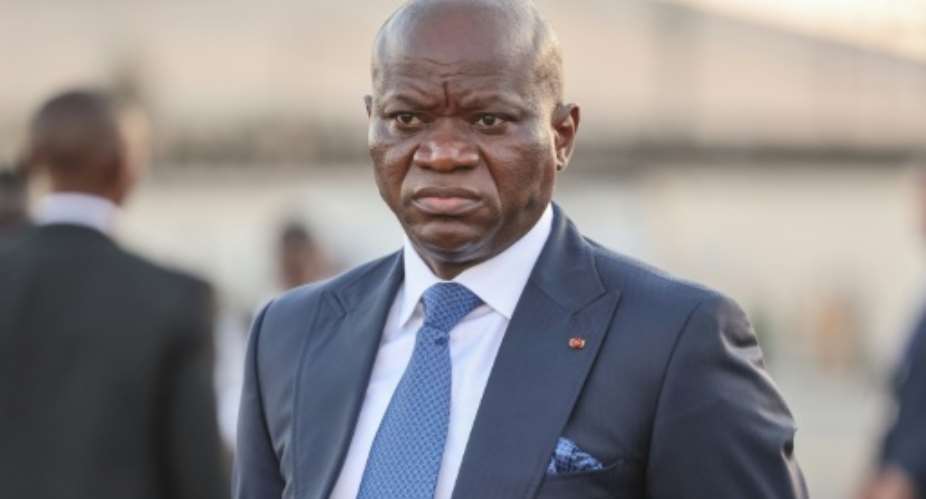
Less than a year after being elected, Gabonese President Brice Oligui Nguema is facing his first wave of social unrest, with teachers on strike and other civil servants threatening to down tools.
The last action by teachers took place in 2022 under then president Ali Bongo, whose family ruled the small central African country for 55 years.
Oligui overthrew Bongo in a military coup a few months later and acted on some of the teachers' concerns, buying calm during the two-year transition period that led up to the presidential election in April 2025.
He won that election with a huge majority, generating high expectations with promises that he would turn the country around and improve living standards.
Now the public's patience is beginning to wear thin.
School teachers began striking over pay and conditions in December and protests over similar demands have since spread to other public sectors -- health, higher education and broadcasting.
The primary cause of the teachers' discontent is a wage freeze decided a decade ago by the Bongo government.
That has left them unable to move up the pay scale, as is customary for civil servants, and struggling to cope with the rising cost of living.
The starting salary for a teacher is 350,000 CFA francs ($640) per month, which is no longer enough to cover basic needs in a country where inflation averaged 2.6 percent per year between 2016 and 2024.
'Legitimate' demands
Oligui's spokesman took a conciliatory stance last week, telling a press conference the strikers' demands were "legitimate" and "the result of decades of mismanagement" under the Bongo family.
But at around the same time, the authorities arrested two prominent figures from the teachers' protest movement, generating a climate of fear that has left teachers and parents unwilling to discuss the strike in public.
Marcel Libama and Simon Ndong Edzo were finally released on Monday after the SOS Education collective, which has spearheaded the industrial action, said it would not resume talks with the government until the two were freed.
Faced with strike threats in other sectors, Oligui met representatives of health and higher education unions last week.
Meanwhile, the communications minister promised to accede to demands from strikers at public broadcaster Gabon Television, whose protest had taken some TV news programmes off air for three days.
The tense social climate of recent weeks is a reflection of the expectations Oligui has raised, political analyst Lysiane Neyer Kenga told AFP.
"He raised a lot of hope. He gave rousing speeches saying his enemies were unemployment, precarity and lack of infrastructure," said Neyer Kenga.
"It was on that basis that a majority of Gabonese people placed their trust in him."
Magloire Memiaga, secretary general of the National Education Union (SENA), acknowledged the authorities had "inherited a difficult situation".
But, he stressed, Oligui did promise to end the civil servants' wage freeze and, two years down the line, that has still not happened.

 Armed mob attacks NAIMOS task force at Manso Keniago; two injured
 GES assures Funsi SHS students of action over water, electricity shortages
 17-year-old arrested over fatal shooting of Ghanaian teenager Javits Frimpong in...
 New Economy: 'Is Mahama government abandoning its 2024 promises?' – Kwesi Pratt
 'God is not a rickety goat to let NPP come back to power' — Cape Coast Mayor on ...
 Govt rules out new taxes in 2027 budget
 Government targets improved foundational learning for children by 2030
 Goldplat suspends operations at Ghana plant after trench collapse kills contract...
 GACL targets end of year start for Wa, Bolga, Sunyani airports
 Credit Akufo-Addo's govt for new oil discovery – Adomako-Mensah to NDC


