




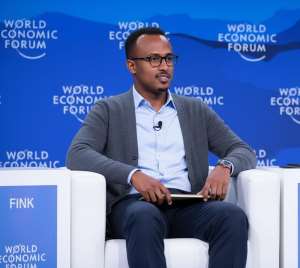
As artificial intelligence continues its rapid expansion across industries, 2026 may become remembered as the year institutions hit a reality check. At the World Economic Forum’s Annual Meeting in Davos this January, business leaders, regulators, and technologists converged not to celebrate AI’s possibilities, but to grapple with its limitations and the urgent need for trust, governance, and human‑centric oversight. (World Economic Forum)
One of the most striking data points to emerge at Davos was highlighted by PwC’s 29th Global CEO Survey. Based on responses from 4,454 executives across 95 countries, 56 % of global CEOs reported that their companies are seeing no measurable benefit from AI investments so far, with only about 10–12 % reporting improved revenue or reduced costs from AI deployments. (Reuters) This stark gap between AI adoption and realized business value is forcing organizations to question whether current approaches to AI are sustainable without stronger governance and explainability.
The disconnect is not due to lack of ambition. CEOs worldwide recognize that AI has the potential to transform industries and could contribute meaningfully to economic growth: PwC research suggests that responsible AI adoption could boost global GDP by up to 15 percentage points by 2035 under the right conditions, but this outcome depends on trust, governance, and ethical deployment. (PwC) Yet at Davos, conversations centered on why these conditions are not yet met—especially in regulated sectors where institutions must answer for every decision they make.
A core theme at the forum was the need to embed trust into intelligent systems rather than simply scaling capabilities. The World Economic Forum’s discussion on “Scaling Trustworthy AI” emphasized that trust is foundational for stable economies and institutional cooperation, not a feel‑good add‑on to technological progress. (World Economic Forum) Similarly, the Human‑AI‑T Manifesto, presented by WISeKey and partners at Davos, formally outlined the need for human control, trust, and ethical governance as prerequisites for any future AI ecosystem. (GlobeNewswire)
The prevalence of AI pilots that fail to scale into enterprise value is backed by broader adoption data. Outside Davos, studies show that only 43 % of organizations have implemented an AI governance policy that covers transparency, compliance, model validation, and ethical use—essential components for trustworthiness at scale. In addition, enterprise surveys find that 73 % of organizations cite poor data quality as the biggest blocker to scalable AI success, further emphasizing that technical capability without a solid foundation of governance and trustworthy data is insufficient.
The implications of a “trust gap” extend beyond business performance to risk exposure and oversight capability. PwC’s Digital Trust Insights report shows that only about half of organizations have fully implemented basic data risk controls, such as classification and loss prevention, which are necessary for secure and reliable AI. (PwC) This weak preparedness indicates that many companies are moving ahead with AI before they are ready to govern it—a recipe for brittle systems that can’t withstand regulatory scrutiny or operational stress.
Critically, traditional AI systems often struggle with explainability, auditability, and accountability, limitations that are especially pronounced in regulated sectors like banking, insurance, healthcare, and public services. Regulators and senior risk officers are increasingly shifting focus from what AI can do to how it operates—demanding systems that produce outcomes that can be explained, traced back to specific data and assumptions, and defended under audit. This is where Trust Intelligence diverges from the conventional model of AI.
Rather than prioritizing autonomous prediction and optimization, Trust Intelligence embeds human judgment, deterministic logic, and governance constructs into every layer of analysis. It emphasizes structured reasoning, documented assumptions, transparent decision rationale, and audit trails that can be reviewed years after a decision is made. In effect, Trust Intelligence is not just a technology—it is an architectural approach that aligns with legal and regulatory obligations that institutions must fulfill.
The Davos 2026 discussions reflect this shift. Leaders from both the public and private sectors are now framing trust not as an abstract ideal but as a quantifiable and enforceable requirement—one that determines whether intelligent systems can be integrated into mission‑critical infrastructure. As debates at the forum highlighted, without trust baked into design and governance, AI systems risk becoming liabilities rather than assets.
In 2026, the institutional adoption of intelligence technologies is no longer measured principally by capability but by confidence: confidence that decisions can be defended, that errors can be traced and corrected, and that stakeholders understand not just what the system recommended but why. Trust Intelligence, with its emphasis on explainability, governance, and human authority, is emerging as the standard that reconciles innovation with institutional responsibility.


 Sam George, Armah-Kofi Buah, Phyllis Naa Koryoo and OPK among 1,568 lawyers call...
 Visa scandal: 'Ampofo Ankrah’s suspension not enough; Kofi Adams must also step ...
 Ghana’s BRICS bid part of strategy to diversify international partnerships — For...
 'Let integrity, discipline guide your conduct' — Samson Lardi tells new lawyers
 Labour Minister optimistic teachers will suspend strike by close of day
 Dr Ato Forson urges MMDCEs to eliminate waste in public spending
 KMA Boss refutes bribery claims amid tears at Abrepo Junction demolition
 GRA summons Jamila Home management over alleged assault of revenue officer
 To suggest FBI acted solely to execute Cyberhunt operations in Ghana will hurt f...
 Eritrea, Ethiopia trade barbs as Tigray rebels retreat


