




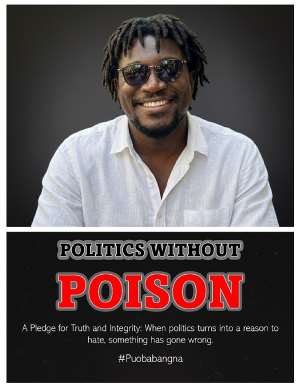
Political alignment should shape ideas, not poison character. The moment loyalty to a party becomes permission to lie about another person, to spread half truths, or to stain a name without proof, judgment has collapsed. That is not conviction. That is decay.
Disagreement is normal. People will always argue about policies, about directions, about what is best for their community. What breaks a society is when disagreement mutates into personal cruelty. When people stop debating ideas and start attacking human beings. When falsehood becomes a weapon used to silence or destroy those seen as opponents. At that point, politics stops serving the public and starts feeding ego, fear, and resentment.
There is a deeper and more troubling layer to this sickness. Political foot soldiers whose role is to come online daily to insult, provoke, and attack. Some do it with their own names and handles. Others hide behind fake accounts created only to spread lies. Many are not driven by belief but by reward. A token given. A promise made. The hope of recognition, position, or money. In that exchange, conscience becomes negotiable. Truth is traded for access. Integrity is exchanged for relevance. These are not defenders of ideas. They are merchants of distortion. Their task is not debate but distraction. Not persuasion but pollution.
What makes unhealthy politics even more dangerous is when media houses and platforms that should inform citizens instead feed bias, misinformation, and disinformation. When reporters or editors treat a story not as a search for facts but as a chance to promote one side, trust collapses. In the worst cases, media has been used as a tool of mass harm. In Rwanda in 1994, radio and print outlets broadcast hate speech against the Tutsi community and called them enemies, amplifying fear and urging violence, a role so central that broadcasters were later convicted for their part in inciting genocide. Radio Télévision Libre des Mille Collines and the magazine *Kangura* helped shape an atmosphere in which murder was framed as self‑defense against a manufactured threat. The result was mass killing on a horrific scale. Scholars have compared their use of dehumanizing language and false narratives to other known cases of extremist propaganda, showing how deeply media can influence minds and actions when it abandons truth for prejudice. ([Human Security Centre][1])
Ask yourself hard questions. If the person you insult belonged to your side, would you speak the same way? If the false story you shared destroyed an innocent reputation but pleased your party leaders, would you still feel proud? When did hiding behind a fake name to attack another human being start feeling acceptable? When did loyalty begin to demand dishonesty?
Unhealthy politics trains people to excuse bad behavior as long as it benefits their camp. It rewards noise over truth and obedience over character. It turns citizens into tools, ready to wound on command, then discard when their usefulness fades. Today you are praised for attacking others. Tomorrow you are forgotten, replaced by someone louder and more reckless.
Criticize ideas. Challenge records. Demand accountability. Do all of that with facts and fairness. The moment you sell your conscience for money, attention, or access, politics has already defeated you. The moment you choose lies over truth, you step away from reason and responsibility.
A society does not fall apart just because of bad leaders. It falls apart when regular people accept lies, cheer for attacking others’ reputations, and call it loyalty. Politics should guide us to know what is right and wrong, not teach us to stay quiet or lie.
If your political orientation leads you to hate others, lie about them, or destroy their dignity, then something within you has gone off course. No party, no position, no token is worth the loss of integrity. When politics demands that price, the problem is no longer politics alone. You have lost your moral compass.
I am Puobabangna, and I pledge to engage in decent politics that respects truth, values honest debate over personal attacks, and refuses to promote misinformation for gain. I commit to speaking fairly, reporting responsibly, and holding power to account without resorting to lies or character assassination.
I call on others to post and share this pledge, to speak up whenever lies, attacks, or misinformation are used for political gain, and to encourage friends, family, and communities to demand accountability and fairness. Let this pledge travel across social media, classrooms, workplaces, and public spaces, reminding everyone that politics should focus on ideas, policies, and the common good rather than personal attacks, fear, or hatred. Together, we can shift the conversation, raise the standard of debate, and build a political culture where respect, honesty, and integrity guide every discussion.
By Victor Raul Puobabangna Plance from Eggu in the Upper West Region of Ghana 🇬🇭
#Puobabangna
[1]: https://www.hscentre.org/sub-saharan-africa/media-tool-war-propaganda-rwandan-genocide/?utm_source=chatgpt.com "The Media as a Tool of War: Propaganda in the Rwandan Genocide - Human Security Centre"

 Mysterious illness leaves children struggling to walk, hear in Mafi Kope
 ‘We’ve come back to make sure our father's ideas never die’ – Nkrumah family
 Ghana Jollof: Akosua Manu appeals to Naana Jane to use her influence to free Sal...
 Yellow fever confirmed in Sissala East after 21 mysterious deaths
 Kenyasi man allegedly attacked by prison officers and inmates over yam theft cla...
 Germany’s far-right AfD makes strong gains in two state elections
 Savannah Regional Minister, IGP Yohuno visit Gbindabuor following lynching of po...
 Jehovah's Witnesses make blood component decisions a matter of personal conscien...
 Road contractors fed on contracts for years without completing projects – Alhass...
 Ghana Jollof saga: ‘She has no right to do what she’s doing’ – Inusah Fuseini


