




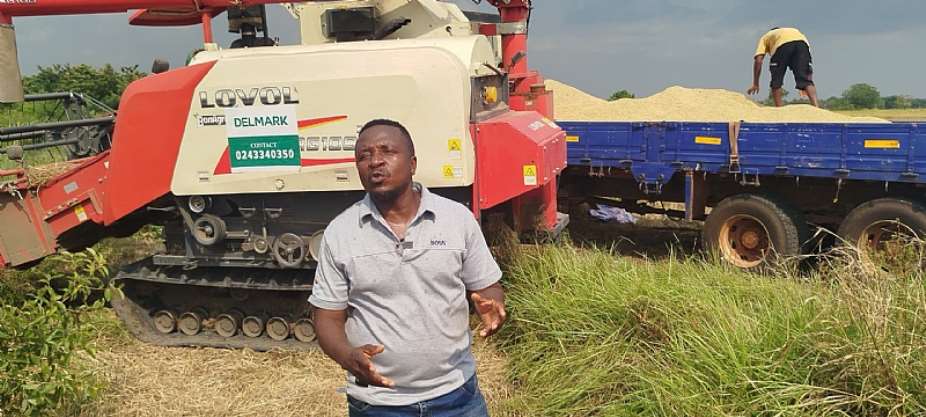
Rice farmers in Akatsi South are grappling with severe post-harvest losses driven by poor market access, depressed prices, and mounting debts—raising urgent concerns about the sustainability of local agriculture and the need for climate‑smart support systems.
Across communities such as Atsiekpi, farmers say hundreds of bags of harvested rice remain unsold on their farms or in makeshift storage. With no structured market, many are forced to sell at loss‑making prices dictated by middlemen, even as they continue to owe agrochemical suppliers, harvester operators, and fertilizer dealers.
“I still have over 100 bags of rice from the last season stored, and there’s no one to buy them,” lamented Nicholas, a farmer and transporter. “Even during Christmas, which used to be our biggest season, the market didn’t move. People are importing cheaper rice, and we’re stuck.”
Yevugah Victor, a farmer from Atsiekpi, said he is struggling to repay debts incurred from hiring combine harvesters and purchasing inputs on credit. “We are losing everything after months of hard work,” he said.
Bless, a local rice buyer, noted that the stagnant market is affecting traders as well. “Even at reduced prices, people are still not buying because imported rice floods the market. The losses affect us all.”
Edem Akuaku, a farmer and agronomist who supplies fertilizers and offers harvesting services on credit, warned that the situation is eroding motivation among farmers. “The lack of structured market access and support mechanisms is killing motivation. We need climate-smart solutions and policy action,” he stressed.
Climate change has already disrupted farming cycles in the area, with unpredictable rainfall and extreme weather affecting yields. Farmers say the added burden of post-harvest losses caused by market failures is making their livelihoods increasingly unsustainable.
They are appealing to the government and the Member of Parliament for Akatsi South, Hon. Bernard Ahiafor, to intervene by improving market access, providing financial support, and integrating local rice producers into national food security programmes such as Buffer Stock and climate-smart agriculture initiatives.
“The rice is there—we just need a system that works,” Edem emphasized.
Experts say that strengthening storage infrastructure, regulating pricing, and linking farmers to institutional buyers such as schools and prisons could significantly reduce post-harvest losses and reinforce food systems under climate-smart agriculture frameworks.

 Transport fares increased 8% from September 26
 Golokuati residents call for operationalisation of abandoned ECG office
 Frank Danquah declared wanted over alleged narcotics offences
 Ghana TVET Service warns against collection of fees in TVET institutions
 16 arrested as National Security uncovers counterfeit currency printing syndicat...
 Work without fear or favour — Shamima Muslim urges broadcasters
 MFWA begins 5-day training for journalists from northern sector on media law and...
 A/R: Assemblyman for Nkwantakese Electoral area killed
 Kumasi: Roadside trader killed in tragic accident at Brewery Traffic Light in As...
 Law student petitions CHRAJ over alleged military killing of Gbewaa Training Col...


