




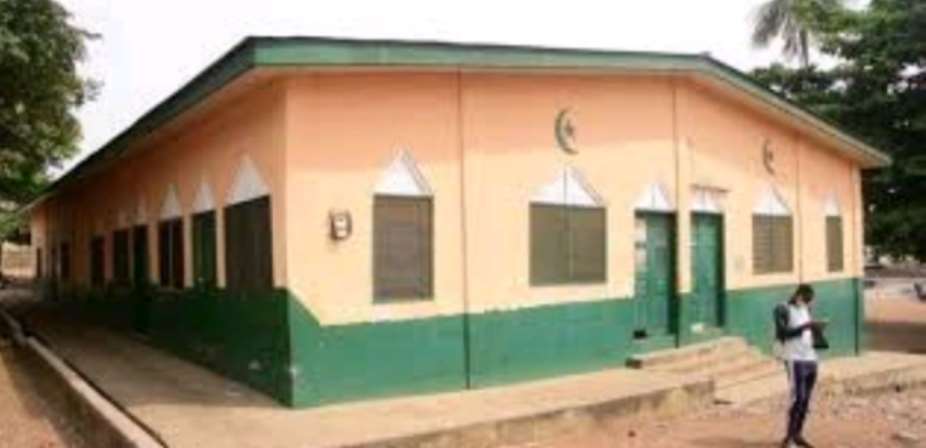
The Ho Central Mosque, one of the principal places of worship for Muslims in the Volta Regional capital of Ho, has become the focal point of a tense standoff between sections of the Muslim community and regional authorities. What was once a peaceful site of daily prayers and Friday Juma’a gatherings has lately been disrupted by leadership disputes, violence, and defiance of government directives.
Origins of the Crisis
Tensions escalated in late December 2025 when rival factions within the Ho Muslim community began clashing over who should serve as the Regional Chief Imam the highest religious leader for Muslims in the region. Two individuals laid competing claims to the position, deepening divisions among worshippers and local leaders.
On Friday, 26 December, the situation turned violent when masked armed men reportedly stormed the mosque during Juma’a prayers, opening fire and injuring several congregants. At least seven to nine worshippers were hospitalized, according to reports, and several suspects were arrested by police in the aftermath.
The shooting and its shockwaves were a turning point, prompting authorities to take extraordinary measures to prevent further bloodshed.
REGSEC’s Closure Order
In response to the violence and increasing unrest, the Volta Regional Security Council (REGSEC), in consultation with the Ministry of the Interior, issued a directive to temporarily close the Ho Central Mosque for two weeks, effective January 1, 2026. The mosque was formally declared a crime scene to support investigations and mediation efforts.
REGSEC officials stressed that the closure was not punitive but aimed at reducing tension, creating space for dialogue, and preventing further clashes as negotiations over leadership continue. They also insisted the safety and sanctity of worshippers and the mosque remain priorities.
Community Defiance and Discontent
Despite the closure order, many mosque members have openly defied the directive:
On January 1 and 2, eyewitness accounts and reports showed the main doors of Ho Central Mosque were still open, with people entering and leaving the premises even after REGSEC’s announcement. The police tape cordoning off parts of the mosque had been removed, and Juma’a prayers were observed outdoors by some groups.
Local residents, including children and adults, were reported inside the mosque compound, signaling a deliberate disregard for the Security Council’s order.
The defiance reflects widespread resentment among parts of the Muslim community, who see the closure as unjust and discriminatory. Leaders of the Ho Zongo community (the historic Muslim quarter) have condemned the shutdown as a violation of the constitutional right to freedom of worship. They argue that the decision penalizes innocent worshippers rather than addressing the real issue accountability for the violent intrusion and tear-gas gunshots inside their sacred space.
Critics also contend that:
the violent actors who brought weapons into the mosque have not been adequately prosecuted, authorities opted for closure instead of beefing up security for peaceful congregants, and the response appears biased toward one faction over others.
The community has appealed to civil society, media bodies, and national peace institutions to help ensure justice, transparency, and protection of religious freedoms.
Security Presence and Worship Adjustments
While the mosque remains under a heavy security watch and officially sealed, some worshippers have adapted by organizing prayer sessions outside the mosque compound, under makeshift arrangements. Security personnel continue to guard the site as investigations proceed.
Larger Implications
The events at Ho Central Mosque illustrate the delicate balance between maintaining public order and upholding constitutional freedoms, especially where religious identity intersects with internal leadership disputes.
Authorities argue their steps are necessary to prevent escalation and “buy time” for mediation. Meanwhile, a faction of the community insists that legitimate worship should not be curtailed and that justice must target criminal conduct rather than collective punishment.
What’s Next?
The two-week closure period ordered by REGSEC is designed as a cooling-off phase. However, the persistent defiance by worshippers raises questions about whether official directives will be respected without broader community buy-in and transparent conflict resolution.
Stakeholders from religious leaders to civil society may need to intervene more substantively if the situation is to shift from confrontation back to peace, mutual trust, and regular worship without fear or division.
Sources:
This summary draws on recent reporting from The Ghana Report, Graphic Online, and MyJoyOnline covering the mosque closure, community reactions, and incidents of violence and defiance at the Ho Central Mosque.
Mustapha Bature Sallama
Medical Science communicator.
Private Investigator and Criminal
Investigation and Intelligence Analysis,
International Conflict Management and Peace Building. Alumni Gandhi Global Academy United States Institute of Peace.
[email protected]
+233-555-275-880

 GJA Applauds Ghana’s Sharp Rise in Global Press Freedom Rankings
 US Embassy Cautions Against Censorship in Fight Against Misinformation
 Interior Minister Blames Weak Enforcement by Assemblies After Avenor Building Co...
 Gov’t Warns Against Rising Misinformation, Calls for Stronger Journalistic Stand...
 Ramaphosa Warns Against Vigilante Crackdowns on Foreign Nationals
 Global InfoAnalytics Boss Rejects Claims Polls Are Destabilising NDC
 Bawumia to Propose Policy Alternative as Cocoa Sector Tensions Deepen
 ECG Announces Scheduled Outages and Technical Fault Affecting Multiple Regions o...
 Investigation committee uncover GH¢19.5m loss at Bolgatanga Technical University...
 Afenyo-Markin calls for protection of journalists, warns against suppression of ...


