




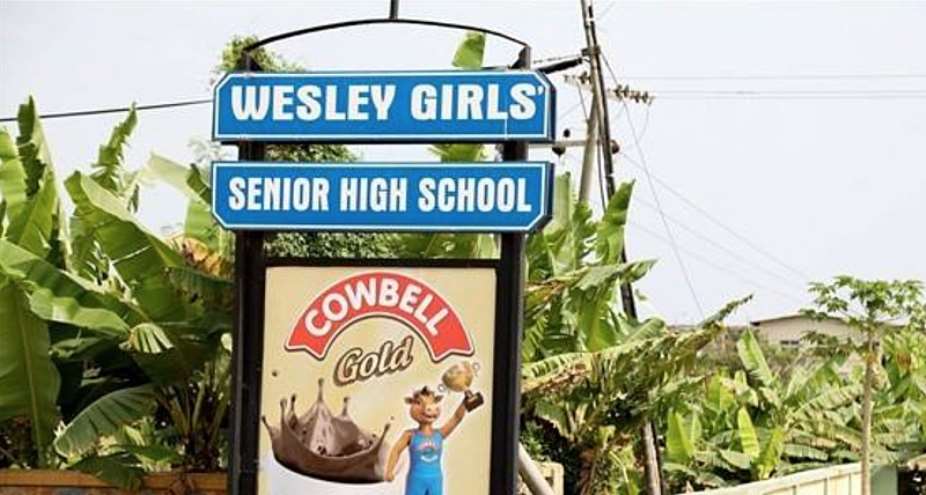
The situation at Wesley Girls Senior High School, which involved Muslim students, highlights some serious gaps in how religious diversity is managed within Ghana's education system. This isn't just an issue for one school; it reflects broader systemic challenges in how mission schools operate, how the constitution is enforced, and how national policies are shaped. Instead of pointing fingers, the concerns raised by the Muslim community suggest that state institutions, religious organizations, and civil society need to come together to ensure that every child in Ghana receives an inclusive education.
When it comes to Islamic mission schools, the supply is quite limited. Historically, Christian mission schools have dominated the secondary education landscape in Ghana, with research indicating that over 50 percent of the top second cycle institutions are Christian-run. While there are some Islamic mission schools, like those affiliated with Ahmadiyya and others at both basic and secondary levels, they are far less common and primarily found in the northern regions. This geographical and demographic imbalance creates significant challenges. For Muslim students in the southern and coastal areas, attending schools run by Christians often means dealing with policies that haven't adapted to accommodate diverse religious practices. Conflicts frequently arise over issues like prayer times, Ramadan fasting, and appropriate religious attire.
Examples of some notable Islamic Mission Schools in Ghana
Ahamansu Islamic Senior High is nestled in the Kadjebi District of the Oti Region. It kicked off as a private school back in 2006 and transitioned to a public school in 2012.
AI-Basar Senior High can be found at Awoshie – Nii Bortey Junction in the Ga Central district of the Greater Accra Region. It opened its doors in 2015.
Al-Azariya Islamic Senior High is situated in Old Tafo, Kumasi, which is part of the Ashanti Region. It began as a private institution in 2001 and made the switch to government management in the 2011/2012 academic year.
Al-Khulafau Arashiduun Islamic Senior High is located in Ekumfi Twea, within the Ekumfi district of the Central Region. It was founded in 2013.
Anbariya Senior High is based in Tamale, in the Northern Region. It started as a private school in 2009 and became part of the public education system in 2013.
Ejura Islamic Senior High School is found in Ejura Dromankuma, within the Ejura Sekyedumase District of the Ashanti Region.
Ghana Muslim Mission Senior High is located in Beposo, Ashanti Region, and was established on October 20, 2008.
Ghana-Lebanon Islamic Senior High is situated in Nima, Accra.
Islamic Senior High (Kumasi) is one of the schools under the Ghana Muslim Mission and is located in Kumasi.
Lady Fatimah Girls Senior High is a private Islamic secondary school affiliated with the Islamic University College, Ghana, and is located in Accra. It was founded in 2015 to provide quality and affordable education.
Nurul Ameen Islamic Senior High is located in the Asawasi or Asewase area of Kumasi Metro, Ashanti Region. The school was established in 2011 as an Islamic mission institution that welcomes students of all faiths.
Siddiq Senior High is an Islamic institution in Agona Nyakrom, near the Zongo community, in the Central Region. It began as a private school in 1989 (or 1991 per some records) and received government recognition in 2013
T.I. Ahmadiyya Senior High is located south of Salaga in the East Gonja District, Savannah Region. The school was founded in October 1971 as a public mixed-gender institution.
Tamale Islamic Science Senior High is a public mixed day/boarding school in Kanvilli, Tamale, Northern Region. It was established in 1997
Tawheed Senior High is positioned in Asokore Mampong near the central mosque at Akwatia-Line, Kumasi, Ashanti Region. The school was founded in 2001
Tijjaniya Senior High (TIJASS) was established by the Tijjaniya Muslim Movement of Ghana on July 29, 2009, as a public mixed school in the Ashanti Region. It aims to provide moral and quality education
Although listed here, the number is still not enough in comparison with the demand to enroll and provision of Christian schools. The solution to the imbalance is strategic growth and empowerment of Islamic mission schools, as well as national guidelines on religious accommodation.
Constitutional Protections for Religious Rights
Ghana's 1992 Constitution provides robust protections for religious freedom and equality:
Article 12(2) guarantees freedom of thought, conscience, and religion, including the right to manifest religion publicly or privately
Article 17 prohibits discrimination on grounds of religion
Article 21(1)(c) explicitly guarantees the right to practice any religion and manifest such practice
Article 26(1) provides equality before the law and equal protection, encompassing religious equality
Articles 28(4), 30, and 35(5) further reinforce protections against religious discrimination and uphold freedom of worship
Policy Commitments
In addition to the constitutions, the Inclusion Education Policy and Ghanaian child-rights frameworks require no learner to be sidelined or disadvantaged due to religious affiliation. These standards are explicitly employed in the Wesley Girls litigation that claims that non-accommodation or exclusionary policies in government-funded mission schools are inconsistent with constitutional requirements.
The real issue is the gap in enforcement and not the constitutional structure. It is the duty of institutions and regulatory bodies to ensure these protections are put in place not on individual Muslim students who are in need of access to good education.
History and National Unity of Ghana.
The legacy of post-independence Ghana is the chance to be able to deal with religious and ethnic diversity under one republic. Muslims, Christians, and traditionalists have played their role in the national struggles and the life of the people. Political leaders and the civil society always present Ghana as an example of religious tolerance in West Africa as domestic peace is determined by mutual respect and practical compromise between communities.
Episodes like the Wesley Girls Muslim students dispute test the country's commitment to this historical legacy of unity in diversity. A forward-looking national response must:
Revisit mission-school rules and practices to align with constitutional standards and ensure religious accommodation
Expand the provision of quality Islamic and secular public schools to reduce structural imbalances
Build robust interfaith dialogue platforms to resolve future conflicts preventively
Ensure that Muslim students do not face a false choice between education and faith expression
Hold state and institutional regulators accountable for enforcing existing protections
Conclusion
The Wesley Girls controversy is not a Muslim problem requiring Muslim self-condemnation it is a national policy and governance challenge. Resolution requires coordinated reform across mission schools, public institutions, regulatory frameworks, and interfaith engagement. Ghana's reputation as a tolerant, religiously diverse nation depends on translating constitutional commitments into practical, inclusive educational practices for all children.
Adam Abdul Kadir
Research Scholar
Dibrugarh University Assam India
[email protected].
 Ambassador Victor Smith urges U.S. investors to see Ghana as production hub
 Stephen Yeboah appointed new registrar of Sunyani Technical University
 Chief of Staff celebrates Apostle Kwadwo Safo’s extraordinary legacy, announces ...
 Abandoned 250-bed Sewua Regional Hospital rots as KATH battles congestion
 GES opens 2026 inter-regional and district re-posting process
 AMA announces June 6 ‘Operation free choked drains’ to tackle flooding in Accra
 Author examines role of student politics in shaping national leaders in 'The Ris...
 Months after the regime crackdown, Iranians search for missing protesters
 Somalia ex-PM says attacked by govt forces in Mogadishu
 GTEC flags 70 unrecognised tertiary institutions in Ghana, abroad


