




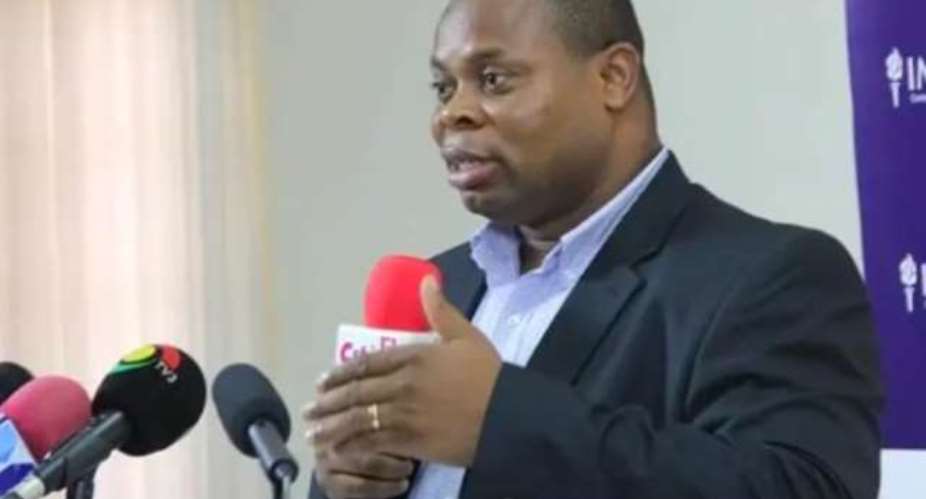
Policy think tank IMANI Africa has called on Parliament to reject the revised 2025 lithium lease agreement, warning that it represents a serious blow to Ghana’s economic sovereignty and long-term mineral revenue.
IMANI Founding President Franklin Cudjoe criticized the renegotiated terms for significantly weakening Ghana’s fiscal position, transferring excessive value to investors, and straying sharply from global best practices for strategic minerals like lithium.
The think tank dismissed claims that a 5% royalty ceiling is immutable, emphasizing that Ghanaian law empowers the Minister for Lands and Natural Resources to set higher royalty rates through subsidiary legislation, subject to parliamentary approval. IMANI noted that the previous 10% royalty clause was constitutional, enforceable, and in line with international standards for energy-transition minerals.
“Lowering the royalty rate shifts millions of dollars annually away from the state,” Cudjoe said, highlighting that investors’ financial models were based on a lithium price of US$1,587 per tonne, not the current US$3,000 per tonne. Even at prices below US$800, the project remained lucrative, and today’s prices still yield high profit margins with production costs at just US$610 per tonne.
IMANI also flagged critical weaknesses in the updated lease. The explicit 10% royalty has been removed, there is no sliding scale as previously promised, and the default 5% royalty relies solely on the Minister’s existing executive instrument. Local refinery obligations are minimal, limited to a mere scoping study, undermining Ghana’s ambition for domestic value addition in the strategic minerals sector.
The think tank further questioned the absence of the Green Minerals Policy in the revised agreement, asserting that the Minister could enforce it and adjust royalty rates without amending the core mining law. Ghana’s minority equity stake, IMANI argued, offers no guaranteed returns and falls short of international benchmarks.
Cudjoe concluded that Ghana’s negotiated position lags behind countries that have successfully safeguarded national control and fiscal benefits over strategic minerals. He called for Parliament to reject the current deal and demand a renegotiation that restores Ghana’s fiscal sovereignty.
“The political class is proving incapable of defending Ghana’s national interests,” IMANI stated, urging civil society and independent actors to be included in any new negotiation process.
Parliament is set to deliberate on the revised lithium lease agreement in the coming days amid rising national debate over the management of Ghana’s strategic mineral resources.

 Thousands attend Kenya opposition rally amid anger over political violence
 Trump slams AI sceptics as Altman pauses OpenAI IPO plans over safety concerns
 WASSCE: School officials helped students cheat for years, but we now see the tru...
 Probe alleged military killing of lecturer in Bawku – Kusaug Youth demands
 ‘If we all pay GH¢1,000 each, we should be able to construct National Cathedral’...
 Mahama inspects proposed site for Upper West Regional Airport
 Mahama reiterates government's commitment to end double-track SHS system
 Police interdict officer over death of 23-year-old Ivan Baidoo on Tema Motorway
 Improved invigilation is exposing true performance of Ghanaian students — Mahama...
 There's no policy to introduce Arabic, Chinese in all public schools — Mahama



Comments
Even if Ghana renegotiates for a 50 % increase, nothing will benefit the citizens. Absolutely nothing!!!