




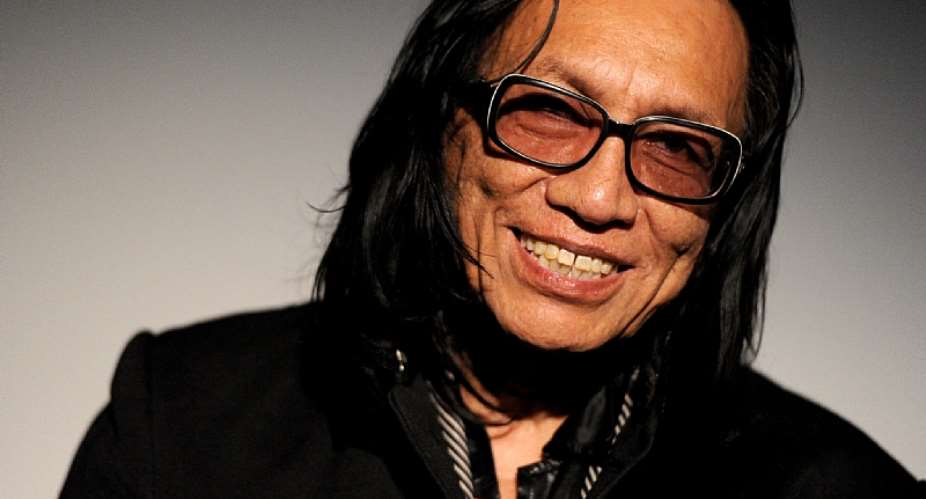
Sixto Diaz Rodriguez was a man whose music transcended continents, yet whose life remained largely unknown — even to those whose hearts his songs had touched. Born on July 10, 1942, in Detroit, Michigan, to working-class Mexican parents, Rodriguez was the sixth child in his family — a name literally meaning “sixth” — and from early on, he carried a restless curiosity and deep sense of social consciousness.
Dropping out of high school at 16, Rodriguez gravitated toward music. He taught himself guitar, began writing songs about injustice and inequality, and dreamt of speaking to the world through his art. In 1967, he released his first single, “I’ll Slip Away,” and in 1970, his debut album, Cold Fact, followed by Coming from Reality in 1971. His songs blended folk, rock, and blues with protest-style lyrics that reflected the struggles of the marginalized and the disillusioned.
Critically acclaimed but commercially unsuccessful in the United States, Rodriguez faced the harsh reality many artists know too well: talent does not always equal recognition. By 1971, his label had dropped him, and he returned to life as an ordinary working-class man. For decades, he labored in construction, raised a family, and pursued a bachelor’s degree in philosophy, all while quietly nurturing his music.
But while Rodriguez remained in obscurity in Detroit, the world outside was slowly discovering him — without him ever knowing it. His albums traveled across oceans to South Africa and Australia, where his songs resonated with youth facing oppression and social injustice. In apartheid-era South Africa, his lyrics became anthems of hope and resistance. A generation revered him as a folk hero, even as rumors falsely claimed he had died.
Rodriguez lived unaware of his international impact. The recognition, the fame, the applause — all were happening thousands of miles away while he continued his ordinary life. Yet, he never abandoned music entirely, keeping faith in the power of his voice, however quiet it seemed.
The turning point came in the 1990s when a pair of South African fans embarked on a quest to find him. Their search led them to a living, breathing Rodriguez in Detroit — still performing occasionally in local bars, still working his day jobs. This remarkable journey became the Oscar-winning documentary Searching for Sugar Man (2012), which introduced Rodriguez’s life and music to the world and finally gave him the recognition he deserved.
After decades of anonymity, Rodriguez re-emerged as a global music icon. He performed for sold-out audiences worldwide, appeared on major television shows, and received renewed interest in his albums. Critics and fans alike marveled at the story of a man who had quietly shaped music in ways no one had anticipated.
Lessons from Rodriguez: Inspiration for Every Dreamer
Rodriguez’s life is more than a story of music; it is a beacon of hope, resilience, and authenticity:
- Persistence pays off: Despite years of rejection and obscurity, Rodriguez never stopped creating. Success may arrive quietly, and often when least expected.
- Impact transcends recognition: Sometimes your work matters far beyond what you see. Even if you feel unnoticed, someone, somewhere, will be touched by your contribution.
- Stay true to your values: Rodriguez’s music reflected honesty, social awareness, and integrity — principles that endured even without immediate rewards.
- It’s never too late: Recognition came decades later, proving that the right time often exceeds our imagination, and patience can turn unseen effort into lasting influence.
For anyone struggling to be heard, ignored, or undervalued, Rodriguez’s story is a reminder: keep creating, keep believing, and trust that your work has power — even if the world hasn’t noticed yet.
Sixto Rodriguez passed away at the age of 81, leaving behind a legacy that defies the traditional narratives of success. He is remembered not just as a singer-songwriter but as a symbol of hope for the unheard, a reminder that passion and authenticity can ripple across the world — even when the creator is unaware.
In a world obsessed with instant fame and viral success, Rodriguez’s life teaches us that sometimes the quietest voices carry the most profound messages. His music, like a hidden river, flowed unseen for decades, and in the end, it changed lives — quietly, profoundly, and forever.
Sixto Rodriguez (1942–2023)
Singer-songwriter, activist, working-class hero, and folk legend — whose life reminds us that true impact often begins in silence and grows in persistence.
By Eric Paddy Boso


 NDC MP explains why Kevin Taylor was not arrested when he returned to Ghana
 Disruption of global order: 'We must expand opportunities for youth' – Mahama
 WN/R: Residents raise concern over abandoned truck on Benchemaa-Oseikojokrom hig...
 Gov’t invests GH¢4.12bn into road infrastructure in Bono Region — Asiedu Nketiah
 Mahama to cut sod for Sunyani Sports Stadium project in October
 Kwesi Pratt urges Ghana to revisit Nkrumah’s seven-year development Plan
 Ghana Jollof saga: 'Power is transient' — Annoh-Dompreh cautions against partisa...
 “I loved NDC but I’ve been disappointed and I’ve learned my lesson” — Mzbel
 Sista Afia laments how colleague musicians turned down her feature requests
 Joining NDC did me more harm than good – Mzbel


