




History, beliefs, controversies, and the enduring influence of a West African Sufi movement across West Africa, stretching from Senegal and Mauritania to Ghana, Nigeria, and even into parts of North Africa, the Tijaniyya (often spelled Tijaniyya, Tijaniya, or Tijani) remains one of the most influential Islamic traditions. With tens of millions of followers and a rich spiritual heritage, the movement embodies the encounter between classical Sunni scholarship, African mysticism, and the lived experience of Muslim communities navigating modernity. But beyond its spiritual teachings, the Tijaniyya is also a story of scholarship, diplomacy, lineages of piety, and evolving practices that elicit both reverence and debate. At the center of this tradition stands Sheikh Ibrahim Niasse, a 20th-century Senegalese figure whose scholarship, charisma, and spiritual authority transformed the Tijani landscape forever. This piece explores the origins of the Tijaniyya, the life and impact of Sheikh Ibrahim Niasse, the contested yet widely practiced Salatul Fatihi, and the inner structure known as the Tariqa. It also examines the movement’s modern presence across West and Northern Africa.
Origins of the Tijaniyya: A West African Sufi Tradition with Global Reach
The Tijaniyya traces its roots to Sidi Ahmad al-Tijani (1737–1815), a renowned North African scholar from present-day Algeria. Like other Sufi orders, the Tijaniyya emphasizes spiritual purification, remembrance of God (dhikr), devotion to the Prophet Muhammad (peace be upon him), and upright living according to Islamic law.
One distinguishing feature of the Tijaniyya is its Maliki foundation --- the jurisprudential school dominant in West and North Africa. Thus, the movement has always seen itself firmly within Sunni orthodoxy, even while adopting spiritual exercises unique to the order. By the late 19th and early 20th centuries, the Tijaniyya had taken deep root in Senegal, Gambia, Mali, Niger, Nigeria, Ghana, and Côte d’Ivoire, largely through the work of influential clerics and scholars who blended classical Islamic texts with local learning traditions.
Sheikh Ibrahim Niasse: The Scholar Who Re-Shaped the Tijaniyya
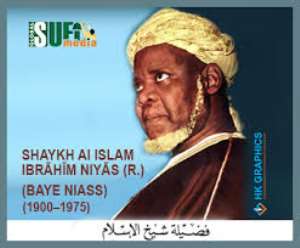
Perhaps no name is more synonymous with modern Tijani identity than Sheikh Ibrahim Niasse (1900–1975) of Senegal’s Kaolack region. Within the Tijani tradition, he is widely regarded as a reviver (mujaddid) of Sufi spirituality and a global ambassador of Islam’s intellectual heritage.
A Life of Knowledge and Piety
Born into a scholarly family, Sheikh Ibrahim memorized the Qur'an early and mastered classical texts in jurisprudence, theology, logic, and Arabic literature. His contemporaries, both in Africa and the Arab world, recognized him as a formidable scholar and spiritual guide. What set Sheikh Ibrahim apart was not only his scholarship but his ability to gather vast followings across ethnic, national, and linguistic boundaries. By mid-century, his influence had reached Senegal and Gambia, Northern Nigeria (especially Kano, Sokoto, and Maiduguri), Ghana, Sudan, and even Saudi Arabia and pockets of the United States and Europe. Through teaching, correspondence, and diplomatic engagements, he emerged as one of the most respected African Muslim figures of his time.
The Visit to Saudi Arabia: A Story of Humility
One of the most widely recounted stories about him, told across Tijani communities centers on his visit to Saudi Arabia during Hajj. Tradition holds that King Abdul Aziz Al Saud, impressed by Sheikh Ibrahim’s influence and scholarship, sought his counsel on consolidating the leadership of the Saud family in the Holy Lands. In gratitude, the King is said to have offered Sheikh Ibrahim a blank cheque signed in his name --- an extraordinary gesture in that era. Yet, instead of seeking wealth or grand patronage, the Sheikh reportedly used the cheque only to purchase a religious textbook he had been searching for. To his followers, this story captures the essence of Ibrahim Niasse: a man of deep piety, humility, and devotion to knowledge.
Salatul Fatihi: A Prayer of Devotion and Debate
Among Sheikh Ibrahim’s well-known contributions is the widespread propagation of Salatul Fatihi, a devotional prayer invoking blessings on the Prophet Muhammad (peace be upon him). Although its origins predate him, he played a key role in making it central to Tijani practice.
Why Do Tijani Muslims Recite Salatul Fatihi?
For Tijani adherents, Salatul Fatihi holds a special spiritual status. It is believed to carry immense blessings, spiritual illumination, and closeness to God. Many Tijani followers recite it after daily prayers, during gatherings of remembrance, and as part of personal devotion. Some recite it dozens or even hundreds of times per day, alongside or in preference to the more commonly known Salatul Ibrahimiyya, which is recited in formal Muslim prayers.
Is Salatul Fatihi Accepted in Mainstream Islam?
Mainstream Sunni scholars vary in their positions: Supportive scholars argue that sending blessings on the Prophet is universally encouraged in Islam, and the form --- provided it does not contradict established teachings is permissible. Cautious scholars contend that while the prayer is not harmful, its elevated status in some circles should not overshadow the universally accepted Salatul Ibrahimiyya. Notably, Salatul Fatihi is not rejected by the majority of global Muslim scholarship. Instead, it is often viewed as a supplementary devotional practice whose spiritual value depends on sincerity and moderation.
Understanding the Tariqa within the Tijaniyya
Within the broader Tijani movement exists a more structured and disciplined spiritual path called the Tariqa. While all Tijanis share core beliefs and practices, those who enter the Tariqa commit themselves to enhanced spiritual discipline. What Differentiates Tariqa Followers? Answer: Membership in the Tariqa requires adherence to strict personal rules, often including no smoking, greater attention to daily prayers, regular Qur'anic recitation, fasting, an unending use of the rosary in chanting the names of Allah or seeking forgiveness, moral discipline and avoidance of major and minor sins, and participation in daily or weekly dhikr (spiritual remembrance). The central idea is spiritual purification --- helping the believer move from ordinary religious observance to heightened God-consciousness (taqwa).
The White Sheet Controversy
One practice that sometimes raises questions, especially among non-Tijanis, is the use of a white sheet spread on the ground during group recitations. While this practice may vary by region, it typically symbolizes purity, equality among participants, and a defined spiritual space for the gathering. Some critics misunderstand the purpose, assuming it carries mystical or un-Islamic significance. However, within Tariqa circles, the sheet is viewed simply as a symbol of discipline, cleanliness, and unity during collective devotion.
Tijaniyya Identity: Sunni, Not Shi’a or Ahmadiyya
Despite misconceptions, the Tijaniyya has always identified squarely within the Sunni tradition. Its foundation rests on the Maliki School of jurisprudence, Ash’ari theology, and traditional Sunni Sufi teachings. Thus, Tijani Muslims are neither Shi’a nor Ahmadiyya. Their spiritual lineage traces back to classical Sunni scholars, and their practices fall within recognized forms of Sufi devotion.
The Reach of the Tijaniyya across West and North Africa
Today, the Tijaniyya remains the largest Sufi movement in West Africa, with a presence in more than 20 countries, including Senegal, Ghana, Nigeria, Mauritania, Mali, Côte d’Ivoire, Burkina Faso, Niger, Chad, Morocco, and Sudan. In countries such as Senegal, Mali, and parts of Nigeria, Tijani leaders play active roles in mediation, education, political advisory work, and social development. Tijani clerics operate Qur’anic schools, community centers, and spiritual retreats, shaping religious life for millions. The movement’s appeal stems from its emphasis on peaceful devotion, its structured spiritual path, respect for learning, strong clerical lineages, and a message centered on love for God and the Prophet (pbuh). For many young Muslims navigating modern challenges, the Tijaniyya offers both a moral compass and a sense of belonging.
The Tijaniyya and Social Harmony in a Changing World
Beyond theology and devotion, the Tijaniyya has played a notable role in peace building across the region. Tijani leaders have mediated conflicts, countered extremist ideologies, and advocated for tolerance within multi-religious societies. In Ghana, for instance, Tijani clerics have been instrumental in promoting peaceful coexistence, especially in Zongo communities. In Senegal, the order’s leadership has long promoted dialogue between Muslims, Christians, and traditionalists. The Tariqa communities also contribute through communal labour, education initiatives, charity and social support, and youth mentorship. These functions make the Tijaniyya not just a spiritual order but a significant socio-cultural institution.
My Thoughts: A Tradition of Faith, Discipline, and African Islamic Scholarship
The Tijaniyya and its Tariqa tradition represent one of West Africa’s most enduring Islamic legacies --- a blend of classical scholarship, African spirituality, and disciplined devotion. From the towering influence of Sheikh Ibrahim Niasse to the daily recitations of Salatul Fatihi and the structured path of the Tariqa, the movement continues to shape religious identity across the region.
Its followers, firmly Sunni and deeply rooted in Maliki tradition embody a form of Islam that values knowledge, humility, spiritual refinement, and communal harmony. As West Africa continues to navigate change, the Tijaniyya remains a stabilizing force and a reminder of the continent’s long-standing contributions to global Islamic thought.
FUSEINI ABDULAI BRAIMAH
+233208282575 / +233550558008
[email protected]


 Gov’t renames 24-hour economy markets as District Economy Markets, targets 100% ...
 BoG, Police arrest 7 in Accra over alleged use of cedi notes for money bouquets,...
 SkyTrain trial: High Court adjourns case management conference to October 19
 Edudzi Tameklo recalls how Duffuor was slapped with GH¢100 million bail in 2020,...
 About 800 Director I and II applicants unreachable due to invalid contact number...
 'Boakye Agyarko was seen as anti-Bawumia' – Lecturer on John Boadu’s victory
 'NPP delegates made wrong choice electing John Boadu as chairman' — Political Sc...
 MTN Ghana secures new 5G spectrum in 700 MHz and 3 GHz bands
 Bawumia explains NPP hunt for winnable parliamentary candidates, not deep-pocket...
 Ghana to tap Egypt’s expertise for new capital city, housing projects – Mahama


