




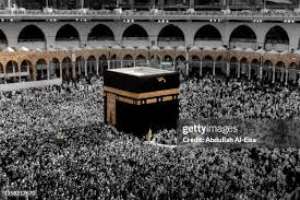
Every year, thousands of Ghanaian Muslims save for decades, sell property, or depend on family support to make the spiritual journey of Hajj. For many, it is a once-in-a-lifetime sacred responsibility. Yet the rising cost of Hajj in Ghana continues to raise questions, frustrations, and calls for reform. In 2024, many privately arranged pilgrims quietly revealed that they completed the entire Hajj process for about GHc40,000. At the same time, the officially announced fare --- through the state-managed Hajj operations --- was significantly higher, reaching GHc60,000 - 75,000 depending on the year and prevailing currency conditions.
This gap has triggered a public conversation: Why is Ghana’s official Hajj fare so high when private or semi-private arrangements appear far cheaper? Are the costs genuinely unavoidable, the result of exchange rate pressures and international fees? Or are there governance and structural issues that continue to inflate our national Hajj budget? This article examines the facts, the concerns, and the opportunities for reform. It does not assign blame, but rather seeks to stimulate a constructive national conversation.
Understanding the Cost Structure: What Really Makes Hajj Expensive?
To appreciate the debate around pricing, it is important to break down what goes into a typical Hajj fare. Across the world, pilgrims --- whether in Malaysia, Indonesia, Nigeria, or Ghana --- pay for the following core components: air transportation (round-trip tickets to Jeddah or Medina); accommodation in Mecca and Medina, often the most expensive component, especially hotels close to the holy sites; Saudi government charges and service fees, which have risen globally in recent years; ground transportation between airports, holy sites, and accommodations; feeding arrangements, depending on the package; local medical, administrative, and logistical support; and, travel documentation, insurance, and processing fees.
None of these are unique to Ghana. Where countries differ is in how efficiently these components are procured, how early they are booked, whether large savings pools are used to subsidize costs, and whether the system is run competitively or through a central authority. Thus, a high fare does not automatically imply mismanagement; it may reflect exchange rate volatility, increased Saudi charges, and global inflation. However, when private Ghanaian groups report significantly lower costs than the official national package, it is legitimate for the public to ask why.
The Controversial Issue of “Legacy Debts”
One recurring explanation for Ghana’s high Hajj fare is the existence of “legacy debts.” Over time, successive Hajj Boards have reportedly accumulated debts from previous operations --- sometimes due to late procurement, sometimes due to payments made on credit, and occasionally due to logistical shortfalls. But important questions remain: How exactly were these debts incurred? Who authorized them? Are they operational debts or debts inherited from political decisions? Are pilgrims paying more in recent years to clear these past deficits? These questions do not accuse anyone of impropriety; they simply call for transparency. If the debt arose from routine service expenses that exceeded revenue, the public deserves to understand the circumstances. If the government advanced funds during a crisis, what were the repayment terms? And if certain contracts resulted in shortfalls, can the details be published to reassure the public? The principle is simple: clarity builds trust. Pilgrims who sacrifice their life savings for a spiritual journey should not carry the burden of past administrative or political decisions they had no say in.
Should Government Be Deeply Involved in Hajj Operations?
Ghana operates a state-led Hajj model, where the government, through an appointed board, handles arrangements for the majority of pilgrims. Advocates of this system argue that: the state ensures national coordination; the government can negotiate favourable terms due to scale; oversight helps prevent exploitation by unscrupulous operators; and, the system ensures national security protocols and orderly travel. These are valid arguments, and many Ghanaians appreciate the state’s involvement, especially older pilgrims who prefer a guided, well-organized system.
However, critics also raise legitimate concerns: political appointments may shift focus from service delivery to patronage; decision-making may be slower due to bureaucracy; procurement may not always benefit from industry competition; the system may limit innovation compared to private operators; free or subsidized slots for officials and party faithfuls increase overall costs. Both sides of the debate have merit. The key question is not whether the state should be involved, but how and to what extent.
The Role of Private Tour Operators: An Underutilized Resource?
Ghana has several licensed Hajj and tour operators with decades of experience. In 2024, I was in Saudi Arabia for Ummra, and I had a royal treat from MoonTouch Tours. Many of these operators successfully transport smaller groups of pilgrims annually at lower prices, leveraging: flexible procurement; early booking strategies; longstanding partnerships with Saudi service providers and airline operators; competitive pricing models; and, customer-focused services. They manage everything, from visas to accommodation, without state involvement, and many Ghanaian pilgrims who choose this option report satisfactory experiences.
Given their track record, many industry observers argue that private operators could complement the government system or even lead operations under strict regulation and transparency requirements. The argument is not for a total withdrawal of government but for a hybrid model, where the government regulates, accredits, and supervises, while private operators compete to deliver the best service at the best price.
Can Ghana Learn From Malaysia and Indonesia?
Malaysia’s Tabung Haji and Indonesia’s BPKH remain among the world’s most admired Hajj management models. What they share is not magic but discipline, transparency, and effective financial planning. Key features include: long-term savings schemes where pilgrims contribute monthly until they can afford to travel; funds are invested ethically, and the returns help subsidize Hajj costs; procurement is done years ahead, locking in favourable prices; the institutions are audited regularly and report publicly; political influence is minimal due to strong legal frameworks; and, pilgrim welfare is the highest priority. These countries also manage far larger pilgrim numbers than Ghana, yet often at lower or more stable costs. Ghana can adopt elements of these systems, especially early planning, stronger financial management, and clearly defined roles for regulators, while adapting them to local realities.
Do Ghanaian Pilgrims Get Full Value for Money?
The answer depends on who you ask. Many pilgrims express satisfaction with the care, coordination, and guidance offered under the official system, especially older pilgrims who appreciate structured support. They highlight: organized transportation between holy sites, dedicated medical teams, Ghanaian coordinators who assist with language and logistics, and group arrangements that reduce anxiety. However, others report concerns: room sharing that does not match advertised packages, inconsistent and poor feeding, delays in movement, limited communication from coordinators, and uncertainty surrounding what exactly they paid for. These mixed experiences emphasize the need for clear service standards, public communication, and transparent contracts.
A Middle-Ground Path: Community Oversight, Professional Operations
A balanced reform model could blend state oversight with industry expertise. One proposal gaining traction is the creation of an independent Hajj Oversight Committee comprising: representatives from the Office of the National Chief Imam, regional chief imams or their deputies, Muslim professionals in law, finance, auditing, and aviation, and civil society observers. This committee would not run Hajj operations. Instead, it would: accredit private operators, ensure fair pricing, scrutinize procurement, monitor service delivery, handle complaints, and publish annual reports. Actual logistics --- flights, hotels, transport --- could then be handled by qualified operators selected through transparent criteria. Such a model keeps the state in a regulatory role while promoting competition, innovation, and accountability.
Moving Forward: A National Conversation Is Needed
The rising cost of Hajj is not solely a Ghanaian problem; nations across the world are grappling with tighter Saudi regulations, currency fluctuations, and global inflation. But Ghana’s situation is unique in that the difference between private and official costs is unusually wide, raising questions that deserve thoughtful engagement, not accusations. A balanced national conversation should consider: how we can ensure transparency in pricing, should legacy debts be separated from current fare calculations? Can government shift gradually from operator to regulator? Should Ghana introduce a voluntary Hajj savings scheme? How can private operators be better integrated?
What role should imams and community leaders play? None of these questions undermine the work of the Ghana Hajj Board, which has improved many aspects of the pilgrimage over the years. Rather, they seek to strengthen the system and ensure fairness for all pilgrims.
My Thoughts: Hajj Must Remain a Sacred, Accessible Journey
Hajj is one of the highest acts of worship in Islam. It should not be overshadowed by anxiety over cost, politics, or uncertainty. Ghana’s Muslim community deserves a system that is transparent, affordable, efficient, and free from avoidable burdens. As the country reflects on recent Hajj seasons, one truth stands out clearly: reform is possible, and improvement is within reach. By learning from international best practices, empowering qualified operators, enhancing oversight, and ensuring that pilgrims’ funds are handled with the highest integrity, Ghana can build a model that honours both the faith and the financial sacrifices of its people. The conversation must continue, not in anger or suspicion, but in a spirit of fairness, transparency, and collective responsibility.
FUSEINI ABDULAI BRAIMAH
+233208282575 / +233550558008
[email protected]

 GJA Applauds Ghana’s Sharp Rise in Global Press Freedom Rankings
 US Embassy Cautions Against Censorship in Fight Against Misinformation
 Interior Minister Blames Weak Enforcement by Assemblies After Avenor Building Co...
 Gov’t Warns Against Rising Misinformation, Calls for Stronger Journalistic Stand...
 Ramaphosa Warns Against Vigilante Crackdowns on Foreign Nationals
 Global InfoAnalytics Boss Rejects Claims Polls Are Destabilising NDC
 Bawumia to Propose Policy Alternative as Cocoa Sector Tensions Deepen
 ECG Announces Scheduled Outages and Technical Fault Affecting Multiple Regions o...
 Investigation committee uncover GH¢19.5m loss at Bolgatanga Technical University...
 Afenyo-Markin calls for protection of journalists, warns against suppression of ...


