




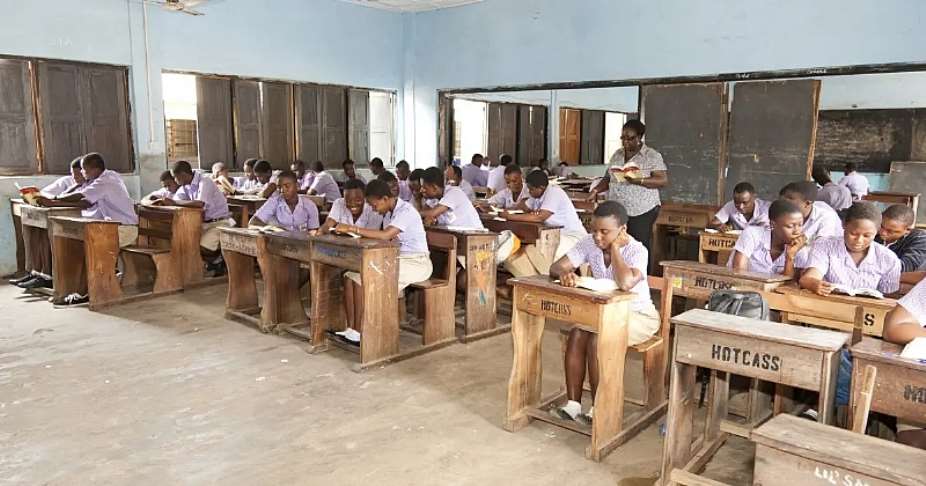
Civil Society Organisation (CSO), SEND Ghana, has welcomed the government’s renewed commitment to expanding and improving educational infrastructure in the 2026 National Budget.
The government in the budget presented to Parliament by Finance Minister Dr. Cassiel Ato Forson last week plans to construct 200 primary schools, 200 junior high schools, 400 teacher bungalows, and 400 places of convenience to improve education in the country.
In a release from SEND Ghana, the advocacy group described the government’s planned investments as a critical step toward strengthening learning outcomes across the country.
However, the civil society organisation cautions that without effective implementation and timely release of funds, the plans of the government may not see the light of day.
In its release, SEND Ghana assured its commitment to collaborating with government, Parliament, civil society, and citizen groups to ensure that the commitments outlined in the 2026 National Budget translate into tangible progress in welfare, equity, and inclusive national development.
Below is a copy of the release by SEND Ghana.
FOR IMMEDIATE RELEASE
2026 Budget: Increased Social Spending Welcome, Implementation Gaps Remain
Accra -SEND GHANA commends the Government of Ghana for significantly increasing investment in the social sector in the 2026 National Budget, reflecting a strong commitment to improving the lives of ordinary Ghanaians who depend on these essential services. This year’s budget totals GH¢302.4 billion (18.9 percent of GDP), representing a 20.1 percent increase over the 2025 projection. It allocates GH¢67.8 billion, 22 percent of total expenditure, to the social sector, compared to the 2025 allocation of GH¢53.7 billion. The government’s planned investments in education infrastructure, expanded healthcare access, strengthened agricultural services, and targeted support for sexual and reproductive health demonstrate a renewed effort to enhance development and reduce inequalities across the country.
Importantly, several key priorities that SEND GHANA consistently advocated for during pre-budget policy dialogues and stakeholder consultations have been reflected in the 2026 budget. These include incentive structures to retain teachers in rural areas, completion of critical health infrastructure under Agenda 111, and support for value-addition in agriculture through decentralized processing plants. The inclusion of these measures signals a welcomed responsiveness to civil society inputs that aim to strengthen equity, service delivery, and rural development.
In education, government intends to expand access and improve learning conditions through the construction of new schools, teacher bungalows, and improved sanitation facilities. Notably, the decision to engage stakeholders on the introduction of a 20 percent allowance for teachers who agree to serve in rural schools aligns with SEND GHANA’s long-standing calls for incentives to ensure adequate staffing in hard-to-reach communities. This policy has the potential to reduce teacher absenteeism, improve learning continuity, and ensure equitable distribution of qualified teachers across districts.
In health, plans to complete hundreds of CHPS compounds and hospital projects — including a renewed commitment to finalizing the agenda 111 facilities through a phased medium-term approach reflect a sustained effort to bring quality healthcare closer to underserved populations. This aligns with SEND GHANA’s recommendations for prioritizing the completion of existing health projects to avoid service gaps and maximize the value of public investments.
The agriculture sector is also set for further growth, with the Ministry initiating processes to deploy mini-processing plants in production enclaves. This measure, which SEND GHANA highlighted during policy engagements as essential for boosting value addition and farmer incomes, will create ready markets for raw produce and strengthen linkages between smallholder farmers and industry.
Furthermore, the government’s investment in sexual and reproductive health including free sanitary pads for schoolgirls and the allocation of GH¢1 million to the Domestic Violence Fund reflects efforts to address long-standing barriers affecting women, girls, and vulnerable groups. Social protection interventions have also seen unprecedented funding, with GH¢1.057 billion for LEAP and GH¢1.98 billion for the School Feeding Programme, the highest allocation in recent years.
While these investments mark significant progress, sustained improvements in the lives of citizens will require more than increased allocations alone. Persistent gaps in service delivery, inequitable access, infrastructure maintenance, targeted support for vulnerable groups, and inconsistent funding flows continue to limit the full impact of government programmes. Many communities still struggle to access reliable, well-resourced services, weakening programme outcomes and deepening inequalities.
The 2026 budget analysis is therefore a reminder that more must be done to ensure that social sector spending translates into real improvements in wellbeing, inclusion, and dignity for all Ghanaians. The analysis below explores these issues in select sector, identifying areas where government action is commendable and where further effort remains urgently required.
HEALTH
The health sector continues to receive substantial public investment as government expands and upgrades healthcare infrastructure nationwide. Over the past five years, allocations to health have grown steadily, reflecting a commitment to decentralising services and reducing disparities. In 2026, the government plans to complete over 522 CHPS compounds and 20 hospital projects, marking a major expansion in primary care capacity.
We acknowledge that while expanding physical infrastructure is crucial, it must be matched with service readiness. Expanding healthcare infrastructure is a critical step toward improving maternal health outcomes. However, the persistently high maternal mortality rate demands a more comprehensive approach. The government must ensure that investments go beyond physical facilities like CHPS compounds and hospitals to include essential complementary services. These should encompass the deployment of skilled health professionals, especially midwives, at the community level, improving access to emergency obstetric care in rural and underserved areas, ensuring reliable ambulance and referral systems, and consistent availability of essential medicines.
In addition, we commend the government’s continued investment in expanding and upgrading healthcare infrastructure, particularly CHPS compounds. However, the current model remains heavily skewed toward curative care. To effectively reduce the growing burden and cost of healthcare, especially from non-communicable diseases (NCDs), a strategy directed toward preventive health is essential. To this end, SEND GHANA recommends the following policy actions: First, wellness centres should be integrated into all new facilities. Each of the 542 targeted CHPS and hospital projects must include accessible and affordable wellness centres focusing on lifestyle modification, early screening, and health education, particularly for middle-income populations at risk due to sedentary lifestyles.
Second, the NCD financing policy should be expanded to explicitly include preventive services. As the government finalizes its NCD financing framework, the approved service lists should include preventive interventions that support early detection and the potential reversal of conditions through timely management of hypertension, diabetes, and cardiovascular diseases. Early detection increases the likelihood of reversing or significantly slowing the progression of these conditions, thereby reducing long-term treatment costs and ultimately improving health outcomes.
Finally, the government must safeguard equity in public-private partnerships (PPPs) for diagnostic and treatment centres. Any PPP model must ensure affordability and universal access and carefully avoid reintroducing out-of-pocket payments under the MahamaCare programme to protect equitable access to care.
SEXUAL AND REPRODUCTIVE HEALTH AND RIGHTS (SRHR)
The 2026 budget makes a notable commitment to menstrual health through the allocation of GH¢292.4 million for free sanitary pads for schoolgirls, which is expected to reduce absenteeism and period poverty. However, the current approach excludes out-of-school adolescents and apprentices, creating inequities in access. SEND GHANA calls for a more inclusive national menstrual health strategy that reaches all young people, regardless of schooling status.
The GH¢1 million allocation to the Domestic Violence Fund is a welcome improvement, especially given the fund’s fluctuating financing over the past five years. To ensure sustainability of survivor support services, predictable multi-year funding is needed to strengthen shelters, legal aid, psychosocial care, and reintegration services.
We also ask that a dedicated share of the National Health Insurance Scheme (NHIS) fund be allocated to guarantee consistent access to family planning commodities and comprehensive sexual and reproductive health and rights (SRHR) education. This will help reduce unintended pregnancies, improve maternal health outcomes, and support national development goals. Recent data from health facilities show shortages of family planning commodities in several parts of the country, while donor funding is steadily declining, further worsening the situation
EDUCATION
SEND GHANA welcomes the government’s commitment to addressing long-standing infrastructure deficits in the education sector. The planned construction of 200 primary schools, 200 junior high schools, 400 teacher bungalows, and 400 places of convenience has the potential to significantly improve educational delivery. To maximize the impact of these investments, the government must ensure that all new facilities are equipped with safe water systems, gender-appropriate sanitation, and changing rooms that support menstrual hygiene management and uphold the dignity of adolescent girls.
Many special and inclusive schools also remain under-resourced and face major infrastructural challenges, requiring additional investment in modern teaching materials, assistive devices, and assessment services. Although GH¢50 million has been allocated to these schools, they remain few and are largely concentrated in the southern part of the country. The government must therefore establish special senior high schools in regions where they are absent to guarantee equitable access for learners with special needs.
In addition, the government must prioritize the recruitment of teachers, particularly at the basic level, to address existing gaps and adequately staff newly constructed schools. Ensuring sufficient and well-distributed teacher deployment is essential for improving learning outcomes and maximizing the benefits of ongoing infrastructure investments.
AGRICULTURE
The 2026 budget reaffirms the government’s commitment to agricultural modernisation through the rollout of over 4,000 pieces of machinery across 50 agricultural districts under the Farmer Service Centre initiative. While this presents major opportunities for productivity growth, transparent and equitable beneficiary selection processes are essential to ensure that smallholder farmers benefit. Clear guidelines, community involvement, and accountability mechanisms must be established to prevent elite capture of the machinery.
The adoption of the National Policy on Integrated Oil Palm Development is a welcome step toward value-chain development. The success of the initiative hinges on the creation of a costed implementation plan, defined institutional responsibilities, and strong oversight of the usage of agrochemicals, especially given the growing concerns about substandard inputs affecting soil health and public safety.
While we commend the government’s allocations to Free SHS, free sanitary pads, the Domestic Violence Fund, and health infrastructure implementation, we urge the government to strengthen budget credibility by ensuring the full, timely release of funds and their effective utilization. This is essential to maximize the impact of these investments and ensure that resources reach the intended programmes and beneficiaries.
SEND remains committed to collaborating with government, Parliament, civil society, and citizen groups to ensure that the commitments outlined in the 2026 National Budget translate into tangible progress in welfare, equity, and inclusive national development.


 No proxy voting, strict 7am to 5pm schedule – NDC outlines measures for Northern...
 Efya marries Nigerian singer Tomi Thomas in traditional ceremony
 Motorists are becoming more responsible after TraffiTech deployment – NRSA
 Mahama to open Ghana Armed Forces critical care and emergency hospital
 Viral shoplifting suspect busted at Akode near Somanya
 Finance Minister to present 2027 budget on November 12
 Mahama announces emergency bed expansion at four major hospitals to tackle 'No-B...
 President Mahama has kept faith with Volta Region in infrastructure development ...
 'We will buy 100 new ambulances, procure parts to bring another 100 ambulances b...
 What Trump’s midterms debacle could mean for US support for Ukraine


