




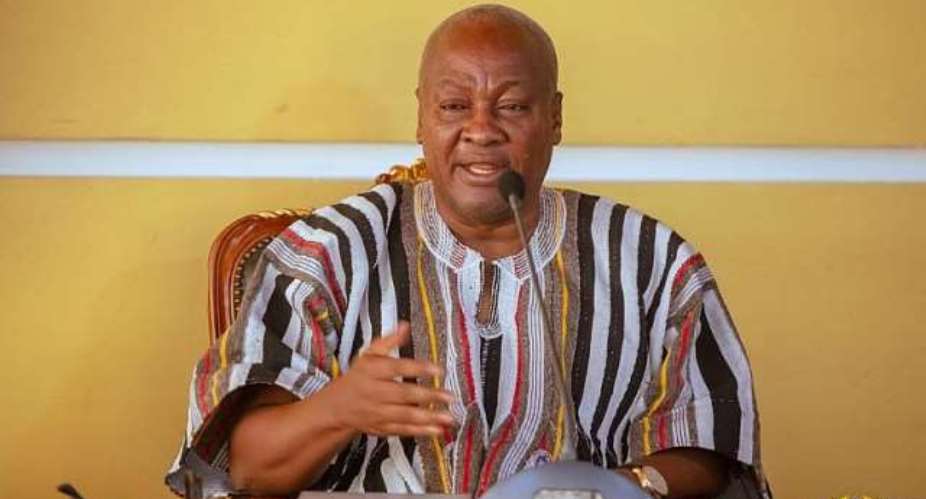
At a recent international conference in Paris, President John Dramani Mahama positioned Ghana at the forefront of a global effort to tackle misinformation and disinformation and stressed the role of independent journalism in that fight. His remarks carry particular weight for Ghanaian media and civil society where the spread of false or misleading information has become a significant challenge. This article summarizes his address, analyses its implications for journalism in Ghana, and outlines key expectations moving forward for the media sector.
The Paris Summit & Mahatma’s Key Messages
Ghana became the first African country to contribute financially to the International Fund for Public Interest Media (IFPIM) during the high-level conference on October 29 2025 in Paris. President Mahama described independent journalism and credible information as “indispensable public goods”.
He highlighted the endorsement of the “Paris Declaration on Multilateral Action for Information Integrity and Independent Media”, which reaffirms global commitments to protecting free, pluralistic and trustworthy information systems.
On the topic of Ghana specifically, Mahama has previously stressed that journalism grounded in truth, fairness and ethics is essential for the country’s democratic development. He has also recognized that the rise of AI-driven disinformation poses new risks to African democracies and media environments.
Why This Matters for Ghanaian Journalism
Challenge: Sophisticated Disinformation & Misinformation
A report by the Ghana Fact Checking Coalition found that 21.1 % of election-related disinformation during Ghana’s 2024 polls was targeted at Mahama. More broadly, studies show that political actors, media houses with partisan alignments and social-media networks have been complicit in spreading misleading narratives:
“The findings indicate that mis/disinformation … is mostly peddled by political actors, media and influencers with the aim of influencing public discourse for propaganda purposes.”
The advent of AI-generated audio, synthetic media and deepfakes further complicates the verification task for journalists and fact-checkers.
Opportunity: Strengthening Media Ethics, Capacity and Independence
Mahatma’s call at Paris signals a commitment to not only countering false information but also investing in media systems that can support journalism as a public good. For Ghanaian journalists and media houses, this means:
- Deepening fact-checking and verification practices.
- Upholding ethical standards, transparency and independence from political pressures.
- Engaging proactively with digital literacy and AI-related risks.
Moreover, Mahatma’s earlier remarks that Ghana’s democracy depends on a “strong, responsible media” provide a normative anchor for reform.
Expectations for Ghanaian Journalists What Should We Be Looking For?
In the wake of Mahatma’s Paris engagement, here are five key expectations for Ghana’s journalism community and media ecosystem:
- Increased access to training and resources on verification and disinformation
Media organizations and press associations should leverage Ghana’s participation in international initiatives (like IFPIM) to secure training, tools and collaborations focused on identifying and debunking false content.
- Clearer institutional safeguards for press freedom and safety Mahama have earlier urged security agencies to engage with the media to prevent harassment of journalists. Journalists should expect strengthened protocols to ensure they can report freely especially in digital spheres vulnerable to threats of disinformation.
- Stronger media-accountability mechanisms. The Paris initiative emphasizes transparency and accountability. Ghana’s media houses should adopt or reinforce codes of conduct, corrections policies, and disclosure of ownership and editorial influences.
- Collaborations between media, civil society & tech platforms Combating disinformation is not solely a media challenge but a systemic one. Partnerships with fact-checkers, digital platforms, and civil society will be pivotal in Ghana’s context.
- Enhanced public engagement and digital-literacy efforts
Journalists must not only report but also help build audiences’ resilience to false information: explain how disinformation works, promote healthy social-media habits, and contextualize political narratives.
Potential Pitfalls & Areas for Vigilance
While the prospects are promising, several risks remain:
If media reform becomes overly regulated under the guise of “information integrity”, there’s a danger of press freedom being constrained rather than protected. Media houses with partisan ties or weak editorial independence must actively reform or risk losing credibility when the public demands higher standards post-Paris. Journalists must guard against becoming simply “repeaters” of official narratives under the banner of fighting disinformation; critical and independent reporting remains essential. Digital threats (bots, deepfakes, AI-audio) evolve rapidly media must stay agile, but resources may lag behind the speed of these threats.
Conclusion
President Mahama’s address in Paris signals a significant moment for Ghana’s media ecosystem. His articulation of misinformation/disinformation as a national and international challenge, combined with Ghana’s entry into global media-integrity mechanisms, creates momentum for meaningful change. For Ghanaian journalists and media houses, this means the expectation is rising: not only to expose falsehoods but to embody and sustain a robust, ethical and independent media environment. The summit sets the stage now the hard work begins: implementation, capacity-building, accountability and public trust restoration.
Mustapha Bature Sallama
Medical/Science communicator ,Private Investigator, Criminal Investigation and Criminal Analysis
International Conflict management and Peace Building. Alumni Gandhi-King Global Academy United State Institute of Peace Building USIP


 October 29: Cedi sells at GHS12.25 on forex market, GHS11.63 on BoG interbank
 Ghana’s mineral wealth must not come at environmental cost – Zanetor
 NPP's SC suit to counter pending suits backing Mahama’s third-term eligibility –...
 No constitutional dispute has arisen to warrant NPP’s suit on presidential term ...
 'NPP has become group of flip-floppers' – Edem Agbana on South Africa evacuation...
 Kufuor explains why his government opted for HIPC despite concerns over Ghana’s ...
 Policewoman who attempted 120-hour painting marathon dies after short illness
 I entered politics in my 20s but became president at 62 – Kufuor
 Accra-Tema Motorway project reaches 53% completion despite delays
 Prisons Service to publish findings on alleged plot to poison Chairman Wontumi


