




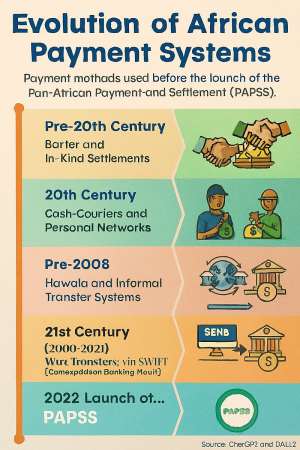
Before the advent of the Pan-African Payment and Settlement System (PAPSS), the landscape of cross-border money transfers across Africa was marked by fragmentation, high costs, and systemic inefficiencies. As a researcher observing the evolution of financial integration on the continent, I’ve often reflected on the patchwork of mechanisms that once defined intra-African transactions.
Legacy Systems and Colonial Echoes
For decades, formal cross-border payments relied heavily on wire transfers routed through the SWIFT network. Correspondent banks typically mediated these transactions—most of which were based outside Africa, in Europe or North America. This dependency not only introduced delays and elevated costs but also reinforced a structural reliance on foreign financial infrastructure. Currency conversions and intermediary fees often consume over 10% of the transaction value, a staggering loss for small businesses and traders.
African banks, lacking direct relationships with one another, were forced to maintain costly arrangements with offshore institutions. The result was a labyrinthine process where funds moved through multiple jurisdictions before reaching their destination—an ironic inefficiency in a continent striving for economic unity.
Informal Economies and Adaptive Ingenuity
In regions underserved by formal banking systems, informal networks flourished. Hawala systems—trust-based and decentralised—enabled money transfers without the physical movement of funds. These systems, while resilient, operated outside regulatory frameworks and offered limited recourse in cases of fraud or dispute.
Cash couriers and personal networks also played a vital role. Traders and families often relied on trusted individuals to carry physical currency across borders, especially in frontier towns and informal trade corridors. In more rural or barter-based economies, goods themselves became the medium of exchange, settling debts and facilitating trade without the need for a banknote.
Structural Barriers to Integration
The challenges of this pre-PAPSS era were not merely technical—they were systemic. Currency inconvertibility meant that local currencies held little value beyond national borders, forcing reliance on hard currencies like the U.S. dollar or euro. Regional payment systems such as the East African Payment System (EAPS) and COMESA’s REPSS existed, but their impact was limited by siloed liquidity and a lack of interoperability.
The absence of a unified framework stifled the promise of the African Continental Free Trade Area (AfCFTA), leaving businesses to navigate a maze of fees, delays, and regulatory mismatches.
PAPSS: A Turning Point
The launch of PAPSS marked a paradigm shift. By enabling direct, real-time payments across African borders using local currencies, PAPSS dismantled many of the barriers that had long hindered intra-African trade. It eliminated the need for offshore routing, reduced transaction costs, and laid the foundation for financial sovereignty.
As I continue to study the ripple effects of PAPSS, I’m struck by its potential not just as a technical solution, but as a symbol of continental ambition. It represents Africa’s move from dependency to autonomy—from fragmentation to integration.
Sources: With additional information from Klasha | Intergest | APS


 SkyTrain trial: High Court adjourns case management conference to October 19
 Edudzi Tameklo recalls how Duffuor was slapped with GH¢100 million bail in 2020,...
 About 800 Director I and II applicants unreachable due to invalid contact number...
 'Boakye Agyarko was seen as anti-Bawumia' – Lecturer on John Boadu’s victory
 'NPP delegates made wrong choice electing John Boadu as chairman' — Political Sc...
 MTN Ghana secures new 5G spectrum in 700 MHz and 3 GHz bands
 Bawumia explains NPP hunt for winnable parliamentary candidates, not deep-pocket...
 Ghana to tap Egypt’s expertise for new capital city, housing projects – Mahama
 Ghana, Egypt deepen cooperation in health, defence and housing
 NDC Women’s Organiser Abigail Mensah condemns alleged pepper spray plot by Hawa ...


