




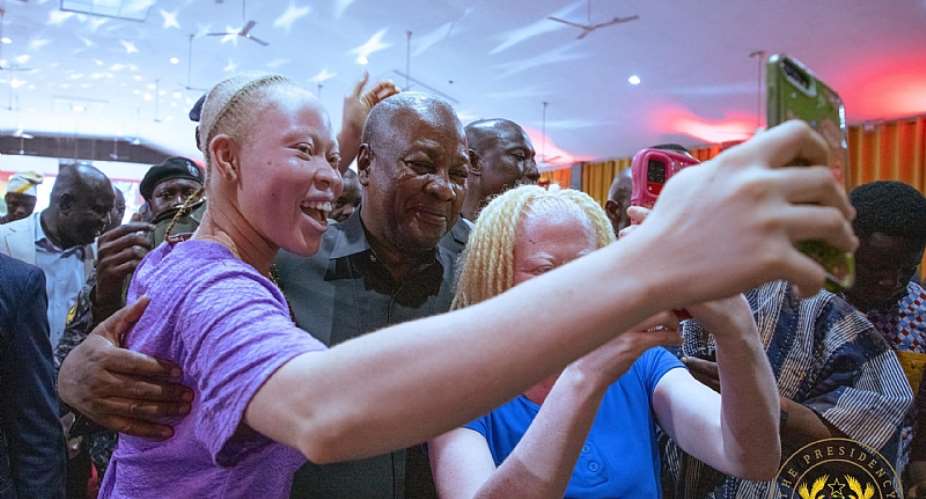
President John Dramani Mahama’s decision to make tertiary education free for persons with disabilities is a historic and courageous step toward equality in Ghana. It is a bold declaration that every Ghanaian, regardless of physical or mental ability, deserves a fair chance to learn, grow, and contribute meaningfully to national development.
For far too long, people with disabilities in Ghana have faced systemic barriers to education from inaccessible buildings and discriminatory attitudes to the crushing weight of poverty.
Many brilliant young people have been forced to abandon their dreams because their families could not afford school fees or because society simply did not believe in their potential. President Mahama’s policy recognizes their worth and restores hope to thousands who have long been excluded from the nation’s educational opportunities.
However, while this initiative is commendable, education alone cannot solve the daily struggles of people with disabilities. Across Ghana, many persons with disabilities can still be seen begging by the roadside , not because they lack ability or ambition, but because social and economic systems have failed to support them. Others remain hidden at home, isolated and dependent, due to stigma or the absence of accessible employment opportunities.
If Ghana is to truly become an inclusive society, this policy must be the beginning, not the end, of our commitment. The President can go further by introducing comprehensive social welfare and empowerment programs , including accessible public transport, skills training centers, and disability-friendly workplaces. Such initiatives would ensure that the promise of free tertiary education translates into real economic independence and dignity.
Countries like the United Kingdom provide clear examples of what is possible. In the UK, persons with disabilities receive educational support from early childhood through higher education, including assistive technology, personal tutors, and adapted learning environments. Beyond education, they benefit from Disability Living Allowance, Personal Independence Payments, and Employment Support Allowance, which enable them to live decently and participate actively in society. Local councils also provide accessible housing and transport services, helping to remove the barriers that often trap people with disabilities in poverty.
Ghana can learn from these models by creating a robust national disability support system — one that moves beyond charity toward empowerment and inclusion.
President Mahama’s bold decision has set a powerful precedent. It shows that leadership, when guided by compassion and justice, can change lives. The next step must be to ensure that no person
with a disability is left on the streets or confined to a home because society failed to make room for them.
Education is freedom but true freedom comes when opportunity meets accessibility, and compassion meets policy.
By Kofi Marfo(Sir Richie),
Broadcast Journalist - London.
editor"sirrichie.com

 GJA Applauds Ghana’s Sharp Rise in Global Press Freedom Rankings
 US Embassy Cautions Against Censorship in Fight Against Misinformation
 Interior Minister Blames Weak Enforcement by Assemblies After Avenor Building Co...
 Gov’t Warns Against Rising Misinformation, Calls for Stronger Journalistic Stand...
 Ramaphosa Warns Against Vigilante Crackdowns on Foreign Nationals
 Global InfoAnalytics Boss Rejects Claims Polls Are Destabilising NDC
 Bawumia to Propose Policy Alternative as Cocoa Sector Tensions Deepen
 ECG Announces Scheduled Outages and Technical Fault Affecting Multiple Regions o...
 Investigation committee uncover GH¢19.5m loss at Bolgatanga Technical University...
 Afenyo-Markin calls for protection of journalists, warns against suppression of ...


