




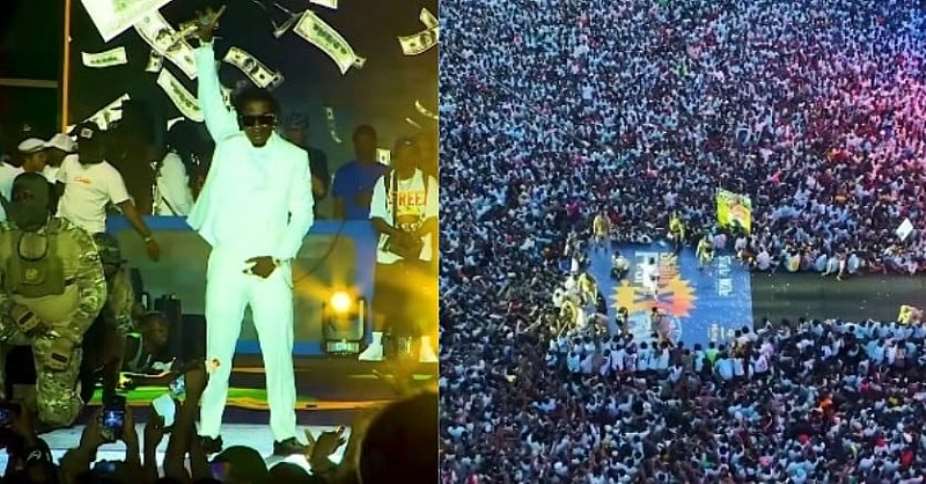
When Shatta Wale took to the stage at Accra’s Black Star Square on October 18, 2025, for ShattaFest x Shattabration: The King Calls, media headlines focused on the massive crowd and electrifying performance. Yet beyond the spectacle lies a deeper story, one that quantifies the economic value of Ghana’s creative industry when music and commerce intersect.
A Concert That Moves the Economy
Over 70,000 attendees packed the venue, with many traveling from across Ghana and neighboring countries. Though entry was free, the concert generated substantial indirect economic activity. Transportation, street vendors, hotels, and food services all benefited from the influx of visitors, transforming central Accra into a bustling creative marketplace.
Estimating the Economic Footprint
| Category | Estimated Units | Avg. Spend (GHS) | Total Value (GHS) | USD Equivalent* |
|---|---|---|---|---|
| Transportation (Uber, taxis, buses) | 40,000 trips | 80 | 3,200,000 | ≈ $266,000 |
| Food & beverage vendors | 800 vendors | 3,500 sales avg. | 2,800,000 | ≈ $233,000 |
| Hotels & short-term stays | 1,000 rooms | 1,200 | 1,200,000 | ≈ $100,000 |
| Merchandise & informal trade | 500 traders | 2,000 | 1,000,000 | ≈ $83,000 |
| Media, logistics, sound & security contracts | 2,500,000 | ≈ $208,000 |
Estimated direct and indirect value: GHS 10.7 million (≈ USD 891,000) within a 24-hour period.Excludes multiplier effects from post-event spending and media exposure.
The Fan Economy: Beyond Ticket Sales
Shatta Wale’s free-entry model illustrates how artists can monetize brand loyalty rather than rely solely on tickets. The concert generated:
Over 20 million social media impressions within 48 hours.
Sponsorship exposure, benefiting beverage, fashion, and digital brands.
Cultural tourism, boosting short-term travel, hotels, and nightlife.
This underscores that Ghana’s music industry is more than entertainment, it is a driver of microeconomic growth and entrepreneurship.
Policy and Investment Implications
ShattaFest 2025 highlights opportunities for policymakers and investors:
Invest in creative infrastructure: Upgraded venues, logistics, and safety measures can scale events nationally.
Leverage city branding: Annual music festivals can strengthen tourism and generate measurable economic returns.
Support financial access for creatives: Short-term financing can empower vendors and promoters to maximize event-related opportunities.
By framing cultural events as economic assets, Ghana can unlock value chains that merge creativity, entrepreneurship, and social inclusion.
Cultural Capital Meets Fiscal Value
ShattaFest 2025 demonstrates that performances, merchandise sales, and sponsorship deals all contribute to GDP, employment, and urban vibrancy. It is a real-world case study in the economics of Ghana’s creative industry, highlighting the potential of music to drive growth, attract investment, and position Ghana as a hub for African cultural innovation.
Estimated conversion rate: 1 USD = 12 GHS.
About the Author:
Divine Kabu Akplehey is a finance professional and creative economy analyst, focusing on the intersection of culture, entrepreneurship, and economic growth in Ghana and across Africa.


 NPA Deputy CEO Dr. Dramani Bukari passes on
 'I’m not a lazy lawyer; I'm not running away' – 'Vacation lawyer' Atta Akyea def...
 George Opare-Addo to petition Education Ministry over rising KNUST hostel fees
 DVLA ready to defend delinquency charges on expired licences in court – CEO
 High Court to continue Mustapha Hamid trial during legal vacation, adjourns to A...
 High Court adjourns Adu-Boahene case to August 11 over absence of defence lawyer...
 EC to review CI 127, introduce dedicated portal for transmitting election result...
 'Wontumi is a significant flight risk' — AG opposes bail application
 Adu-Boahene trial will continue during legal vacation — Court maintains
 Mahama reorganises National Security Secretariat with six appointments

