




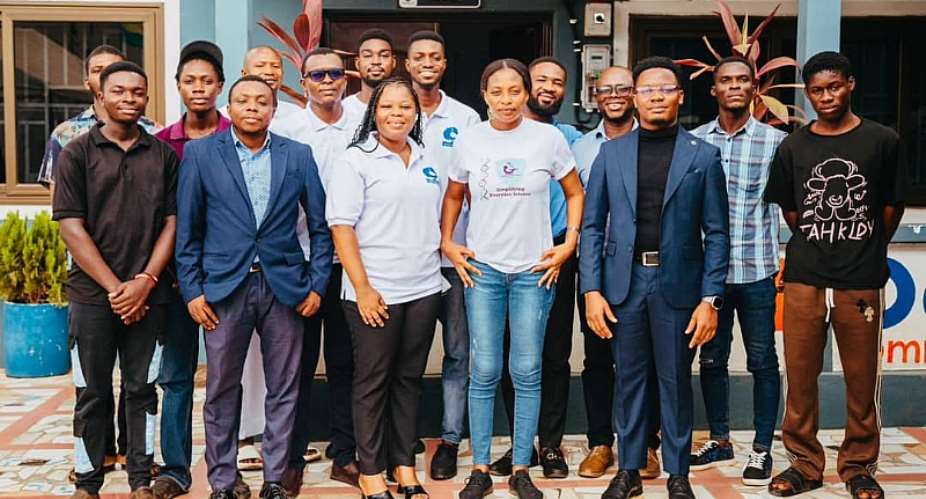
In November 2024, journalists, fact checkers, technologists and media practitioners converged in Accra, Ghana for the Africa Facts Summit 2024, held at Ablekuma, Accra, Ghana. The gathering brought together participants from across Africa, united under the theme of “Countering Misinformation and Disinformation in Africa: Challenges, Innovations and Strategic Responses.”
Although the summit’s primary lens was fact‐checking and misinformation, its implications for science journalism are profound. In an era where science stories are increasingly shaped or distorted by AI, generative tools and viral misinformation, science journalists in Africa are facing both exceptional opportunities and serious hazards.
The Changing Landscape for Science Journalism
Science journalism in Africa has traditionally grappled with under resourcing, language and contextual challenges, limited access to data, and infrastructural constraints. Now, with the rapid advance of artificial intelligence (AI), these challenges are magnified but so are the possibilities.
Opportunities
- Efficiency & scale: AI tools can help sift vast data sets, identify patterns and speed up investigations (for instance, climate data, health statistics, environmental monitoring). A recent study in Ghana noted that some newsrooms are slowly adopting AI to improve efficiency even if unevenly.
- New story formats: Interactive visualizations, AI‐assisted multimedia and automated translation/localization can help science journalism reach wider audiences across Africa’s linguistic diversity.
- Fact checking science claims: With the rise of pseudo‑science, health misinformation, climate denial and so forth, science journalists increasingly act as watchdogs not just narrators. The Accra summit’s emphasis on fact‐checking is very relevant here.
Risks
- Misinformation amplified by AI: AI enables the creation of deepfakes, falsified scientific claims, manipulated visuals, auto generated content that looks credible. A survey found journalists worried about AI producing inaccurate narratives and the lack of local context in AI tools.
- Digital divide & unequal access: Many African newsrooms lack the infrastructure, training or resources to effectively integrate AI tools. The Ghana study noted barriers such as cost, inadequate data and poor internet connectivity.
- Erosion of trust: When science stories are misused, sensationalized or incorrectly generated by AI, public trust in both science and journalism suffers. This is especially important in contexts like pandemics, climate change or policy debates.
- Ethical challenges: Issues around copyright, attribution, bias, privacy and the ‘human touch’ in science storytelling remain front and centre. Journalists stressed the need to verify AI outputs and not rely blindly on them.
Key Take‑Aways from the Accra Summit for Science Journalists
Here are several insights emerging from the 2024 summit that science journalists in Africa should consider:
Collaboration is essential
The summit emphasized networked responses: fact checking organizations, media houses, technology platforms, academic institutions and civil society must work together. For science journalism, this means working with scientists, data analysts, fact checkers and technologists.
Develop information resilience
The “Accra Declaration on Information Integrity and Resilience” (issued at the summit) calls for robust digital infrastructure, offline outreach, partnerships with platforms, and AI-driven tools to build resilience.
Science journalists must build resilience: anticipate misleading science claims, understand AI-driven misinformation vectors, and prepare strategies (such as data literacy campaigns, science narrative checking, community outreach).
Focus on localization and context
AI tools developed in Western contexts might lack relevance in African settings. One Ghana/South Africa study noted: “If it’s not an international story, and it’s a local story, AI will not be able to give you the facts you want in your local contexts.”
Science journalists should ensure that data, narratives and tools reflect local realities (languages, cultural frames, and context).
Maintain journalistic and scientific ethics
The summit discussed how journalists and fact‐checkers must maintain accuracy, transparency, attribution and clarity when using AI tools. For science journalism:
Be clear when AI‐assisted tools are used
Validate scientific claims with original sources and local experts
Beware of sensationalisation or over‑reliance on automated tools Address access disparities (some audiences may distrust AI‐generated content)
Audience engagement and literacy
The summit underscored the need to promote media and information literacy. For science journalism, this means engaging audiences not just with stories, but also explaining the process of science, the role of data, the risks of misinformation, and how AI might distort science narratives. (See Ghana’s demand for journalists to be equipped to use AI responsibly)
Why This Matters for Africa’s Future
Science journalism is not a niche: it matters deeply for public health, climate resilience, agriculture, technology uptake and democratic decision making. In Africa’s context, where infrastructure, education and governance face major constraints, trustworthy and effective science journalism has a multiplier effect.
During health crises, misleading science claims can cost lives.
In climate adaptation, misrepresenting scientific data can lead to poor policy and wasted resources.
In technology debates (including AI itself), the public needs clear, accurate explanation of risks and opportunities. As African countries engage with AI (for example, in education, health, and agriculture), journalists’ help shape public understanding and policy.
The Accra summit signaled that Africa is waking up to the challenge: fact checking, AI tools, media literacy, and collaboration are part of the toolkit. But for science journalism specifically, a proactive, context aware, ethically grounded and tech‑savvy approach is required.
Recommendations for Science Journalists in Africa
- Invest in training: Seek out workshops on AI, data journalism, fact checking, multimedia storytelling.
- Build partnerships: Work with universities, research institutions, fact check hubs (e.g., those attending the Accra summit) to access data and expertise.
- Transparency in tools: When using AI (for transcription, translation, data analysis), disclose its use, check outputs, verify manually.
- Focus on audience literacy: Embed explanations of methodology, uncertainties, and the process of science in reporting don’t just report results.
- Monitor misinformation vectors: Understand how deep fakes, AI-generated claims, viral science myths spread in your region; counter them proactively
- Localization: Translate science stories into local languages, account for cultural frames and local relevance.
- Lead in building trust: Given widespread distrust in media or new tech, build community engagements, Q&A, audience feedback loops to strengthen credibility.
Conclusion
The 2024 summit in Accra underscored a crucial reality: in the era of AI and rampant misinformation, the role of journalists especially science journalists has never been more vital. For Africa, where the stakes of misreported science are high on health, economy, environment and society the imperative is clear: adapt, collaborate, remain ethical, and build resilience.
The tools and technologies are evolving, but the core mission remains the same: to inform, to explain, to question and to serve the public good. As Africa enters deeper into the fourth industrial revolution, science journalism must not be left behind. It must lead.
By Mustapha Bature Sallama
Medical / science communicator
International Conflicts management and Peace building
Alumni Gandhi- King Global Academy, United State Institute of Peace USIP
[email protected]
+233-555-275-880


 24-year-old Ghanaian found dead in New York, days after teenager’s murder
 Melania Trump to host Ukrainian, Russian officials at White House
 Bread shortage threatens to plunge more Sudanese into hunger
 South Korea to deploy military mission to keep Strait of Hormuz open
 How Chinese AI is censoring the controversy around Mbappé’s Chairman Mao comment...
 'Ghana should also organise midterm elections to boot out lazy MPs' – Solomon Ow...
 ‘We tasted death’ – Lil Win recounts terrifying PassionAir flight incident with ...
 Ghana demand justice over second citizen killed in New York within a week
 TraffiTech-GH: 'If the fines are too expensive, then do not speed' – Mahama
 GFA President urges Parliament to reverse ban on alcohol sponsorship of sports


