




“Our lives begin to end the day we become silent about the things that matter (most).” – Martin Luther King Jr.
When the World Bank approved Ghana’s participation in the West Africa Coastal Areas Resilience Investment Project Phase 2 (WACA ResIP 2) in 2022, many coastal communities along the Densu Estuary, Korle Lagoon, Keta, Anloga, and Ketu South had renewed hope. The project, with a funding allocation of over US$150 million, was expected to provide lasting coastal protection interventions, restore degraded ecosystems, build climate resilience and enhance livelihoods for vulnerable coastal communities as done under WACA ResIP 1.
After its ratification by the Parliament of Ghana in December 2023, a formal national grand launch in August 2024 and the inauguration of both Technical and Steering Committees, expectations were very high that the project would immediately move into implementation gear, especially since coastal erosion in the above-mentioned communities continues to displace families, destroy livelihoods, and wash away public infrastructure. Yet, more than a year after its grand launch, little to no tangible work has been done on the ground.
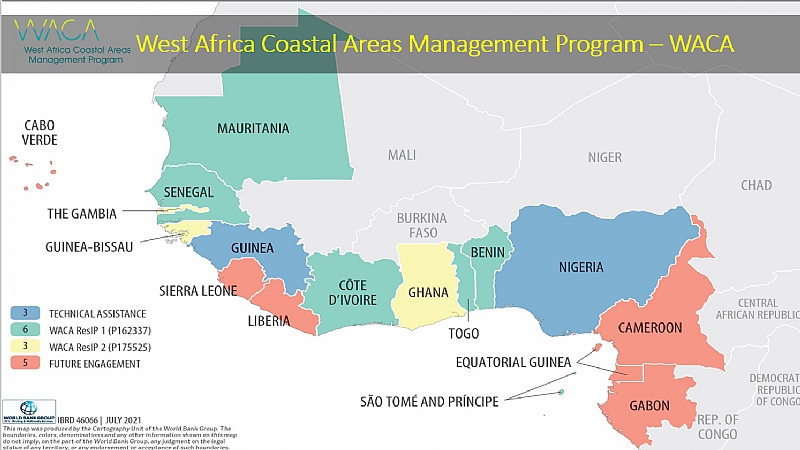
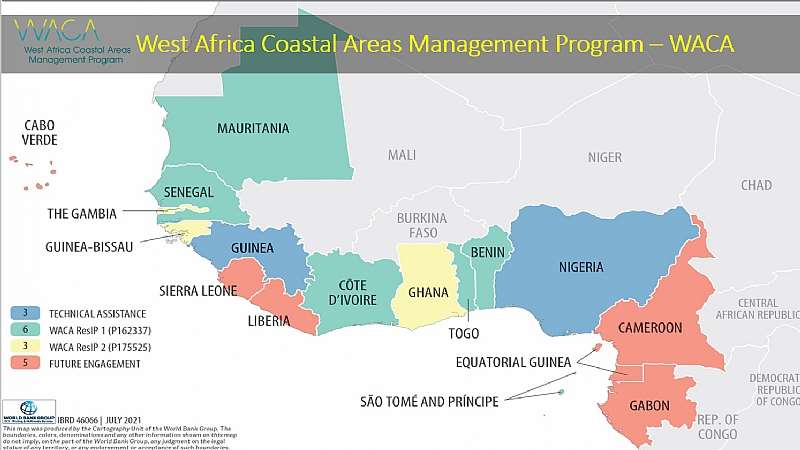
This slow pace stands in stark contrast to the remarkable and fast progress achieved under WACA ResIP 1, which was implemented across six countries, namely: Togo, Benin, Côte d’Ivoire, Mauritania, Senegal, and São Tomé and Príncipe. In those countries, visible coastal protection works and social interventions were executed swiftly, beautifully and successfully completed on schedule, and handed over to the respective governments. For instance, Togo and Benin, with funding of about € 63.4 million, have delivered impressive engineering structures, ecosystem restoration, and community livelihood support initiatives in a common transboundary project.
However, Ghana’s case, unfortunately, tells a totally different story. With a far larger financial envelope of over US$ 150 million, the project remains largely in the preparatory phase since its official launch. The question on everyone’s mind now is: Why is Ghana’s WACA ResIP 2 delaying? What at all is causing the delay?
Possible Factors Behind the Delay.
While the Ministry of Environment, Science, Technology and Innovation (MESTI), Ministry of Works and Housing (MWH) and the Project Implementation Unit (PIU) at MESTI and other agencies involved in the project implementation have not publicly addressed the reasons for the delay, several possible factors may be contributing:
1. Institutional and Bureaucratic Bottlenecks:
The complex coordination among multiple ministries, agencies, and local governments may be slowing down decision-making and approvals. Ghana’s coastal management mandates often overlap between agencies, leading to administrative delays and bottlenecks.
2. Procurement and Project Design Delays:
The World Bank’s procurement and environmental safeguards processes, though very essential for transparency and accountability, can be lengthy if not proactively managed. The development of detailed engineering designs, environmental impact assessments, and contractor selection might still be underway.
3. Weak Communication and Transparency:
Unlike in Togo and Benin, where national coordinators provided regular public updates on radio and community engagements, Ghana’s WACA PIU has remained largely silent most of the time. The absence of timely communication fuels speculation and public frustration.
4. Limited Political Urgency:
Coastal erosion in Ghana continues to be treated as a seasonal or localized issue, rather than a national emergency. Without strong political will and prioritization, even well-funded projects can stagnate.
5. Change of Government.
The change in government from NPP to NDC may have also contributed to the seemingly delays and bottlenecks in the project implementation and smooth progress. This is characteristic of Ghana and project development and execution. A case in point is the earlier Keta Sea Defence Project which was started by NDC before power changed in January 2001 that led to a lot of changes to the project.
Lessons from Neighboring Countries.
The successful implementation of WACA ResIP 1 in other countries offers valuable lessons Ghana can immediately adopt:
- Dedicated national leadership and inter-agency coordination in Togo and Benin ensured swift decision-making.
- Community engagement and transparency built public trust and reduced resistance and frustration.
- Strong project monitoring and clear timelines kept contractors and institutions open and accountable.
If these countries could achieve visible results with smaller budgets, Ghana has no excuse for its inaction and unnecessary delays.
The Way Forward.
It is time for the Ministry of Environment, Science, Technology and Innovation (MESTI), the Ministry of Works and Housing (MWH), the Project Implementation Unit (PIU), and the National Project Coordinator (NPC) to come out boldly and tell Ghanaians:
- The current state of the project, including completed preparatory activities.
- The progress made so far, such as feasibility studies, design approvals, contractor selection and procurement status.
- The timelines going forward, when exactly field works will commence and which communities will be prioritized.
The coastal communities of Densu, Korle, Keta, Anloga, and Ketu South cannot wait indefinitely. Every delay means more homes and other infrastructure lost to the sea, more livelihoods destroyed, and more national resources washed away.
Ghana must act decisively, not just to fulfill its obligations under WACA ResIP 2, but to protect its people and shoreline. The time for bureaucratic silence is over. Ghanaians deserve answers, accountability, and action. Time is NOW.
Joel Degue, Environmental Activist and Climate Justice Advocate, [email protected] /+233 24 2501638


 ‘Too arrogant, too sure of itself’ France confronts its legacy in Africa
 Nigeria's unwritten power-sharing rule looms over presidential race
 Several killed, dozens wounded in Jordan church shooting
 ‘I killed lots of terrorists, but it didn’t make me feel better’: The trauma hau...
 Casualties feared as multi-storey building collapses in Nairobi
 Cabinet approves bill to regulate public relations practice – Shamima Muslim
 Bawumia was right; NDC's economy is only on paper, not in people's pockets – Kwa...
 NDC should credit Bawumia for introducing gold-for-reserves policy – Kwadwo Poku
 Obuasi SHTS sex scandal: Gender Ministry deploys team to support affected studen...
 Adwoa Safo's Dome-Kwabenya comeback bid must push Elikplim Akurugu to deliver mo...


