




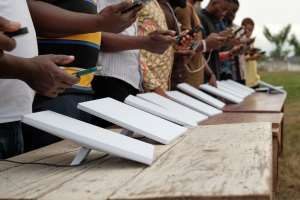
Thirty schools in the Volta Region have been connected to high-speed internet through a partnership between Our Future Prize and the Starlink for Good Initiative, marking a major step toward bridging Ghana’s digital divide.
The project, which serves as a pilot, aims to extend internet access to schools across the country to enhance digital learning and provide students with access to global educational resources.
Founder of Our Future Prize, Ginhee Rancourt, said the initiative seeks to close the digital gap for underserved children by connecting schools and communities that lack reliable internet. Through the partnership with Starlink, satellite-based connectivity is being provided to remote Ghanaian schools for the first time.
Rancourt explained that the first 30 schools connected in the Volta Region represent only the beginning, with additional installations planned for New Tafo, Cape Coast, and Elmina. She added that the project will eventually expand to hospitals and community centres, broadening its social and educational impact.
“Each school receives internet equipment and a one-year subscription,” Rancourt said, adding that sustainability plans are in place to ensure the schools remain connected beyond the pilot phase. “We want Ghanaian children to benefit from online learning while nurturing their talent at home to help build the nation.”
Starlink, a division of SpaceX, provides satellite internet to areas without access to traditional broadband. With its technology, Ghanaian students can now participate in online learning, research, and global education programs, positioning them for opportunities in the digital workforce.
As part of the initiative, the Learning Upgrade platform—an international educational program offering structured courses in English, mathematics, and job skills—has been introduced in beneficiary schools. The platform, which has supported over 3.5 million learners globally in the past 26 years, is being made freely available to Ghanaian students under the project.
Haneen Khalaf, Director of Global Business Development at Learning Upgrade, said the goal is to give students in rural and underserved areas access to life-changing digital learning tools. “These schools are often beginning their first e-learning programs,” she noted. “Learning Upgrade provides a structured way for students to engage with digital content, build confidence, and explore new opportunities.”
According to Khalaf, discussions with the Ghana Ministry of Education revealed that most schools lacked internet connectivity, making e-learning nearly impossible. Combining Starlink’s high-speed internet with Learning Upgrade’s digital curriculum now offers a complete solution—both connectivity and educational content.
So far, about 2,000 students from six schools have been enrolled on the Learning Upgrade platform, with 700 actively participating. Within six months, students completed around 120 courses, which Khalaf described as “a clear sign of how access and structured digital learning can transform education.”
She added that Learning Upgrade’s work with refugees and disadvantaged communities has shown that digital access can lead to online jobs and new livelihood opportunities. “With Starlink’s connectivity, Ghanaian students can begin exploring digital work options while living in their communities,” she said.
Rancourt emphasised that the project is not just about providing internet but about “creating pathways for Ghanaian youth to lead in the future.” She said rural children now have access to the same quality of educational resources as their peers in developed countries.
The next phase of the project will connect 22 more schools in New Tafo and Cape Coast, with plans to reach 52 schools nationwide in the short term. Our Future Prize continues to work with the Ministry of Education to develop sustainable models for maintaining internet access after the initial year of support.
To ensure sustainability, Robert Tornu, Policy Director at Friends of Adaklu, said the organisation has engaged several stakeholders—including the Ghana Education Trust Fund (GETFund), District Assemblies Common Fund, Parent-Teacher Associations (PTAs), School Management Committees (SMCs), local fundraising initiatives, and community leaders—to support ongoing connectivity costs.
Both Rancourt and Khalaf believe Ghana can become a continental model for integrating technology into education. “Connectivity is not the end goal—it’s the foundation for empowerment,” Rancourt said. “When students have access to knowledge and digital tools, they can change their future and the future of their country.”
 Gihnee Rancourt, Founder of Our Future Prize and Haneen Khalaf, Director of Global Business Development at Learning Upgrade being welcomed by some pupils at the Impact Hub Academy, of the beneficiaries of the free Starlink Internet Installation programme in the Volta Region.
Photo Credit: Mac House - USA
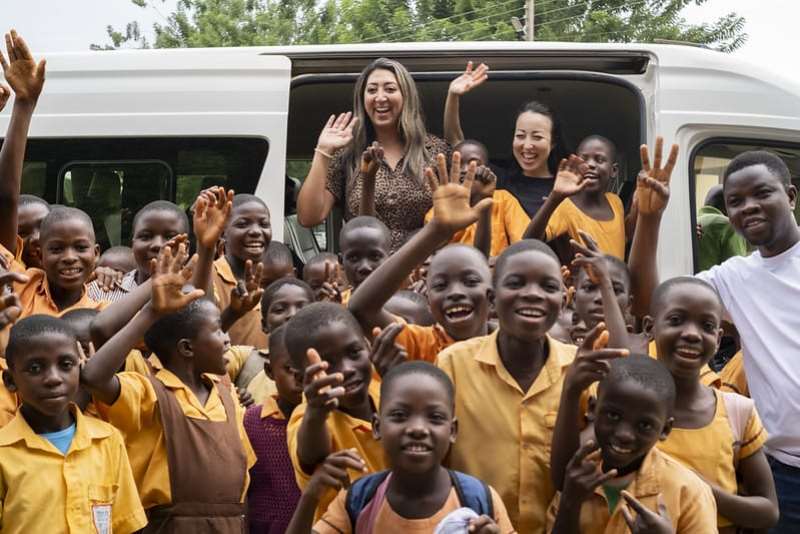 Photo Credit: Mac House - USA

 27-year-old nursing mother shot dead along Tilli–Widnaba road
 Ghana to reopen diplomatic mission in Ireland
 Ghana facilitates return of 180 nationals from Libya
 Parliament to review dollar payment for locally produced crude
 Ghana to build 1,200MW gas-fired power plant, surpassing Akosombo capacity befor...
 “Those responsible should be imprisoned for life with no food” — Friend of murde...
 “I have crocodile skin; insults don’t bother me” — President Mahama
 Police arrest 64 suspects, recover firearms in special operation at Achimota Mil...
 Madina MP receives medical attention after GIMPA collapse
 Ghana concludes cocoa freight negotiations for 2026/27 season


