




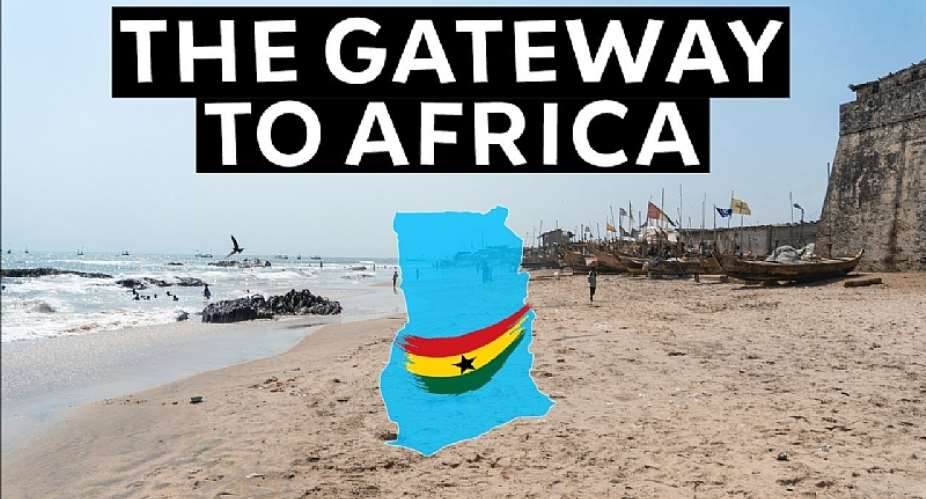
Accra, Ghana Recent changes in U.S. visa policies for Ghanaian citizens have stirred discussions about Ghana’s potential new role as a hub or gateway for other Africans seeking access to the United States. While the policy shifts pose challenges for many Ghanaians, they also reveal broader dynamics in mobility, diplomacy, and regional access.
What has changed
As of July 2025, the U.S. Department of State revised its visa reciprocity schedule for Ghana. Under the new rules, most non-immigrant visas (including B1/B2 business and tourism, and F‑1 student visas) issued to Ghanaian applicants will henceforth be single-entry visas with validity of only three months.
Before this change, many Ghanaians could obtain visas valid for multiple entries over one to five years.
The U.S. states the revision is part of its visa reciprocity framework, which tries to align how U.S. citizens are treated abroad with how foreign nationals are treated by the U.S. government. Concerns about visa overstays among Ghanaian nationals also appear to have played a major role.
Importantly, the new rule affects new visa applications only. Existing visas (multiple entry or otherwise) are not stripped of their previously granted validity.
Ghana’s Response & Diplomatic Tension
The Ghanaian government expressed strong concern, citing reciprocity imbalance. It notes that Ghana has long issued multiple-entry; long-term visas to U.S. citizens over 40,000 visas between January and mid‑2025, with about 70% being multiple-entry, many valid for up to five years.
Ghana has pledged to engage diplomatically, seeking “urgent dialogue” and a “fair resolution.” Foreign Affairs Minister Samuel Okudzeto Ablakwa has led delegations to the U.S. to address the issue.
“Gateway” Implications for Africa
The notion that Ghana could become a “gateway” for Africans to the U.S. emerges from several intersecting trends:
Regional Mobility: Ghana is a relatively stable, Anglophone country with established diplomatic links, education institutions, and Diaspora relations. This can make it a more practical base for Africans seeking U.S. visas, travel documents, or opportunities.
Flight & Transit Connections: Many flights from other parts of West or Central Africa connect through Accra. Changes in visa access in Ghana could thus have ripple effects for neighboring countries whose citizens travel through Ghana.
Policy Spillover: If U.S. visa changes begin affecting multiple African countries similarly, Ghana might set precedents in how to respond, negotiate, or adapt. This might involve consolidating resources, legal assistance, or travel networks.
Migration & Overstay Concerns: With the U.S. citing overstays as one reason for stricter visa conditions, Ghana’s overstay rates have drawn attention. A recent report suggested Ghana overtook Nigeria in U.S. visa overstay metrics for certain visa categories.
Challenges & Risks
For many Ghanaians, the stricter visa rules will mean frequent applications, higher costs, and less flexibility for travel, study, or family visits.
If Ghana becomes perceived as a hub for transit or visa applications for other African nationals, it may attract heavier scrutiny, stricter consular reviews, or additional security measures.
There are diplomatic risks: if U.S. citizens lose privileges or feel mistreated, or if reciprocity degrades further, bilateral goodwill could suffer.
Looking Ahead
Ghana’s government is pushing for a restoration of more favorable terms multiple-entry visas and longer validity periods on the basis of fairness and reciprocity.
Advocacy and legal support for affected individuals (students, business travelers, and families) may increase.
Regional cooperation might emerge: neighboring African countries may coordinate responses or share resources to navigate visa restrictions.
Conclusion
while the recent U.S. visa revisions impose new constraints on Ghanaians, they simultaneously shine a light on Ghana’s geopolitical and diplomatic significance. If navigated well, Ghana could emerge as a strategic “gateway” for Africans a hub for visa facilitation, advocacy, and regional mobility. But it will require active diplomacy, policy fitting, and close attention to the risks of increased mobility restrictions and unequal treatment.
By Mustapha Bature Sallama
Medical/science communication
[email protected]
+233-555-275-880


 'EOCO attempted arrest of Baffour Awuah was unprofessional' — James Agalga
 'Building a congregation of 20,000 will kill you' – Duncan-Williams tells young ...
 September 29: Cedi finishes day selling at GHS12.20 on forex market, GHS11.67 on...
 ‘We’ll explore another constitutional option for narcotics probe’ – Minority on ...
 Speaker Bagbin adjourns Parliament indefinitely after rejecting narcotics probe ...
 Food Buffer Stock seeks stronger liquidity buffer despite record GH¢91.7 million...
 Ex NAFCO Boss trial: Court adjourns trial to hear application for return of seiz...
 Bagbin backs Mahama’s call for national dialogue on social media insults


