




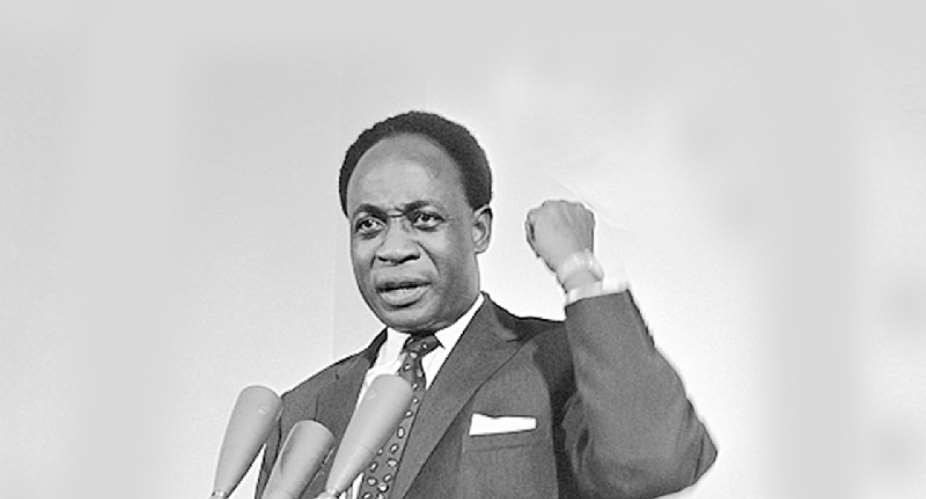
Recently, the Parliament of Ghana passed the Public Holidays and Commemorative Days (Amendment) Bill, 2025, which restores September 21 (Nkrumah’s birthday) as Founder’s Day, replacing the August 4 date.
With this new amendment, September 21 returns as placing Dr. Kwame Nkrumah, Ghana’s first President, firmly back in the spotlight of history as the founder of the new nation.
This might mean the dusting of a ritual. Every 21st of September, we’ll take a holiday, lay wreaths, and say big, flowery things about Nkrumah. And then, the next moment, we go back to business as usual.
But Nkrumah wasn’t a man who believed in “business as usual.” Did he? In his estimation, freedom isn’t some trophy you put in a glass cabinet. It’s supposed to be lived, worked at, and improved every single day.
Long before independence, he wrote Towards Colonial Freedom. In it, he includes harsh words for those who thought the colonial masters would one day wake up, clap their hands, and hand over power. “Tragically mistaken,” he called them. Simply put, in Nkrumah’s world, freedom couldn’t be served on a silver platter; you had to cook it yourself. And for him, the cooks were clear: the youth, the farmers, the workers.
That was from the mid-1940s into the 1950s. But let’s jump to 2025. Yes, we’re free. We can wave our flag, sing our anthem, and no one needs a colonial governor’s permission to hold rallies here and there. But try telling that to the university graduate who’s been applying for jobs for the past five and counting years. Try telling the farmer who has to watch his pineapples, tomatoes, and onions rot because there’s no road to the market. Tell it to the patient with failing kidneys who can’t find a dialysis machine. Or the pregnant woman in a rural village who has to gamble her life and her baby’s on a long, bumpy ride to the nearest maternity ward.
What then was Nkrumah’s point? He believed independence was never meant to stop at flag-raising ceremonies. It had to come with education, with opportunity, with dignity. That’s why he spoke endlessly about abolishing what he called “political illiteracy.” For him, freedom was empty if citizens couldn’t question leaders, understand policies, and make informed choices. He wanted young people trained not only to pass exams but to grasp science, technology, and politics—tools that could shape their own future.
And he was clear about something else: freedom loses its shine when campaign promises are tossed aside and when corruption eats into the very fabric of public trust. To Nkrumah, the true measure of independence was whether ordinary people could see honesty in leadership, see promises kept, and believe that their sweat was building something larger than themselves.
What do we have now? We wait for foreign donors to build our hospitals. We wait for outside investors to employ our young people. And when the youth complain, we tell them to be patient. But patience, I’m afraid, doesn’t pay rent.
This is why Nkrumah still matters. Supposing he were here today, he’d tell us: the colonial governor may be gone, but the chains remain. They now carry new names—unemployment, ignorance, dependency. And you can’t wait for anyone else to break them for us. That would be quite calamitous.
We can keep celebrating Nkrumah with wreaths, lectures, and official holidays. Or we can take him seriously. Because Nkrumah’s message was simply clear: freedom without empowerment is a set-up.
And so, if the 20th century was about breaking the colonial chain, then the 21st must be about breaking the barriers that keep the Ghanaian youth from thriving. If we fail, the youth won’t only ask what became of Nkrumah’s dreams. They’ll ask what became of us.
And this time, I doubt they’ll accept wreaths and lectures as an answer.
Komla Lokoe
[email protected]


 Appiagyei denies alleged GH¢70,000 vetting payment in memo
 Lawyer challenges GRA’s power to grant passenger baggage tax exemptions
 Agbogbloshie waste heap is as high as 10-storey building – Mahama Ayariga
 'How did we get here, to be told to go to Rwanda to learn cleanliness?' – Mahama...
 'After getting the gold, you will get thirsty' – Kwaku Bonsam explains why galam...
 “No such person has been handed any monies whatsoever' – Jerry Shaib denies clai...
 'Ato Forson after one year and nine months still decided not to pay our ex-grati...
 Anthony Joshua Crash: Driver was overtaking truck before fatal collision — Court...
 Arthur Kennedy accuses NPP, NDC of hypocrisy over CJ’s remarks
 No MP is entitled to gift for performing constitutional duty – Inusah Fuseini

