




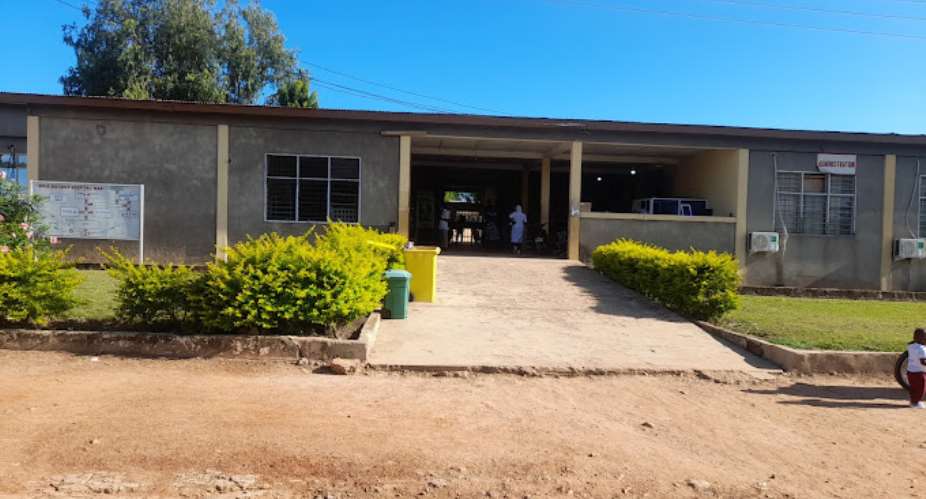
Health care delivery is meant to be a sacred duty, a service anchored on compassion, professionalism, and integrity. Yet, verified and verifiable information from the Bole District reveals a disturbing rot in the system. One that undoubtedly reflects the situation in many health facilities across Ghana.
In Bole, senior nurses and medical assistants at CHPS compounds have resorted to procuring drugs with their own money, only to resell them at exorbitant prices to patients. What may appear to be “filling a gap” has become a profiteering venture. Drugs are over-prescribed to ensure stocks run out quickly. Patients, many of them vulnerable and poor, are given medications they do not even need. Infusion that should cost GHc 10 is sold for GHc 15. In some cases, patients are issued six packs or more, knowing full well they will never use them, and cannot return unused stock for a refund.
Nurses who refuse to participate in this illegality are punished. They are posted to more remote facilities, effectively frustrating them into submission. At Tinga, for instance, the officer in charge has gone as far as employing his own private accountant, clearly paid from illicit funds generated. How can this happen under the nose of district authorities --- the District Chief Executive, the Eminent Bolewura, and other government officials?
We often talk about corruption in Ghana as if it is the preserve of politicians. But here is corruption staring us in the face at the very point where lives should be saved. Hospital staff deliberately direct patients to private laboratories, owned by themselves or their associates, while ensuring that the hospital’s own laboratory remains under-resourced and dysfunctional. This is not just unethical, it is criminal.
Complaints beyond Bole: A Nationwide Concern
The situation in Bole mirrors wider challenges across Ghana’s health facilities. From Accra to Tamale, patients commonly complain of:
- Long waiting times: Sometimes patients wait the whole day for attention, only to be told to return the next day.
- Absentee staff: Nurses and doctors abandon duty posts during official working hours, while patients are left stranded.
- Drug shortages and informal charges: Basic medications are often “out of stock,” pushing patients to buy from private pharmacies at high costs. Oft times, some pharmacies have links with the hospital authorizes. In some cases, staff demand unapproved fees before providing care.
- Unprofessional attitudes: Complaints abound of rude treatment, neglect of patients, and a general lack of empathy from staff. Most health workers lack communication and interpersonal skills.
- Sale of consumables: Items such as syringes, gloves, or cotton wool meant to be supplied by hospitals are sometimes sold to patients at inflated prices.
- Deliberate diversion of patients: Public hospital facilities are crippled so that patients are forced to seek services from privately owned businesses owned or run by hospital staff.
What the Law and Policy Say
The Ghana Health Service Code of Conduct and Disciplinary Procedures (2018) states clearly that employees are expected to “deliver quality health service in a humane and equitable manner,” uphold the “dignity and interest of patients/clients at all times,” AND EXHIBIT INTEGRITY, TRANSPARENCY AND DEICATION TO DUTY. MISCONDUCT SUCH AS MISUSE OF RESOURCES, CONFLICT OF INTEREST, PROFITEERING, AND CORRUPTION IS AN OFFENCE THAT ATTRACTS DISCIPLINARY ACTION! Yet, across the country, health facilities continue to flout these rules with impunity.
Verified Cases of Abuse
Recent reports confirm that the abuses are widespread and systemic:
- NHIA warns 81 facilities nationwide (Jan 2024): Health facilities were caught charging patients illegal fees for drugs, infusions, laboratory tests, and bed charges, despite such services being covered under NHIS (GNA, Jan 2024).
- Tamale illegal charges (Nov 2023): Facilities such as Tamale Central and West Hospitals were exposed for charging patients for services already covered by NHIS. The NHIA set up an “Illegal Co-payment Committee” in response (GNA, Nov 2023).
- Korle-Bu and LEKMA Hospitals (2021): The Auditor-General found that both hospitals charged GH¢35.44 million in unapproved fees, using parts of the funds to pay allowances without parliamentary approval (JoyNews, 2021).
- Upper West Region (Mar 2024): Regional hospital, Lawra Municipal, and others were warned for illegally charging NHIS members for services already paid for by the state (GNA, Mar 2024).
- Auditor-General’s 2021 Report: Found over GH¢1.08 billion in irregularities across health institutions, including misapplication of drug funds, poor procurement, and diversion of resources (Ghana Business News, 2023).
The Call to Action
These abuses are not isolated accidents; they represent a culture of impunity that undermines Ghana’s health system. The consequences are severe. Poor patients are impoverished further, essential drugs are wasted, trust in the health system erodes, and preventable deaths occur. The time has come for communities to demand accountability. Chiefs must not remain passive when illegality thrives in their backyards. District Chief Executives must have their ears on the ground. Civil society and district coordinating councils must step up as watchdogs. If our leaders fail, should we not consider community health monitoring committees --- citizens empowered to report wrongdoing and protect patients’ rights?
Ultimately, however, no law or cane can fully solve this rot. Nurses, medical assistants, laboratory staff --- all health workers --- must be guided by their conscience. They were trained and sponsored by the state to serve Ghana. If they prefer private practice, they must resign and pursue it openly, not exploit the public system for personal gain. Ghana deserves better from its health service. The time to act is now.
FUSEINI ABDULAI BRAIMAH
+233208282575 / +233550558008
[email protected]

 Gov’t renames 24-hour economy markets as District Economy Markets, targets 100% ...
 BoG, Police arrest 7 in Accra over alleged use of cedi notes for money bouquets,...
 SkyTrain trial: High Court adjourns case management conference to October 19
 Edudzi Tameklo recalls how Duffuor was slapped with GH¢100 million bail in 2020,...
 About 800 Director I and II applicants unreachable due to invalid contact number...
 'Boakye Agyarko was seen as anti-Bawumia' – Lecturer on John Boadu’s victory
 'NPP delegates made wrong choice electing John Boadu as chairman' — Political Sc...
 MTN Ghana secures new 5G spectrum in 700 MHz and 3 GHz bands
 Bawumia explains NPP hunt for winnable parliamentary candidates, not deep-pocket...
 Ghana to tap Egypt’s expertise for new capital city, housing projects – Mahama



Comments
Very true thanks God such revelations are becoming public it will help restore sanity in the system and upgrade the health sector