




The Volta Regional Coordinating Council (VRCC), in collaboration with key stakeholders, has pledged urgent interventions to address pressing water and sanitation challenges in the region, where 15 percent of residents still depend on unsafe water sources and 21 percent practice open defecation.
The disturbing statistics, drawn from the 2022 Ghana Demographic and Health Survey (GDHS), were described by stakeholders as a crisis of health, dignity, and economic opportunity requiring immediate action.
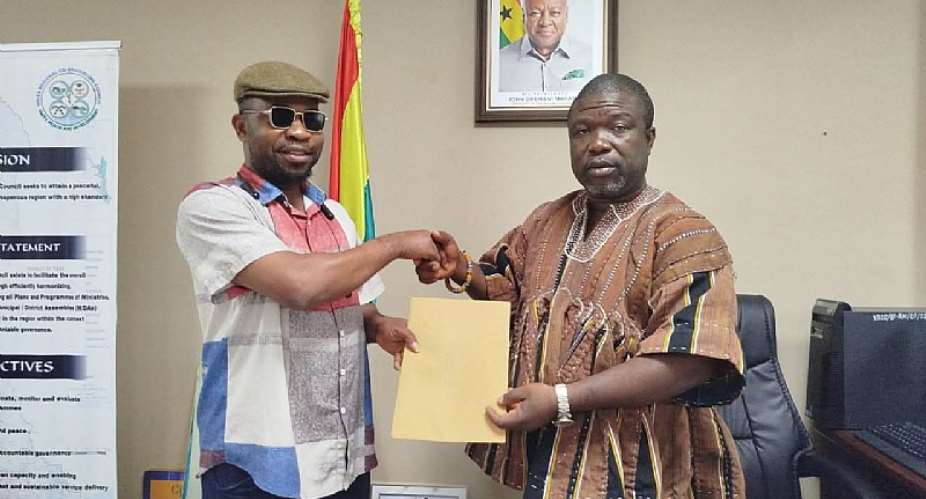
On Thursday, August 28, 2025, Volta Regional Minister Hon. James Gunu received a communiqué from the Executive Director of Community Focus Foundation (CFF-Ghana), Mr. Richard Kasu, outlining resolutions from the maiden Volta Water and Sanitation Dialogue. The VRCC, in response, committed to enacting and enforcing regional by-laws, ensuring each district constructs at least 10 mechanised boreholes, and accelerating the “Water for All Initiative.”
The commitments were endorsed by traditional authorities, development agencies, civil society groups, and private sector partners. Stakeholders agreed that protecting major water bodies such as the Volta Lake and River Dayi, scaling up technologies like solar-powered treatment systems and rainwater harvesting, and creating a dedicated Volta WASH Fund were essential to reversing the crisis. They stressed that the inequalities reflected in the data disproportionately affect rural communities, women, and children, noting that while 28 percent of residents currently have access to basic sanitation, the figure remains far below what is required for sustainable development.
Participants also called for stronger enforcement of environmental regulations, sustainable financing through district allocations, and greater involvement of youth and civil society in accountability processes. They urged government to introduce tax incentives for private companies investing in the sector and to explore financing tools such as a “Volta Water Bond” to support long-term improvements. Traditional leaders pledged to allocate land for WASH infrastructure, while civil society organisations committed to monitoring delivery through community scorecards to ensure transparency and accountability.
Hon. James Gunu welcomed the recommendations and assured stakeholders of government’s commitment. “The Volta Region deserves a just and resilient water and sanitation system. Together, we will build it,” he stated.
The Volta Water and Sanitation Dialogue, organised by the VRCC in partnership with CFF-Ghana and supported by GIZ and the EU, will now be held annually to track progress, strengthen accountability, and maintain momentum in the region’s fight for water security.


 Mysterious illness leaves children struggling to walk, hear in Mafi Kope
 ‘We’ve come back to make sure our father's ideas never die’ – Nkrumah family
 Ghana Jollof: Akosua Manu appeals to Naana Jane to use her influence to free Sal...
 Yellow fever confirmed in Sissala East after 21 mysterious deaths
 Kenyasi man allegedly attacked by prison officers and inmates over yam theft cla...
 Germany’s far-right AfD makes strong gains in two state elections
 Savannah Regional Minister, IGP Yohuno visit Gbindabuor following lynching of po...
 Jehovah's Witnesses make blood component decisions a matter of personal conscien...
 Road contractors fed on contracts for years without completing projects – Alhass...
 Ghana Jollof saga: ‘She has no right to do what she’s doing’ – Inusah Fuseini


