




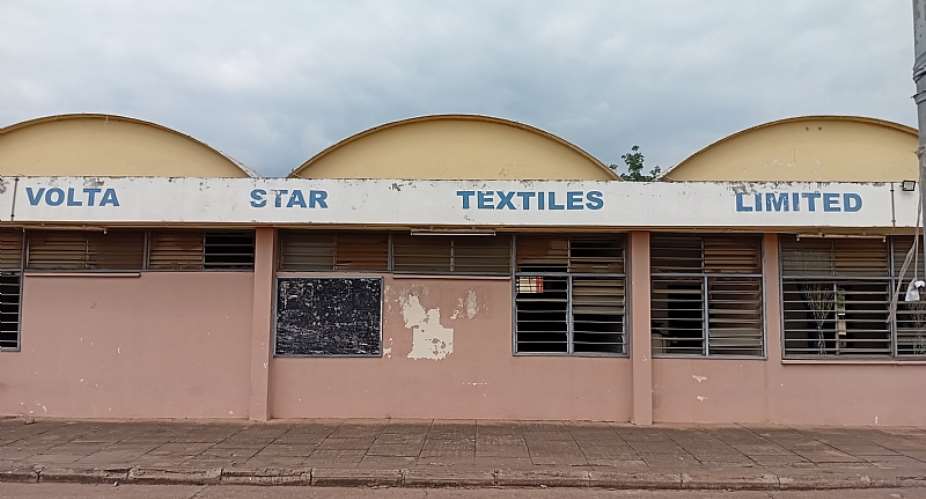
Jerome Kwaku Dunyo, the Managing Director of Volta Star Textiles LTD, has noted that the company would need at least a total of $25 to $100 million to resume operations.
He made the revelation during the launch of the Volta Trade and Investment Fair held at the premises of VSTL on Monday, the 25th of August 2025.
Volta Star Textiles LTD, formerly known as Juapong Textiles Limited, was established in 1968 and for decades stood as one of Ghana’s strongest industrial brands. It produced high-quality grey baft which supplied both local and regional textile industries, serving as a key employer in the Volta Region. At its peak, the company was part of a thriving industry of 16 textile factories that collectively employed over 25,000 Ghanaians and contributed about 12 percent to national GDP. Today, however, only three of those 16 companies remain in operation. Volta Star Textiles is not among them.
In an interview with the media, Mr. Dunyo explained that management has prepared a $100 million business plan to fully restore and modernize the factory. He clarified that the figure could be scaled up or down depending on the interest of investors.
“With $25 million, we can do something. But for us to do maximum investment, we need about $100 million,” he said, expressing optimism that potential investors would seize the opportunity.
Mr. Dunyo stressed that there is renewed commitment from both government and private stakeholders to restore the industry. He acknowledged the support of the Volta Regional Coordinating Council, the Ministry of Trade and Industry, and the Presidency, noting that the regional minister and Member of Parliament for North Tongu, Hon. Samuel Okudzeto Ablakwa, has been instrumental in championing Juapong’s revival.
The Managing Director welcomed the decision to launch the Volta Trade and Investment Fair on the factory premises, by the Association of Ghana Industries (AGI), describing it as symbolic of efforts to bring the once-vibrant industrial town back to life. “We are aware of the deep interest of the president himself, His Excellency John Dramani Mahama, in getting this place reopened,” he said, adding that the fair was an opportunity to showcase investment potential.
According to a report by Graphic Online, the story of Juapong Textiles mirrors the wider struggles of Ghana’s textile and garment sector. In the 1970s and 1980s, the industry thrived, but liberalization policies opened the domestic market to cheap imports, particularly from Asia. By the mid-2000s, uncompetitive production costs, high energy tariffs, and a lack of local cotton supply forced Juapong Textiles to shut down in 2005, laying off over 1,400 workers.
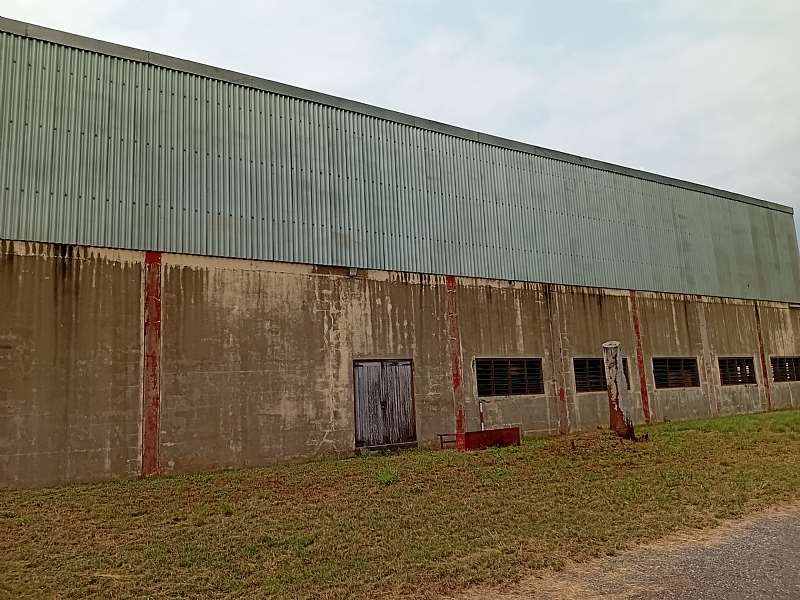
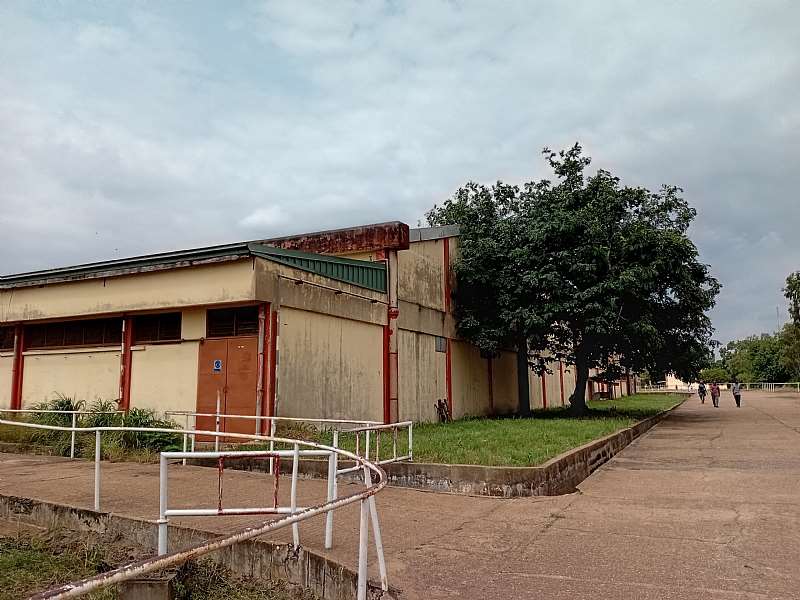
A brief revival came in 2007 when the factory was rebranded as Volta Star Textiles with technical support from China. However, by 2014 operations had again collapsed under the weight of obsolete machinery, mounting debts, and a crippling electricity bill to the Electricity Company of Ghana. As of July 2023, the plant remained closed, with over 1,200 workers unpaid and the town of Juapong economically depressed.
The decline of Juapong has had cultural and social consequences as well. For decades, textiles represented life, pride, and progress for the community. Today, locals lament that their once-celebrated cloth is more often used for mourning, reflecting the loss of livelihoods and opportunities.
The influx of second-hand clothing has further worsened the industry’s decline. Ghana imported an estimated \$121 million worth of used garments in 2023, with the Kantamanto Market in Accra alone handling around 12 million pieces weekly. Industry experts note that 30 to 40 percent of these imports quickly become waste, ending up in landfills or polluting coastal areas. This dynamic not only undermines local textile production but also poses a major environmental challenge.
Despite these difficulties, stakeholders believe the Volta Star factory can be revived as part of a broader national industrial strategy. Experts argue that success will depend on adopting a multi-faceted approach that combines modern technology, investment in raw material supply, and environmentally sustainable production methods.
A government assessment in 2023 identified outdated machinery as a major obstacle. Analysts recommend investing in energy-efficient, state-of-the-art textile equipment, as well as exploring renewable energy solutions to reduce costs. International partnerships, similar to the 2007 Chinese collaboration but on more sustainable terms, are seen as critical for bringing both technical know-how and funding.
Another major challenge is the absence of a domestic cotton industry. Ghana currently imports most of its cotton, subject to duties that drive up costs. Neighboring Burkina Faso and Benin have thriving cotton sectors, and industry leaders argue that Ghana must emulate these models. Establishing cotton processing factories and providing incentives for local farmers could secure a steady supply of raw materials for Volta Star and the wider industry.
Stakeholders have called for tax exemptions for cotton farmers, subsidies for processing facilities, and stronger protection against unfair imports. Others suggest leveraging Ghana’s heritage in kente and African print designs to build a competitive export brand. With the African Continental Free Trade Area (AfCFTA) headquartered in Accra, a revived Volta Star could tap into a broader African market.
Mr. Dunyo expressed optimism that with the combined efforts of government, private investors, and the community, Volta Star could soon resume operations. “We believe it won’t be long before we reopen this place and attract the right level of investment,” he said. “The story of Juapong must not end in decline but in revival.”
 Jerome Kwaku Dunyo, Managing Director of Volta Star Textiles LTD


 Don’t let speed of information become your judgement — Chief Justice tells new l...
 ‘Big Push’: Government assures contractors of prompt payments
 GES to develop plan to recover teaching time lost during teachers’ strike – Clem...
 Fire guts Kumasi Central Market near Aboabo Station
 'All human emotions': French astronaut Sophie Adenot's first words since returni...
 French astronaut recounts 'astonishing' emotions after return to Earth
 India's 'cockroach' movement chief detained ahead of major protest
 Strike suspended, but negotiations for teachers’ benefits not over — GNAT
 CSA rejects FBI claims, insists Ghana led cybercrime operation
 Govt suspends enforcement of ban on preaching in moving vehicles


