




Ghana’s Strong Communal Spirit
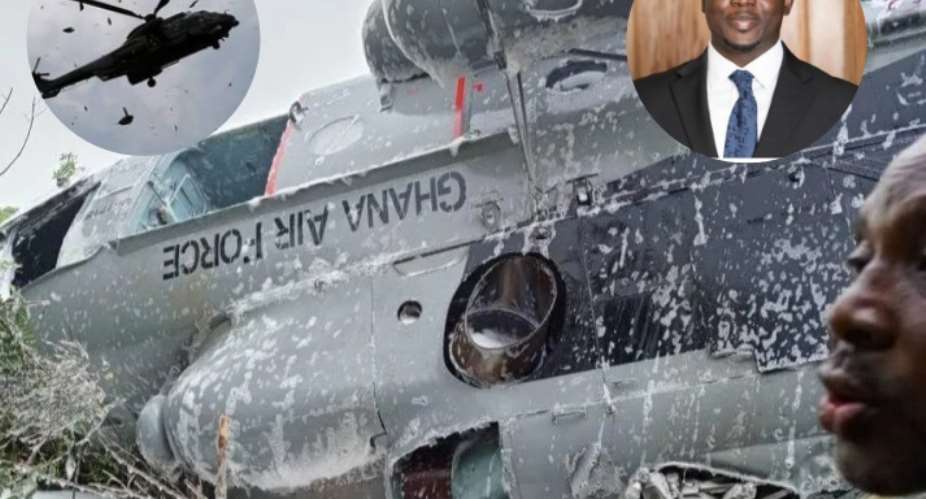
The nation mourns the fallen and extends condolences to their families, may God provide comfort and strength. I also salute the people of Adansi for rushing to help; that courage reflects the best of our communal spirit. What happened at the site was not wrongdoing but a lack of public awareness: stepping into a crash zone can unintentionally disturb tiny clues debris positions, ground marks, even footprints that help experts find the truth. Our aim is not to blame, but to channel that goodwill: in future, the most powerful help is to keep a safe distance, share what you saw or recorded with authorities, and allow trained teams to work. Together, with better awareness, we can honor the fallen and protect the integrity of the investigation.
What likely changed and what remains
Early public access altered Debris Field Geometry (DFG); the shape, size, distribution, and orientation of fragments that would have revealed whether breakup occurred in flight or at impact, the aircraft’s attitude and energy, and where structural failures began. Foot traffic overprinted surface marks and burn patterns (gouges, scorch layers, tree-strike signatures) that map the final seconds. Handling fragments without gloves contaminated or erased trace evidence (fingerprints, touch DNA, fibers, soils, fuel/oil residues), and the absence of a scene log weakened the chain of custody for any item later returned. Small electronic media (memory cards, phones, avionics modules) were displaced or lost. Even so, these impacts did not amount to a lost investigation, but rather shifted emphasis to corroborating lines of evidence.
What we still have; Independent, converging evidence streams
Despite the disturbance, investigators still have independent, converging evidence streams. Wider-area mapping can reconstruct debris-field geometry from remaining fragments, canopy damage, and micro-debris at the perimeter. Mechanical and materials forensics—fractography of rotor, mast, gearbox, and airframe parts can help to distinguish fatigue from overload and reveal pre-existing defects. Digital forensics from cockpit/engine modules (CVR/FDR or lightweight recorders, FADEC/HUMS), personal devices, and raw public videos can build a second-by-second timeline, anchored by flight and weather data (ATC audio, ADS-B/radar tracks, satellite/nowcasts). Pathology and operational records such as injury biomechanics, toxicology (time-dependent, and may no longer be possible), crew training/currency, decision-making, and procedures can provide the context needed to interpret the physical and digital findings.
Alternative forensic options after scene disturbance
Even with the scene disturbed, investigators can pivot to independent lines of proof. Digital forensics comes first: drone photogrammetry remaps the wider debris field into a geo-referenced 3D model that captures tree strikes, ground scars, and the fragments still in place; original videos (before, during and after the incident) and files from phones, smartwatches, and SD cards are imaged to build a second-by-second timeline and, where recorded videos of the flying helicopter exists, run frequency analysis for rotor/engine RPM trends and impulsive events. In parallel, weather forensics (radar/satellite, wind, precipitation, visibility) tests for environmental contributors; impact physics reconstructs attitude and energy at impact from marks on terrain and vegetation; fuel and lubricant chemistry checks for misfuelling, contamination, or thermal degradation; and explosives and ballistic forensics screens for residues and perforation morphology when warranted. Finally, human factors & operations analysis such as crew training, currency, procedures, ATC comms; frames decision-making, while wildlife-strike forensics (DNA/feather/keratin) is considered although bird strikes are rare. Together, these streams replace what was lost at the footprint with corroborated evidence from the perimeter, the lab, and the data record.
Disaster Scene Management (Going forward)
To protect lives and evidence, secure the perimeter early, restrict access to trained responders, and preserve the site exactly as found until documentation is complete. NADMO should stand up Community Scene Marshals; vetted volunteers trained to establish inner and outer cordons whilst at the site, steer crowds and traffic, log early witnesses, and relay information to police and emergency response Teams. Pair this with faster emergency response activation and media-led public awareness (help from a safe distance; share raw footage privately), so the nation’s instinct to assist is channeled into safeguarding both safety and truth.
Bottom line: While early disturbance affected certain traces and custody, the investigation retains robust avenues wider-area 3-D mapping, digital timelines, materials analysis, and environmental data to reach sound conclusions. Our communal spirit remains a strength when paired with scene discipline and evidence awareness.
Jonathan Awewomom is a US-based Ghanaian Forensic Scientist.

 Allow the law to deal with defilement perpetrators - Director tells families
 Gov’t to develop policy for Ghanaian sign language in education
 Two Ada SHS students plead guilty to assault, slapped with 12-month bond
 Enlistment: GAF begins documentation, body selection from September 28
 Violent rainstorm rips off roofs, displaces residents in Krachi Nchumuru
 Ghana risks EU gas market access over methane emissions
 Tumu landlord gives road encroachers 2-week ultimatum to relocate for road const...
 Serbian President Aleksandar Vucic resigns
 Tigray TV station hit by drone, rebels advance in north Ethiopia
 Swiss reject plan to toughen neutrality


