




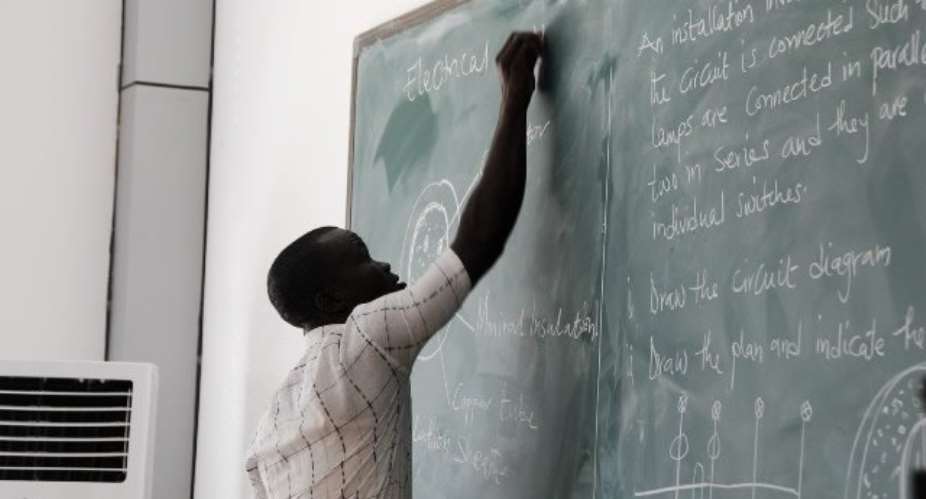
The teacher trainee allowance has remained one of Ghana’s most hotly debated educational policies. Initially introduced to attract more youth into the teaching profession, it was later abolished and reintroduced at different times depending on the government in power. The current Education Minister has emphasized that “we cannot elevate Colleges of Education and still pay teacher trainee allowance,” sparking renewed discussions about whether the allowance should be maintained or cancelled.
This article examines the government’s reasons for intending to cancel the allowance and the counterarguments raised by teacher trainees and stakeholders.
Government’s Reasons for Cancelling the Allowance
1. Financial Burden on the State
The government spends millions of cedis annually on allowances for teacher trainees. With Ghana facing competing developmental priorities such as healthcare, infrastructure, and industrialization.The cost of sustaining allowances is seen as a heavy burden on the national budget.
2. Expanding Access to Teacher Education
Because the government budgets for each trainee’s allowance, Colleges of Education often restrict admissions. Cancelling the allowance would allow more qualified applicants to be admitted, thereby producing more teachers to meet Ghana’s growing educational demand.
3. Fairness Across Tertiary Education
Students in universities, nursing schools, and technical universities generally do not receive allowances. It is therefore viewed as unfair to provide financial support only to teacher trainees. Cancelling the allowance would ensure equity, with all students accessing support through the Students’ Loan Trust Fund.
4. Professionalization of Teacher Training
As Colleges of Education are now degree-awarding institutions, the government wants to treat trainees like other tertiary students. The continuation of allowances is seen as inconsistent with efforts to elevate teacher education to professional standards.
5. Upgrading Colleges and Lecturers’ Salaries
The government has invested in upgrading Colleges of Education to the same level as universities, and lecturers in these colleges are now paid on the same salary scale as their counterparts in the universities. By this logic, teacher trainees should also be treated like university students without allowances but with access to student loans. Maintaining allowances, the government argues, would contradict the elevation of Colleges of Education to higher academic status.
6. Sustainability and Long-Term Investment
Rather than investing in allowances, government argues that resources should be redirected into building infrastructure, providing digital tools, and improving the quality of teaching and learning interventions that have a more lasting impact.
Counterarguments from Teacher Trainees
1. Economic Hardship
Many teacher trainees come from modest backgrounds and rely heavily on allowances to pay for food, accommodation, and learning materials. Cancelling the allowance would impose severe financial hardship on them, possibly discouraging many from pursuing teacher education.
2. Attractiveness of the Teaching Profession
The allowance has historically served as an incentive to attract young people into the teaching profession. Without it, some argue, teaching could lose its appeal compared to other careers, leading to shortages of qualified teachers in the long run.
3. Disparities in Educational Support
While government cites fairness, trainees argue that nursing students once enjoyed similar allowances. Removing teacher trainee allowance without providing a practical alternative risks leaving them worse off compared to other professional students.
4. Risk of Student Loan Dependency
Government suggests the Students’ Loan Trust Fund as an alternative. However, trainees argue that this creates debt burdens before they even begin their careers. In a profession that is not among the highest-paying, many fear this could discourage potential teachers.
5. Policy Instability and Trust Issues:
Frequent changes in allowance policy abolished under one government, restored under another have created uncertainty and distrust. Trainees argue that education policy should be consistent, especially when it directly affects livelihoods and professional commitment.
Conclusion
The debate over teacher trainee allowances reflects a broader tension between short-term financial support for students and long-term investment in education systems. The government justifies its intention to cancel the allowance on the grounds of cost, fairness, professionalization, sustainability, and the upgrading of Colleges of Education to university standards. Teacher trainees, however, highlight the hardship, motivation, and trust issues that come with its removal.
Ultimately, the issue calls for a balanced approach one that considers both the financial realities of the state and the welfare of teacher trainees who form the backbone of Ghana’s education system. A middle ground, such as partial stipends combined with improved access to student loans and better college infrastructure, may offer a sustainable compromise.

 Musah Superior Dismisses Government’s $10bn Economic Plan as Unrealistic
 Zaato Accuses Ablakwa, NDC of Politicising Akufo-Addo’s Chartered Flights
 Akufo-Addo Never Sought Approval for New Presidential Jet, Says Dr Zaato
 Beyuo Defends Acquisition of New Presidential Jet
 Auditors Should Help Shape GIFMIS Relaunch, Says Seth Terkper
 Rent Commissioner Seeks Police Protection After UG Hostel Confrontation
 Zenith University College law students gain practical knowledge in copyright, mu...
 NAP Graduates to Receive Start-Up Kits, Tools, and Monthly Stipends
 'Unacceptable': EU chief condemns alleged Russian plot to kill US-Ukrainian citi...
 Nkrumah used secret walking stick signals to direct cameraman Chris Hesse – Docu...


