




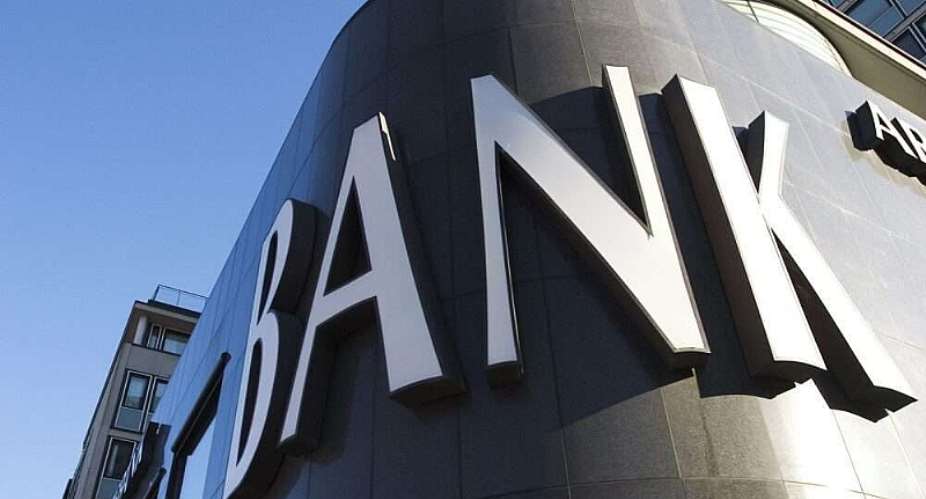
The Ghanaian banking sector plays a critical role in fueling growth, financing businesses, and supporting individuals. But behind the scenes, banks also wield immense power — the power to create money. Through loans and credit, banks expand the money supply, sometimes leading to unintended consequences such as inflation, rising debt burdens, and risks to financial stability.
The Mechanics: How Banks Create Money
Contrary to popular belief, banks don’t simply lend out deposits they already have. Instead, they create new money when they issue loan according to a writer at Accra Street Journal. For example, if a bank approves a ₵100,000 loan to a business, that amount is credited to the business’s account as a deposit — effectively new money in circulation. The borrower then spends it, and as the funds move through the economy, they become part of the wider money supply.
This process is governed by , where banks are only required to keep a small portion of deposits (say 10%) as reserves and can lend out the rest. In Ghana, the Bank of Ghana’s reserve requirement ratio currently stands at 12% (2024 figures), meaning commercial banks can lend out most of the deposits they receive.
Facts and Figures from Ghana
According to the , private sector credit grew by 32.3% year-on-year in December 2022, compared to 12.6% in 2021. This sharp rise reflected increased lending activity by banks.
Ghana’s broad money supply (M2+) stood at ₵180.3 billion by December 2022, driven largely by credit expansion.
However, high lending rates remain a concern: the average lending rate stood around 33% in 2023, discouraging productive borrowing but still enabling banks to profit heavily from credit.
The Double-Edged Sword
Economic Growth Driver: Lending supports businesses, creates jobs, and enables households to invest in education, housing, and consumption. For instance, SMEs in Ghana rely heavily on bank credit to expand operations.
Inflationary Pressure: When too much credit is extended without corresponding productivity growth, inflation rises. Ghana’s inflation surged above 40% in 2022, partly fueled by excess liquidity and exchange rate depreciation.
Debt Burden: Credit creation can trap households and businesses in debt cycles. Loan defaults in Ghana rose by over 15% in 2022, putting strain on banks’ balance sheets.
Bank-Centric Economy: Since banks profit from credit, they may prioritize short-term gains (high-interest consumer loans) over long-term investments (manufacturing, infrastructure), skewing the economy toward consumption rather than production.
Historical Context
Ghana’s banking sector reforms of 2017–2019, which consolidated over 34 banks into 23 stronger institutions, were partly due to reckless credit expansion and poor governance. Non-performing loans (NPLs) had reached 21% in 2017, eroding public trust. Since then, the sector has stabilized, but credit-driven money creation continues to shape economic cycles.
Looking Ahead
The challenge is balance. Ghana cannot grow without credit, but excessive reliance on bank-created money risks fueling inflation and instability. Policies such as stricter credit risk assessments, promoting alternative financing (venture capital, equity markets), and deepening financial literacy could help.
As one financial analyst at notes: “Credit is like fire: it can cook your food or burn down your house. Ghana must manage it wisely to avoid overheating the economy.”
Conclusion
Ghana’s economy thrives on credit, but banks’ ability to create money through loans makes them powerful architects of the nation’s financial destiny. Understanding this process — and its consequences — is key to ensuring sustainable growth, stability, and fairness in the financial system.
"Stay ahead of themarkets with Accra Street Journal — your trusted source for business insights, financial analysis, and the stories shaping Ghana’s economy."

 Benjamin Danso unseats Ashie-Moore as NDC Greater Accra Regional Chairman
 Ghana to ratify three key AU financial institutions by 2027
 Catholic Bishops want full implementation of Kalba-Gbinyiri conflict report
 For Christ’s sake ‘cocaine economy’ label could damage Ghana’s reputation, put G...
 Iran claims attack on US military airbase in Bahrain
 'Is this a cyberattack?' Grounded flights, a Microsoft outage and AI chaos fuel ...
 'No justice, no peace': Fifth round of protests sweep across France
 Netanyahu renews call for Israeli government unity as Eisenkot dismisses 'tricks...
 SpaceX's Starship set for return to Earth after failed booster catch
 Sir Sam Jonah appeals to Mahama for restoration of Acheampong's military rank of...


