




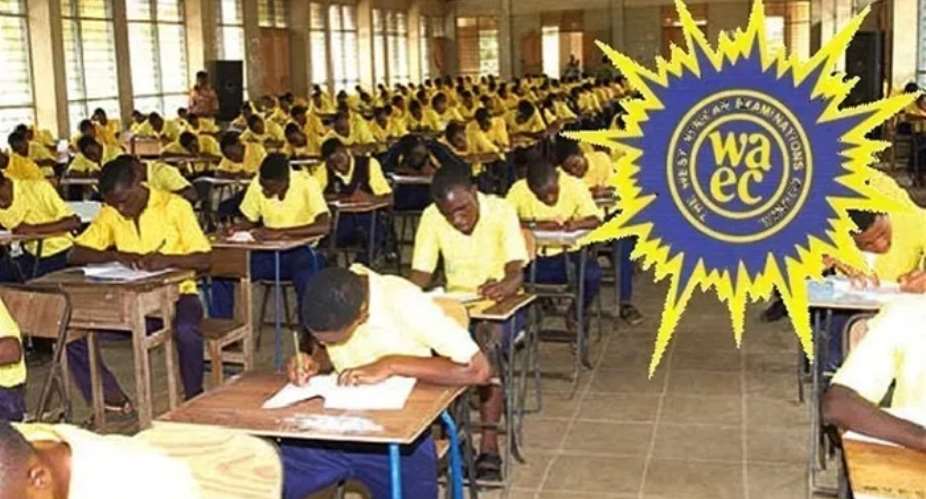
Today, as thousands of young candidates sit for the 2025 West African Senior School Certificate Examination (WASSCE) across Ghana, one issue remains unresolved 'examination malpractice'. For years, this cancer has eaten deep into the credibility of our education system, leaving behind a haunting question: Who is truly to blame, the students who engage in malpractice, or the teachers who aid and abet them?
The Case Against Students
Students are the direct participants in the act. Some resort to smuggling notes into examination halls, copying answers from peers, or even paying middlemen for leaked questions. In an age of smartphones and social media, platforms are flooded with so-called “apor” (leaked exam papers), which desperate candidates purchase. This culture of shortcuts raises concerns about personal discipline, integrity, and the seriousness with which many students approach their studies.
The Case Against Teachers
However, to blame students alone would be unfair. Teachers, who are meant to be custodians of knowledge and integrity, sometimes directly facilitate malpractice. In certain schools, teachers reportedly dictate answers during exams, provide solutions beforehand, or turn a blind eye when malpractice is happening under their watch. This is often justified with the excuse of “protecting the school’s image” or “ensuring high pass rates.” Sadly, this creates a cycle where students believe success is only possible through shortcuts.
The Systemic Problem
Beyond teachers and students, the system itself is not blameless. High-stakes examinations like WASSCE determine university admission and, by extension, future opportunities. With so much pressure placed on a single exam, the temptation to cheat becomes overwhelming. The lack of strict and independent supervision in some centers, coupled with inadequate punishment for offenders, allows malpractice to thrive.
The Way Forward for WASSCE 2025 and Beyond
As WASSCE 2025 commences, stakeholders must act decisively:
1. WAEC must tighten security to prevent question leaks and strengthen invigilation with neutral supervisors.
2. Teachers must uphold integrity, resisting the urge to interfere with students’ performance.
3. Students must be sensitized that malpractice is not just an academic crime but a betrayal of their future.
4. The government and GES should invest in continuous assessment reforms to reduce over-reliance on one final exam.
5. Communities and parents must play their role in teaching honesty and hard work as values beyond the classroom.
Conclusion
Examination malpractice is not merely a student problem, it is a societal issue that involves teachers, parents, and the system as a whole. As candidates sit for WASSCE 2025 today, Ghana must reflect: Are we raising graduates of integrity and competence, or products of shortcuts and malpractice?
The answer depends on how honestly we confront this menace. The time to act is now.


 'Chief Justice was talking as a citizen; you have to look at the context in whic...
 Mandatory towing to remove broken-down, stationary vehicles from roads to begin ...
 Domelevo backs OSP probe into alleged GH¢70,000 payment to Appiagyei despite den...
 WAEC releases 2026 WASSCE results, cancels entire results of 861 candidates for ...
 Baffour Agyeman-Duah explains why profitability may not be only reason behind SO...
 Kofi Bentil defends Mahama’s dissolution of nine State Boards
 5-year-old girl dies after falling into water-filled manhole at Winneba
 Sierra Leone ex-president to return after treason case dropped
 'Explain how you spent your Common Fund' — Boako, Annoh Dompreh challenge Tano N...
 Ghana ends South Africa evacuation; brings home nearly 1,900

