




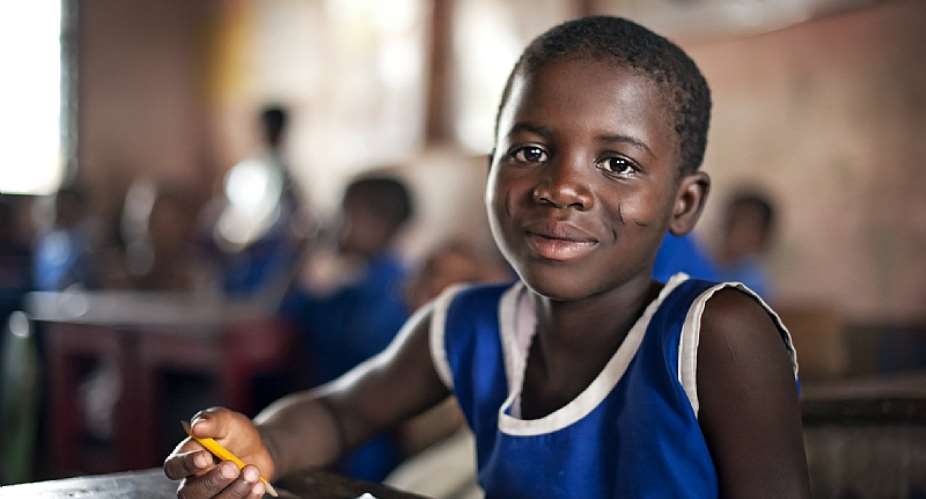
Ghana likes to measure progress in neat headlines: laws passed, committees formed, and glossy conferences where ministers promise more inclusion. But for thousands of deaf and hard-of-hearing Ghanaians, those promises too often remain gestures — “muted” in practice while people live the consequences: lack of meaningful schooling, limited livelihood options, vulnerability to abuse, and social isolation that leads some to beg, marry for survival, or enter risky work just to survive
Ghana’s deaf community faces broken promises, poverty, forced marriages, and sexual abuse — with little government action. This editorial by Samuel Kwame Boadu exposes the silence, injustice, and urgent need for reform.
Every few years, the Government of Ghana makes new promises to the deaf and hard-of-hearing community. We hear them at conferences, on campaign stages, in polished speeches about “inclusion” and “equal opportunity.” We see photos of officials smiling next to deaf students or interpreters. But after the speeches fade, life for most deaf Ghanaians remains painfully the same — or worse.
For thousands in this community, the word “inclusion” is just political decoration. There is no real plan, no real investment, and no real urgency to fix the structural barriers that keep deaf people trapped in poverty, abuse, and social exclusion.
Schooling That Leads Nowhere
Yes, Ghana has schools for the deaf. But what happens after graduation? For many, it’s a cliff edge. The education they get is often not enough to land a job in today’s economy. Vocational training is scarce, and there’s no nationwide plan to link deaf graduates with employers.
The result is predictable: many end up begging in traffic, holding envelopes in bus stations, or relying on family members who are themselves struggling. Those who don’t want to beg often face an even harsher reality — survival through forced marriages, prostitution, or drugs.
Forced Marriages and Broken Dreams
Within the deaf community, early marriage is common — not because of tradition, but because of desperation. Society often shuns the idea of a “physically challenged” son- or daughter-in-law. So deaf men and women marry each other, hoping to pool resources and survive together.
But marriage in poverty is still poverty. Many of these couples struggle to raise children without skills, without steady income, and without any government support. It is not the “family stability” politicians boast about. It’s survival mode.
The Hidden Crisis of Sexual Abuse
Perhaps the most underreported tragedy is the sexual abuse of deaf women and girls. Predators know that deaf victims often have no way to report crimes effectively. Police stations rarely have sign language interpreters. Hospitals aren’t equipped to take statements in sign language. Even in courtrooms, interpreters are scarce.
The result? Abusers walk free. Survivors remain silent — or worse, are pressured into silence. And the cycle of violence continues.
This is not just a “deaf issue.” It’s a human rights crisis.
Drugs and Desperation
In some cases, hopelessness pushes young deaf men into drugs — either as users to escape reality, or as petty dealers to make ends meet. When caught, they face the full weight of the law, without the same chance to defend themselves as hearing citizens.
Again, the system is not built for them. It is built to forget them.
Empty Promises vs. Real Action
The government points to “achievements” like publishing a Ghanaian Sign Language dictionary. But let’s be clear: a dictionary does not replace laws, interpreters, and real access. In Europe, countries like Finland, Sweden, and the UK have made sign language an official language, trained thousands of interpreters, provided full-time accessibility officers in hospitals, and funded deaf entrepreneurs.
Ghana could do the same — if it wanted to.
What Needs to Happen Now
Enough photo-ops. Enough symbolic gestures. Ghana must:
Legally recognize Ghanaian Sign Language and make it a right in all public services.
Fund interpreter programs for police stations, hospitals, and courts.
Transform deaf schools into hubs for real vocational training in tech, craft, and entrepreneurship.
Give targeted grants and loans to deaf-owned businesses.
Create safe reporting channels for deaf survivors of abuse.
This isn’t charity — it’s justice. It’s also smart economics. When deaf Ghanaians have skills and opportunities, they earn, spend, and pay taxes. They contribute to society instead of being forced into dependency.
A National Shame
Right now, Ghana’s deaf community lives in the shadow of empty promises. They are educated but unemployed, married but impoverished, abused but unheard.
Every day the government delays action, it chooses to keep these citizens on the margins. It chooses silence over justice. And it tells a whole community — without saying a word — that their lives matter less.
Ghana must break that silence. Not with more promises, but with action that can be seen, felt, and measured.
Because until that happens, the deaf will continue to hear the same message they’ve been hearing for decades: nothing.
This was first published on Accra Street Journal titled "Muted Promises: Ghana’s Silent Betrayal of Its Deaf Citizens" and written by Samuel Kwame Boadu (Founder & Editor-In-Chief at Accra Street Journal)


 1,568 new lawyers must use law to advance justice — Chief Justice
 GH¢800,000 worth of goods lost in Kia Rhino truck fire at Amanfrom
 I never said Ghana has more nurses than it needs — Akandoh
 I have tried reaching Boakye Agyarko after NPP chairmanship race, but to no avai...
 Ghana’s Corporate Illusion: Why We Celebrate Professional Titles More Than Natio...
 Sam George, Armah-Kofi Buah, Phyllis Naa Koryoo and OPK among 1,568 lawyers call...
 Visa scandal: 'Ampofo Ankrah’s suspension not enough; Kofi Adams must also step ...
 'Let integrity, discipline guide your conduct' — Samson Lardi tells new lawyers
 Labour Minister optimistic teachers will suspend strike by close of day
 Dr Ato Forson urges MMDCEs to eliminate waste in public spending


