




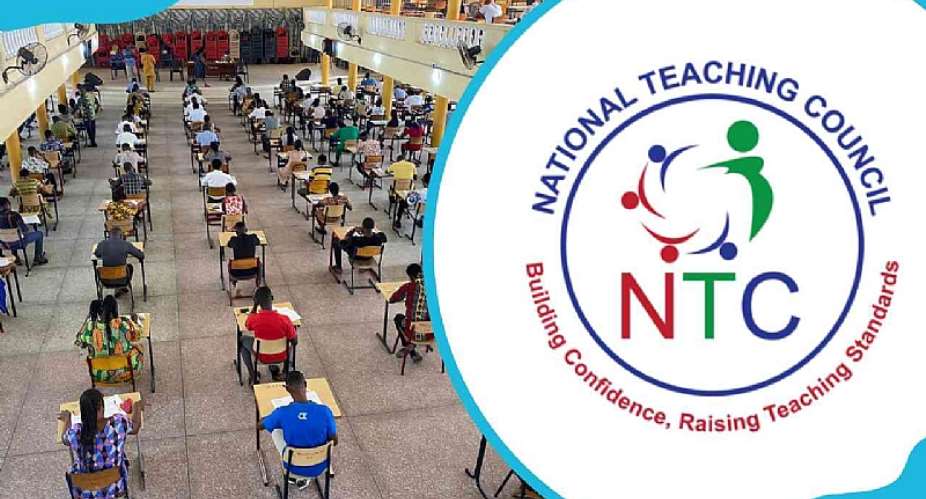
In recent years, the Ghana Teacher Licensure Examination (GTLE) has been a major talking point in Ghana’s education sector. Introduced with the stated aim of ensuring that only competent and qualified individuals enter the teaching profession, the GTLE has since become a subject of heated debate among stakeholders, from teacher trainees to policymakers. While the intention behind the GTLE may be laudable, a closer look reveals compelling practical reasons why it either needs a thorough review or should be abolished entirely.
1. Duplication of Assessment
Teacher trainees in Ghana already go through rigorous academic evaluation during their three or four years of professional training. They write semester exams, complete teaching practicums, submit research projects, and undergo assessments by the National Teaching Council (NTC) during their college years. The GTLE, in many ways, duplicates these evaluations without adding significantly to the measurement of professional competence. In effect, it tests what has already been tested, leading to exam fatigue rather than better quality assurance.
2. Financial and Emotional Burden on Graduates
Beyond academic stress, the GTLE has created an additional financial burden for teacher trainees, many of whom come from modest backgrounds. Registration fees, transportation, accommodation for the exam period, and possible re-sit costs put unnecessary strain on already struggling graduates. In some cases, these costs deter otherwise competent teachers from pursuing the profession further, contributing to teacher shortages in certain regions.
3. Questionable Relevance to Practical Teaching Skills
One of the main criticisms of the GTLE is that it heavily emphasizes theoretical knowledge while neglecting practical teaching skills. The reality is that classroom management, adaptability, creativity, and emotional intelligence are crucial to effective teaching. Yet the GTLE offers no practical platform to assess these abilities. A written multiple-choice exam cannot fully measure a teacher’s ability to inspire, manage diverse learners, or adapt lessons to local contexts.
4. Impact on Teacher Motivation and Retention
For many aspiring teachers, registering the GTLE has become a daunting final hurdle that determines whether their years of training will bear fruit. Failing the exam, even marginally often leads to feelings of discouragement and demoralization. Some trainees abandon the teaching path altogether, leading to a loss of human capital at a time when Ghana needs more, not fewer, dedicated educators.
5. Inconsistencies and Lack of Transparency
Stakeholders have repeatedly raised concerns about the transparency of GTLE processes. Questions about how exam items are set, the validity of questions, and grading inconsistencies have persisted without satisfactory answers. Without an open and accountable framework, the credibility of the GTLE remains in doubt, undermining its own justification.
Alternative Quality Assurance Measures Exist
Countries with high-performing education systems, such as Finland and Singapore, do not rely solely on post-graduation standardized tests to determine teacher competence. Instead, they invest in strong teacher education programs, continuous professional development, and in-school mentorship systems. Ghana could redirect resources from the GTLE towards improving teacher training curricula, upgrading infrastructure, and providing sustained in-service training for teachers.
Conclusion
The GTLE, in its current form, appears to be a well-intentioned but poorly implemented policy. While the goal of maintaining high standards in the teaching profession is non-negotiable, the pathway to achieving it must be practical, fair, and supportive of the people it affects. Reviewing the GTLE to focus more on practical competencies or replacing it entirely with a more holistic teacher development system could ultimately yield better outcomes for Ghana’s education sector.
If Ghana truly values the teaching profession, it must ensure that its quality assurance processes are not obstacles but stepping stones for those committed to shaping the next generation.


 'Chief Justice was talking as a citizen; you have to look at the context in whic...
 Mandatory towing to remove broken-down, stationary vehicles from roads to begin ...
 Domelevo backs OSP probe into alleged GH¢70,000 payment to Appiagyei despite den...
 WAEC releases 2026 WASSCE results, cancels entire results of 861 candidates for ...
 Baffour Agyeman-Duah explains why profitability may not be only reason behind SO...
 Kofi Bentil defends Mahama’s dissolution of nine State Boards
 5-year-old girl dies after falling into water-filled manhole at Winneba
 Sierra Leone ex-president to return after treason case dropped
 'Explain how you spent your Common Fund' — Boako, Annoh Dompreh challenge Tano N...
 Ghana ends South Africa evacuation; brings home nearly 1,900


Comments
I suggest the writer gets to understand teacher education and come again.