




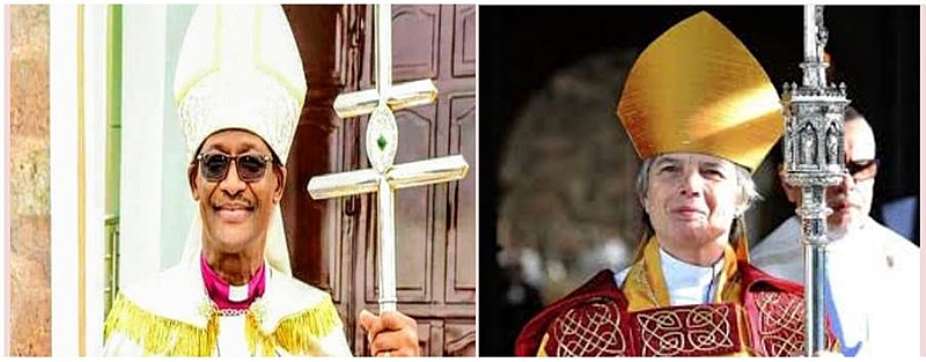
The recent decision by the Nigerian Anglican Communion to sever ties with the Church in Wales following the enthronement of lesbian Bishop Cherry Vanna as the Archbishop of Wales has sparked intense debate nationwide. But because the Primate, Most Rev. Henry Ndukuba, cited adherence to Biblical authority as the basis of the split, the growing divide within the global Anglican Communion over same-sex relationships might call for a sober reflection rather than what may appear as a panic-driven decision.
The tension is not new. As far back as the 1998 Lambeth Conference, Anglican bishops worldwide declared that "homosexual practice was incompatible with the Scripture." Despite that understanding and agreement, since then within the Anglican Communion, there have been shifts in homosexual thought and practice, especially in Canada, the UK, and the US. These shifts led to crises of unity, as African provinces, especially Nigeria, responded to the shift by rejecting such developments, seeing them as a threat to the moral foundation of their society.
While doctrinal integrity is critical in this development, the urgent question to be considered is whether the response of the Church in Nigeria is constructive and Christ-like. Will total severance promote healing, understanding, and the Gospel message? Or will it risk deepening polarization that overlooks complex socio-cultural realities or takes them for granted?
There is no doubt that the conservative stance of Nigerian primates like Peter Akinola and Nicholas Okoh has been consistent. Along with many other African bishops, they have rightly emphasized the sanctity of marriage as a union between a man and a woman. They say God created a woman, Eve (not Steve), as companion and help-mate for man. Their commitment to Biblical orthodoxy is commendable. But, in reality, the wider conversation requires more than condemnation of gay relationship. It requires pastoral wisdom to deal critically with the issue. Perhaps it is news to many Christians that sexual orientation, particularly in the context of African societies, has not always been a straightforward issue. Perhaps, it is not. But in many cases, individuals engaged in same-sex relationships have their personal stories to tell: stories that were mostly rooted in emotional neglect, unintended psychological conditioning or even in trauma. Some cases arose, not from deliberate rebellion against scriptural teachings, but from social dynamics that the Church has not yet found sufficiently necessary to address.
I think the Anglican Communion should begin to look at this issue more deeply and with the eyes of maturity. I believe that Church authorities in Africa can revisit this development, having at the back of their minds that prominent and influential individuals like former President Obama of America even had a soft spot for the gay community. Perhaps they may soften and become more compassionate in finding a meaningful solution to the problem. Because it is a problem, and it is spreading like wild fire.
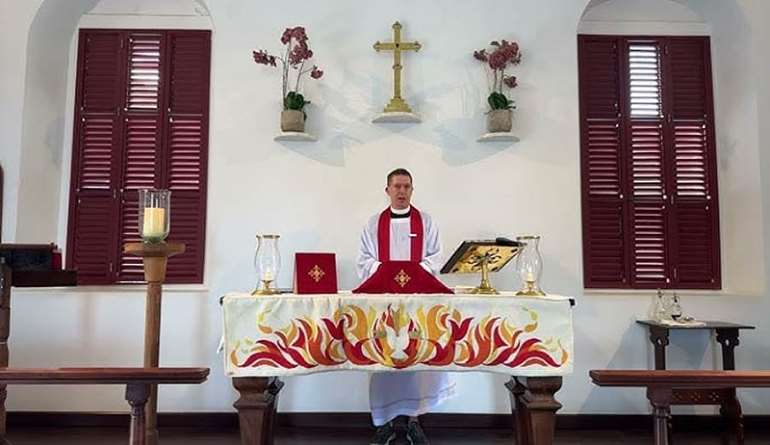
Let us pray for the Anglican Church to heal
Rather than excommunicate churches or persons associated with non-traditional sexual identities, the Anglican Communion, especially in Africa, could invest in a more profound exploration of the roots of this phenomenon. What are the psychological, sociological, and even spiritual forces driving it? And more importantly, how can the Church minister to such individuals who are caught up in it without affirming sin and also without dehumanizing them? Jesus modelled engagement with sinners, not by condoning their sins, but by showing them dignity and offering transformation. He spoke truth with love and called people into wholeness. If the Church was to follow this example, it must not only dwell on what the Bible says, but also on how Jesus would have responded, had he been confronted with the gay situation. Would He disown an entire Church? Or would He invite dialogue, offer healing, and open the door to redemption?
This is not to downplay the seriousness of unbiblical practices. Rather, it is to emphasize that the way the Church responds to such practices must reflect the heart of the Gospel. Blanket condemnation without redemptive engagement may create martyrs out of individuals whose spiritual, emotional, or cultural formation we barely understand. The anti-gay legislation in Nigeria, which criminalized same-sex relationships with a 14-year prison sentence, adds yet another layer of complexity. While many in the Church applaud such laws as a defence of traditional values, they must also ask: would criminalization align with Christ’s teaching? Would it promote healing or fear? Does it address the root causes or merely punish the symptoms? If Jesus could dine with people of low moral standards, prostitutes and tax collectors, who are we to question his authority?
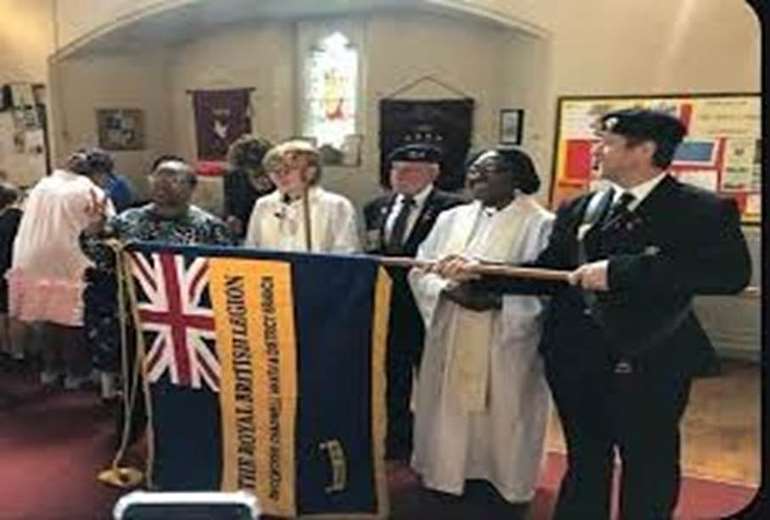
All Saints' Church of England, Goodmayes
To move forward constructively, the Anglican Church in Nigeria must pursue a path of balanced orthodoxy, holding fast to Scripture while also nurturing an informed pastoral response. The task is not to compromise Biblical teaching, but to deepen its application in a broken world. It is not enough to know what is wrong. The Church must also embody what is right and that is love, patience, empathy, and redemption. The Church should also strengthen its family life ministries, youth mentorship programmes, and sexual education curricula within its institutions. When children are taught to understand their emotions, human sexuality, and their God-given identity within a healthy, supportive framework, the risk of misdirected relationships is reduced. Parents too must be guided not to weaponize morality in ways that unintentionally alienate their children from who they really are. Beyond this, the Church must foster a culture where individuals struggling with sexual identity issues can seek help without fear of rejection. Creating safe spaces within the Church for honest conversations may be one of the most powerful ways to minister to those in need.
There is also room for the Church to revisit the theology of human brokenness and sin in light of modern psychological and scientific insights. While holding to Scripture, the Church must resist conflating orientation with action. Many believers experience unwanted same-sex attraction but strive to live in accordance with Biblical teaching. These individuals need pastoral support, not punitive suspicion. The Church must be able to distinguish between temptation and transgression. Moreover, Church leaders should encourage academic theological research into sexuality and cultural patterns, especially in Africa. Rather than borrow only Western frameworks of understanding, African scholars and clergy should develop locally rooted theology that grapples with these emerging realities from an indigenous standpoint, supported by Scripture and guided by the Spirit.
It is also important for the Church to engage the younger generation. Increasingly exposed to global perspectives through technology and social media, many African youths are encountering pro-LGBT narratives and alternative sexual ideologies. If the Church does not offer biblically sound but intellectually honest teachings on sexuality, young Christians may either reject the faith entirely or live in secret shame and confusion. A strong doctrinal teaching that addresses contemporary issues openly and without fear is vital. Furthermore, severing ties with churches that adopt liberal stances on sexuality may feel like a moral imperative, but it often has unintended consequences. It isolates the Nigerian Church from the opportunity to bear witness and minister truth to those with differing views. Remaining engaged in communion while expressing dissent can offer a platform for influence, reform, and perhaps even repentance.
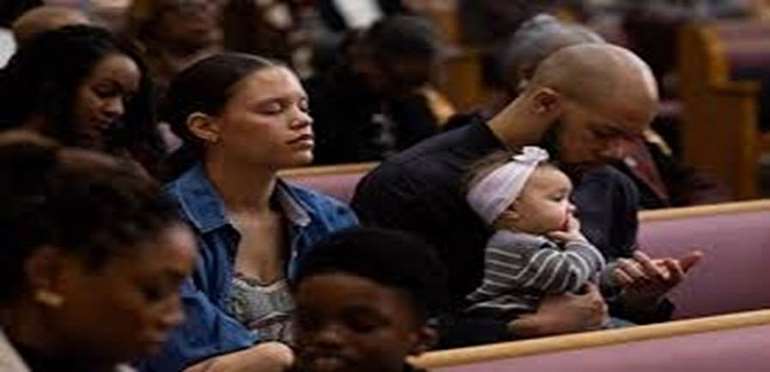
Praying for the unity of the Anglican Church
Historically, the Anglican Communion has been a family marked by theological diversity yet united by shared worship and mission. To preserve that unity amidst doctrinal differences is one of the hardest tests of ecclesiastical maturity. The Church in Nigeria has a chance to lead not only with the authority of Scripture but with the wisdom of the Spirit. That leadership should embody firmness in truth and fluency in grace. The Church must remember that its mission is not simply to pronounce judgment but to offer Christ to a broken world. If the Church becomes known more for what it is against than what it stands for, it may win the moral battle but lose the souls it was sent to save. The Church must be a hospital for the wounded, not a courtroom for the condemned.
In these complex times, the Anglican Communion, particularly in Nigeria, must resist the temptation of panic. It must reject both compromise and condemnation as extremes, choosing instead the narrow path of Christ: the way of truth and grace, of justice and mercy. Only then can it lead not only with courage but also with wisdom, and shepherd a generation that is unendingly facing unprecedented moral and spiritual challenges.


 Baffour Awuah may spend night in EOCO custody — Lawyer
 Suspend Ghana-Colombia port and visa deals over cocaine seizures — Minority
 Ghana Law Society proposes National Service for fresh lawyers
 'We cannot continue to be a Bar of Accra, by Accra, for Accra' — Ghana Law Socie...
 Stop speculation, premature conclusions; allow investigation to determine Baffou...
 Judge halts Ex-NAFCO CEO's trial until ruling on seized phones
 Manhyia South MP who resisted arrest reports to EOCO a day after arrest warrant ...
 "Show us evidence" —Upper West teacher unions demand proof of payment before end...
 Adenta: Bolt driver jailed 25 years for cutlass attack and robbery of beautician...
 EOCO drags Manhyia South MP to former law firm, residence for search



Comments
Hello Sir, just to let you know that we chose to stand with any Church, even if only one, that has determined to accept, believe and follow the laws of the Holy Bible as we know it. In the days of Elijah, from the Prophet, there was no issue of asking for "open- mindedness" to idolatory, as popular as it was then. You quoted that Mr. Obama is open to homosexuality. So what? Is he Jesus Christ, the Author of our faith? Idolatory was so "accepted" by big, powerful people and ...