




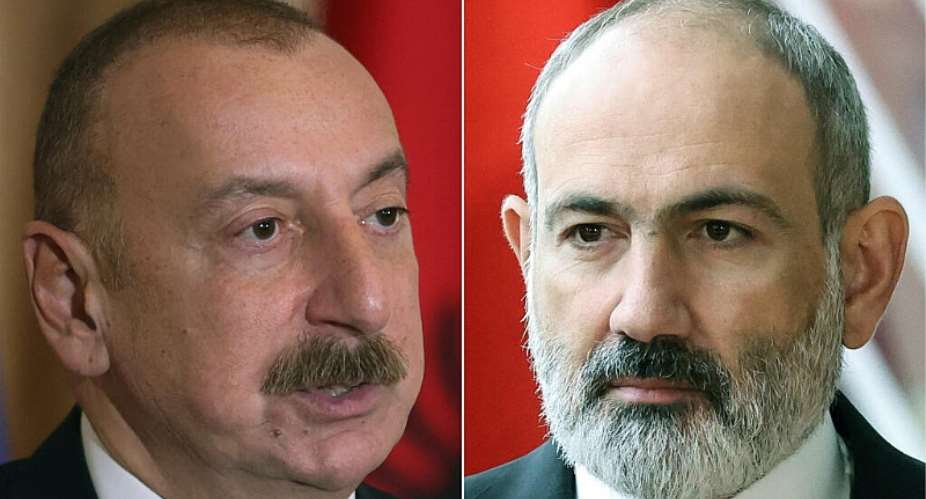
Direct talks in Washington with United States President Donald Trump aim to mark a turning point in efforts to secure lasting peace between Armenia and Azerbaijan, after decades of hostilities.
Armenian Prime Minister Nikol Pashinyan and Azerbaijani President Ilham Aliyev will meet with Trump at the White House on Friday for a summit aimed at ending decades of conflict in the South Caucasus.
The trilateral meeting, confirmed by the Armenian government earlier this week, will focus on finalising a peace framework between Armenia and Azerbaijan, and establishing a new US-backed transit corridor through Armenian territory.
US officials say the summit could pave the way for a “concrete pathway to peace”, following years of failed negotiations and sporadic violence.
The leaders are expected to sign a preliminary peace framework and unveil plans for the Trump Route for International Peace and Prosperity – a proposed 32-kilometre corridor linking mainland Azerbaijan to its Nakhchivan exclave, which borders Turkey.
The corridor would run through southern Armenia and, under the proposed agreement, would be developed by the US, which would hold exclusive rights to its construction and management.
Growing military buildup in Azerbaijan and Armenia a concern for peace talks
"This agreement, if signed, will be a game-changer," one senior US official told reporters. "It's a strategic and economic solution that benefits all parties and reduces the risk of future conflict."
In addition to the corridor, the two leaders are expected to jointly request the formal dissolution of the OSCE Minsk Group, the defunct international mediation mechanism that includes the US, France and Russia.
Decades of conflict
Armenia and Azerbaijan have been locked in hostilities since the late Soviet era, primarily over Nagorno-Karabakh, a region internationally recognised as part of Azerbaijan but previously home to a majority-Armenian population.
The First Karabakh War from 1988 to 1994 left more than 30,000 people dead and more than a million displaced.
A second war in 2020 saw Azerbaijan reclaim much of the territory it had lost, and in 2023 a swift Azerbaijani offensive led to the full recapture of Karabakh, prompting the exodus of more than 100,000 ethnic Armenians.
Although both sides agreed on the draft text of a peace deal earlier this year, progress has since stalled.
Baku is demanding constitutional changes in Armenia that would remove references to Karabakh, while Yerevan remains cautious, particularly ahead of parliamentary elections in 2026.
Another sticking point has been the status and control of the proposed transit corridor. While Azerbaijan wants guaranteed access, Armenia has been wary of ceding too much control – a concern the US aims to address by overseeing the project.
Nagorno-Karabakh almost empty as most of population flees to Armenia
Friday's summit follows months of diplomacy led by US special envoy Steve Witkoff and his team, who have travelled across the region to lay the groundwork for the meeting.
US officials have suggested that a successful deal could open the door for Azerbaijan to join the Abraham Accords – Trump's initiative to normalise relations between Israel and Muslim-majority nations from his first presidential mandate.


 21-year-old Ghanaian man stabbed to death in north London
 Another phone snatcher jailed 11 years in Ashaiman, marking second conviction in...
 Defeated NDC Central Regional Chairman blames former secretary, threatens legal ...
 Haruna Iddrisu urges AG, CID for prosecution of culpable persons in Obuasi SHTS ...
 24-hour economy is private sector-led, New Economy is US$10 billion government-l...
 Nana Kwasi breaks down in tears after reclaiming NDC Ashanti Regional chairmansh...
 Benjamin Danso unseats Ashie-Moore as NDC Greater Accra Regional Chairman
 Ghana to ratify three key AU financial institutions by 2027
 Catholic Bishops want full implementation of Kalba-Gbinyiri conflict report
 For Christ’s sake ‘cocaine economy’ label could damage Ghana’s reputation, put G...


