




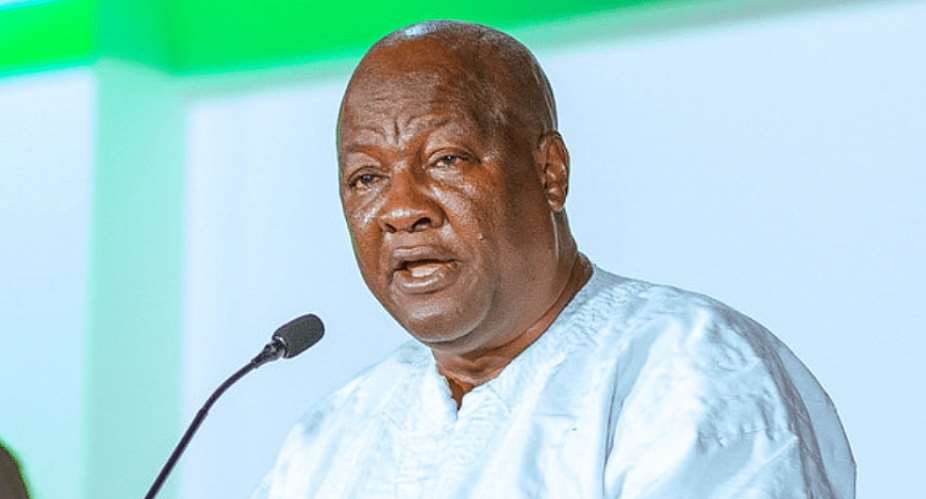
President John Dramani Mahama is set to introduce a comprehensive national policy on oil palm to drive economic transformation and position Ghana's crude palm oil as globally competitive, the Chief Executive Officer of the Tree Crops Development Authority (TCDA), Dr Andy Okra, has disclosed.
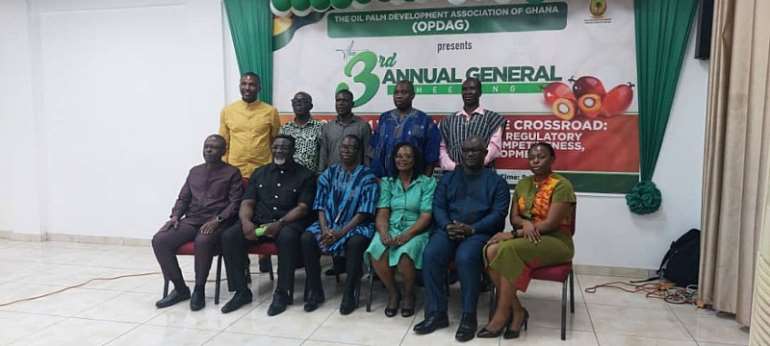
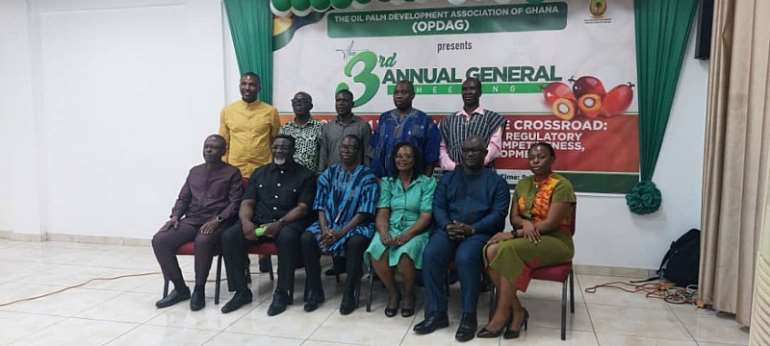
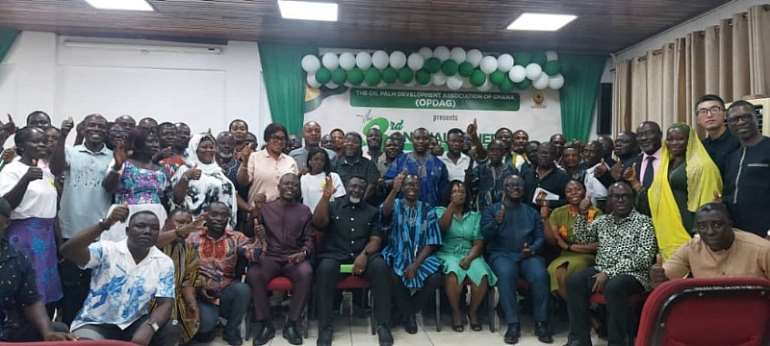
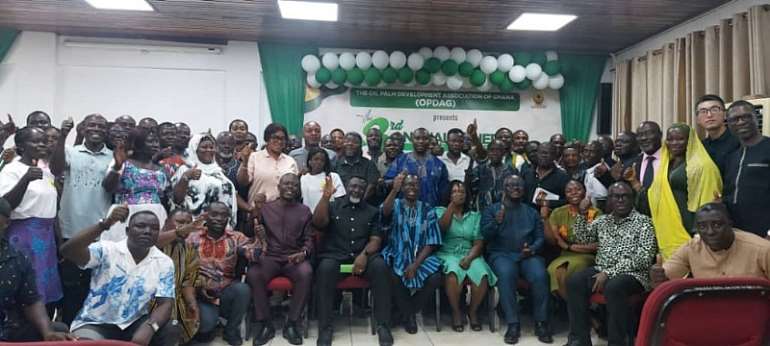
Dr Okra made the announcement at the third Annual General Meeting of the Oil Palm Development Association of Ghana (OPDAG) held under the theme: “The Oil Palm Value Chain at the Crossroads: The Role of Policy Alignment and Regulatory Enforcement for Productivity, Competitiveness, Inclusive Growth and Development.”
According to him, President Mahama has identified oil palm, one of six strategic crops under the remit of the TCDA, as the game-changer in reviving Ghana's agro-industrial sector.
He added that a technical committee had already been constituted, in collaboration with the Ministry of Finance, to design the national oil palm policy framework.
“The oil palm sector in Ghana stands at a critical juncture. We must decisively transition from fragmented efforts to a coordinated, policy-driven and regulated ecosystem that delivers value to every actor along the chain, from smallholder farmers to large-scale processors, and from rural communities to the national economy,” Dr Okra said.
He emphasised that the TCDA was strategically positioned to lead this transformation through regulatory enforcement, policy alignment, and inclusive growth interventions.
Dr Okra underscored the need to harmonise disjointed national policies in agriculture, trade, environment, and land use that have long hampered the sector's development.
He explained that the proposed oil palm policy aligned with Mahama's Feed Ghana initiative, which targets 50,000 hectares of oil palm cultivation over the next four years.
He also mentioned that the policy would also complement the government's 24-hour economy vision by supporting export-oriented processing that enhances foreign exchange earnings.
“We are working closely with the Ministries of Food and Agriculture, Industry, Finance, and Local Government, as well as partners such as OPDAG, Solidaridad, and the Ghana Private Sector Competitiveness Program II (GPSCP II) to synchronise interventions and reduce duplication,” he added.
He further revealed that a policy dialogue later this year would bring together relevant institutions to ensure coherence in programmes and regulatory frameworks for the sector.
Dr Okra highlighted enforcement as key to achieving global competitiveness, citing challenges such as the illicit importation of vegetable oil, lack of quality assurance, land governance issues, and environmental concerns.
To address these, he said, the TCDA had strengthened its legal framework under Act 10/10 and L.I. 2471 and started registering and licensing all actors within the oil palm value chain, including through an online platform.
He revealed that over 2 million seedlings had been distributed freely to farmers, with more support through the out-grower models and financial access schemes.
“With the support of Solidaridad and the Ministry of Food and Agriculture, we are launching a Seed and Seedling Production Policy to provide certified, high-quality planting materials to farmers,” he noted.
He again indicated that the authority was also working with processors to improve standards in traceability, processing quality, and pricing fairness.
Noting that smallholder farmers contribute over 80% of Ghana's oil palm production, Dr Okra stressed the importance of inclusivity in the sector's growth.
“Women and youth, who play vital roles in harvesting, processing, and marketing, will also receive focused support,” he added.
He reaffirmed TCDA's partnership with OPDAG and other stakeholders to build a globally competitive and inclusive oil palm industry that delivers jobs, export earnings, and rural prosperity.
“The road ahead requires strong leadership, collaboration, and commitment. The oil palm value chain is no longer business as usual. It is time for smart policies, firm regulation, and inclusive innovation,” Dr Okra said.
GNA
 Preaching in moving vehicles banned, not stationed vehicles — Mahama clarifies
 Man picking mushroom accidentally shot dead at Nyagbo Kume Forest, hunter in pol...
 Strike suspended, but negotiations for teachers’ benefits not over — GNAT
 CSA rejects FBI claims, insists Ghana led cybercrime operation
 Govt suspends enforcement of ban on preaching in moving vehicles
 Trump strikes diesel deal with Putin, reversing years of pressure on Russia over...
 Powerful 7.6 magnitude quake shakes Panama, triggering tsunami warning
 GH¢800,000 worth of goods lost in Kia Rhino truck fire at Amanfrom
 I never said Ghana has more nurses than it needs — Akandoh
 I have tried reaching Boakye Agyarko after NPP chairmanship race, but to no avai...



Comments
I think president Mahama is the visionary leader for Ghana at this moment.We have to amend the constitution to allow him to develop Ghana for Ghanaians.He is the Nkrummah of our time.God bless Ghana.