




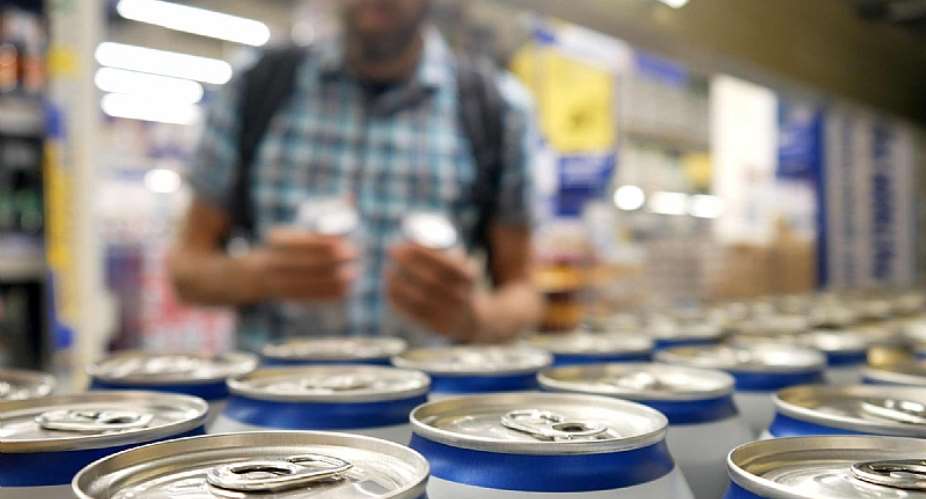
Caffeine is no longer just your morning pick-me-up as research by Accra Street Journal Team led by Samuel Kwame Boadu. In Ghana, it has quietly morphed into a booming — and often unregulated — industry. Beneath the glossy marketing of energy drinks and so-called herbal tonics lies a concerning public health blind spot: excessive caffeine consumption, aggressive imports, and a weak regulatory framework that is allowing a potential crisis to brew.
Caffeine’s Hidden Footprint
Energy drinks — from international giants like Monster and Red Bull to local brands such as Rush, Storm, and Run — now line almost every kiosk shelf in Accra and Kumasi. These products are aggressively marketed, particularly to young adults, drivers, sports athletes and students. Yet many Ghanaians remain unaware of the caffeine content in each bottle or sachet as researched by SKB Journal with our team. Perhaps you should read an article published by SKB JOURNAL titled “How Unhealthy Are Energy Drinks in Ghana? A Look Behind the Buzz”
A 2017 paper by the African Journal of Food, Agriculture, Nutrition and Development sighted by Samuel Kwame Boadu highlighted that energy drink consumption among Ghanaian youth was becoming a growing public health concern due to high caffeine levels and lack of consumer knowledge. According to their findings per given to Accra Street Journal Team, some local energy drinks contain up to 160mg of caffeine per serving — more than a double espresso.
Who Is Importing It?
The Ghana Revenue Authority (GRA) classifies most energy drinks and caffeine-containing products under general beverages, making it difficult to track caffeine imports specifically. However, market research by Euromonitor International estimated Ghana’s energy drink market to be worth $56 million in 2023, a significant rise from under $10 million in 2015.
Much of the caffeine consumed in Ghana is imported, either as an ingredient in energy drinks or as part of dietary supplements. Importers range from registered beverage companies to independent traders using informal supply chains. This makes enforcement of dosage standards and labeling even more difficult.
Is It Regulated?
The Food and Drugs Authority (FDA) Ghana requires registration of all caffeinated beverages, but experts say enforcement is spotty. While the FDA mandates labeling, there is no upper limit for caffeine content in energy drinks, unlike the EU which caps it at 320mg per litre, or the US FDA which requires clear disclosure above 200mg per serving.
In 2018, the FDA briefly suspended the licenses of several herbal drinks after they were found to contain caffeine and sildenafil (Viagra) without proper labeling. Yet the products quietly returned to market, repackaged and rebranded, raising concerns about loopholes in enforcement.
What Health Experts Are Saying
Dr. Paul Nsiah, a clinical pharmacologist at Korle Bu Teaching Hospital, warns of caffeine dependence in Ghana’s youth. “We are seeing more young adults coming in with symptoms of insomnia, palpitations, and even anxiety — all linked to chronic energy drink consumption. It’s not just coffee anymore. It’s a culture of chemical performance.” he briefly told a reporter of Accra Street Journal
A 2021 review published in The Pan African Medical Journal found that in several African countries, including Ghana and Nigeria, there was a spike in emergency cases involving elevated heart rate and high blood pressure directly linked to caffeine overdose, particularly from energy drinks.
The Influence of Culture and Misconceptions
Caffeine has also become entangled with social myths. Taxi drivers are known to drink multiple bottles during night shifts, believing it will “boost virility” or “keep the body warm,” as captured in a 2022 informal study by University of Ghana sociology students. The report noted that over 68% of surveyed drivers consumed more than one energy drink per night, unaware of its cumulative effects.
What Needs to Change
The Ghanaian government, through the Ministry of Health and the FDA, must begin by tightening caffeine labeling laws. Every beverage, tonic, or supplement with caffeine must disclose the exact amount per serving — in bold — with accompanying health warnings.
Secondly, importers and local manufacturers must be held to global caffeine limits. This will require an overhaul of beverage classification systems at the ports and consistent post-market surveillance.
Lastly, the Ghana Education Service (GES) and Ghana Health Service (GHS) should launch targeted public awareness campaigns on the risks of excessive caffeine use, especially in schools and lorry stations.
Conclusion by Samuel Kwame Boadu (Founder & Editor-In-Chief)
Caffeine is legal. But legality doesn’t mean safety — especially when it’s sold in unregulated volumes, marketed to the most vulnerable, and imported under broad beverage codes. Ghana needs a clearer caffeine policy before its casual consumption becomes a national crisis.
References:
- African Journal of Food, Agriculture, Nutrition and Development (2017)
- Euromonitor International Report: Ghana Energy Drinks Market (2023)
- Food and Drugs Authority Ghana Public Notices (2018–2024)
- The Pan African Medical Journal: “Health Effects of Energy Drinks in African Youth” (2021)
- University of Ghana Sociology Dept. Informal Study (2022)
This editorial was first published on Accra Street Journal as "The Dirty Business of Caffeine in Ghana — Report By Accra Street Journal" and written by Samuel Kwame Boadu


 Benjamin Danso unseats Ashie-Moore as NDC Greater Accra Regional Chairman
 Ghana to ratify three key AU financial institutions by 2027
 Catholic Bishops want full implementation of Kalba-Gbinyiri conflict report
 For Christ’s sake ‘cocaine economy’ label could damage Ghana’s reputation, put G...
 Iran claims attack on US military airbase in Bahrain
 'Is this a cyberattack?' Grounded flights, a Microsoft outage and AI chaos fuel ...
 'No justice, no peace': Fifth round of protests sweep across France
 Netanyahu renews call for Israeli government unity as Eisenkot dismisses 'tricks...
 SpaceX's Starship set for return to Earth after failed booster catch
 Sir Sam Jonah appeals to Mahama for restoration of Acheampong's military rank of...


