




As China expands its economic and strategic influence globally, Africa has found itself at the heart of a complex geopolitical tug-of-war. From infrastructure investments to resource extraction, Beijing’s century-long plan for global dominance increasingly positions African nations as both beneficiaries and bargaining chips in a wider global agenda. While some hail the development boost, others warn of long-term debt traps, political influence, and the erosion of sovereignty.
The Strategy That Started Quietly — But Loudly Shapes Our Future
When Chinese leaders met in 1949 to announce the birth of the People’s Republic of China, they weren’t just starting a nation — they were launching a century-long plan to reclaim global dominance. This was not a simple development roadmap. It was, and still is, a 100-year strategy to become the world’s most powerful nation by 2049, the 100th anniversary of the Communist Party’s founding.
We’re now 76 years in, with just 24 years left. And while the world debates Western decline or AI revolutions, Africa — especially Sub-Saharan Africa — is already deeply woven into China’s silent rise.
At SKB Journal, we believe it’s time the African people, especially its thinkers, strategists, and policymakers, stop admiring Chinese development and start decoding its geopolitical intentions.
What Is China’s 100-Year Strategy?
China’s long-term ambition, described as “The Great Rejuvenation of the Chinese Nation”, was first formally outlined by President Xi Jinping in 2012, though it had been in practice since Mao Zedong in 1949. Its key milestones include:
- 2000–2020: Economic growth phase (China becomes world’s factory)
- 2020–2035: Global influence expansion (Belt and Road, tech, military reach)
- 2035–2049: Become the world’s undisputed superpower [Source: The Brookings Institution, 2020 – “China’s Vision for the World”] Council on Foreign Relations – Xi Jinping Thought on Socialism]
Africa: The Silent Chessboard in China’s Plan
Africa holds 30% of the world’s mineral reserves, 65% of its arable land, and the world’s youngest population. China didn’t miss that memo. While the West offered aid with strings, China came with loans, roads, railways — and long-term control.
What Have They Achieved So Far in Africa?
- Infrastructure Dominance: Over 1 in 5 African infrastructure projects is now built by China, including railways in Nigeria and Ethiopia, and ports in Kenya and Djibouti. [Source: McKinsey & Company – “Dance of the Lions and Dragons”]
- Digital Colonization: Huawei and ZTE build most of Africa’s mobile networks, while China funds surveillance systems in over 15 countries. [Source: Carnegie Endowment – “China’s Surveillance Exports”]
- Debt Diplomacy: African countries owe China over $145 billion as of 2023. When Zambia defaulted in 2020, China quietly renegotiated — on its terms. [Source: China Africa Research Initiative – Johns Hopkins SAIS]
- Resource Extraction: China now controls large mining concessions in DRC (cobalt), Zambia (copper), and Guinea (bauxite). These are critical for green energy dominance.
- Military Positioning: China has built its first overseas military base in Djibouti and regularly trains African military forces. [BBC & Foreign Policy Reports, 2021]
The Threat? Dependency, Not Diplomacy
On the surface, China brings “development.” But beneath that is a more calculated outcome: dependency.
At SKB Journal, we view China’s growing control not just in economics — but in ideas, governance, and sovereignty. China trains African bureaucrats in Beijing. Chinese state media is expanding its influence in African airwaves. What we think, how we build, even what our youth believe — is gradually being shaped by Chinese soft power.
A 2019 SKB Journal analytics piece revealed that over 60% of Ghanaian procurement in major road and energy projects involved Chinese contractors or financing — not because they were cheaper, but because they came with loan conditions. It’s a subtle but deep capture of national direction.
24 Years Left: What Happens by 2049?
By 2049, China intends to:
- Dominate global trade, digital infrastructure, and AI
- Lead in military modernization and intelligence gathering
- Control strategic supply chains — especially rare earth minerals and energy
- Shape global norms, including internet governance, development models, and diplomacy
Africa — if it does not define its own counter-strategy — risks becoming a subordinate zone: mineral-rich, labour-ready, but decision-poor.
What Should Africa Do — Now?
SKB Journal offers this 5-point framework:
- Audit All Chinese Deals: Public disclosure and cost-benefit analysis on infrastructure, mining, and digital contracts.
- Negotiate Collectively: A Pan-African trade alliance must negotiate with China, not fragmented states.
- Invest in Local Innovation: We can’t just build roads — we must build minds.
- Strengthen Strategic Media: Counter China’s narrative dominance with platforms that reflect African interest.
- Develop a 100-Year African Strategy: If China can think 100 years ahead, why can’t Africa?
Final Word from Samuel Kwame Boadu's Journal
China’s 100-year plan isn’t a myth — it’s a methodical, documented state policy. Africa is not just watching; we’re already in the movie. The question is whether we are lead actors or background extras.
There are 24 years left to 2049. That’s two decades to decide if our grandchildren will inherit a continent led by African vision or bound by Chinese debt, apps, and influence.
Africa’s future will not be sold in a handshake. It will be protected by strategy.
This article was first published on samuelboadu.com as "China’s Century of Power: How Africa Is Already Caught in the Middle of a Global Strategy"
—
Written by Samuel Kwame Boadu | Founder, SamBoad
Founder & Editor In Chief – SKB Journal
Cited Sources:

 Credit Godfred Dame for Ghana's US$393 million tax arbitration victory against T...
 How can EOCO be accused of wanting to kidnap Baffour Awuah in full glare of the ...
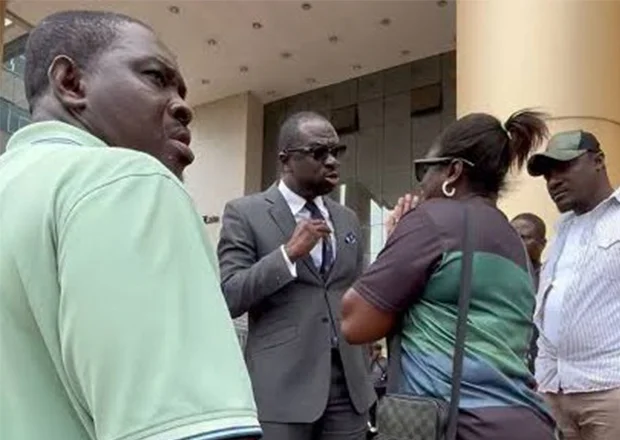 'She is not party operative' – Kwakye Ofosu defends EOCO officer
 Baffour Awuah wanted over alleged financial loss, dissipation of public funds an...
 Brazil is the main source of cocaine in Ghana by sea concealed in sugar containe...
 'The cacophony of noises surrounding my comments were pure mischief' — Chief Jus...
 ‘Judges must not abandon their humanity because of their judicial office’ – Chie...
 GTEC flags over 100 tertiary institutions as unrecognised
 Political protection may be behind decline in visible cocaine trafficking in Gha...
 Ghana identified as source of explosives used in Sahel conflicts — Crime Index r...


