




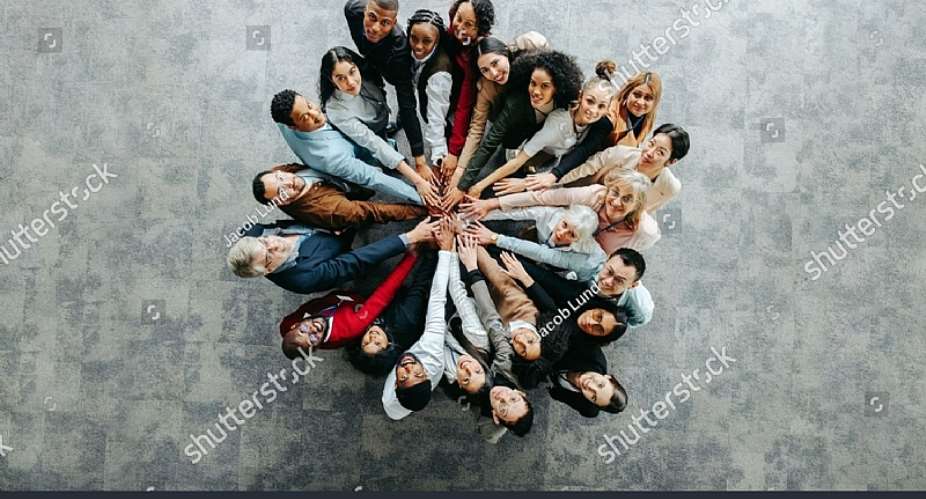
Inclusion is widely regarded as a social good; but what it means varies dramatically across cultural frameworks. Western liberal traditions emphasise individual rights and access, Indigenous worldviews prioritise relational responsibility and spiritual kinship, and Ghanaian Indigenous philosophies offer a communal ethic rooted in harmony, responsibility and ancestral legacy. Examining these differences reveals how “belonging” is shaped by culture, and why inclusive systems must be locally grounded, not universally imposed.
Western Frameworks: Inclusion as Equal Access
In the Western tradition, inclusion is based on individual autonomy and legal equality. This approach aims to integrate marginalised groups into dominant structures such as education, governance and the workforce through rights-based frameworks. For instance, a child with a disability in the U.S. may receive an Individualised Education Programme (IEP) that guarantees support in mainstream schooling. This ensures “access”.
Indigenous Frameworks: Inclusion as Relational Responsibility
In contrast, many Indigenous cultures: from the Māori of New Zealand to the Yolŋu of Australia understand inclusion as embedded in a web of relationships among people, land, ancestors and spirits. Belonging is inherent, not granted.
Consider the Māori concept of whakapapa (genealogy), which situates individuals within an extended relational universe. To be included is to fulfil one’s role in the intergenerational ecosystem of human and non-human beings. This is exemplified by New Zealand’s 2017 decision to grant legal personhood to the Whanganui River, not as an environmentalist gesture, but to acknowledge the river as an ancestor. This was formalised through the Te Awa Tupua (Whanganui River Claims Settlement) Act.
Education in such settings often incorporates storytelling, ceremonies and land-based learning, acknowledging children as carriers of cultural knowledge rather than passive recipients of standardised curricula.
Ghanaian Frameworks: Inclusion as Communal Harmony
In Ghanaian Indigenous worldviews—especially among the Ewes, Akans and Dagombas—inclusion is governed by principles of communalism, respect for elders and cosmic balance. The notion that “I am because we are”, while popularised by South African ubuntu, deeply resonates with Ghanaian cultural logic.
Here, inclusion is not about accepting difference within existing structures; rather, it is about preserving harmony and participation within a moral and spiritual community. Elders, chiefs and spiritual leaders mediate belonging, not laws or policies. A person with intellectual disability, for instance, may be considered “a child who has fallen ill” rather than deviant—evoking care, not exclusion.
The extended family system guarantees that no individual is left without social support. If a child loses both parents, kinsfolks take over seamlessly. Inclusion, then, is organic and generative; it emerges through obligation, not entitlement.
In traditional Ghanaian education (before colonial schools), learning happened through apprenticeship, proverbs and storytelling, not formal classrooms. Inclusion meant being taught by the community to serve it, not entering a system designed without it.
Contrasting Assumptions
| Aspect | Western | Indigenous (Māori/Yolŋu) | Ghanaian Indigenous |
| Inclusion Defined As | Equal rights/access | Interconnected relations | Communal harmony |
| Root of Belonging | Legal citizenship | Ancestral/spiritual ties | Family/clan identity |
| Nature of Exclusion | Rights violation | Broken relationships | Social/spiritual imbalance |
| Authority Structure | State and law | Elders and tradition | Chiefs, family, ancestors |
| Educational Approach | Mainstream with supports | Land-based, storytelling | Apprenticeship, orature |
Toward Ethical Hybridity
Rather than ranking these philosophies, a more productive path is synthesis. In Ghana, for instance, there are emerging efforts to blend Western schooling with cultural relevance—as seen in “local language instruction” mandates in early education and community-led reconciliation courts that blend formal justice with traditional mediation.
Elder Albert Marshall’s Two-Eyed Seeing vision—“seeing with one eye the strengths of Indigenous knowledge, and with the other the strengths of Western systems”—applies equally here. Inclusion should be contextual, not universalised.
To conclude, whether viewed through legal rights, relational responsibilities, or communal harmony, inclusion is always cultural. Western models emphasise equality; Indigenous ones highlight interdependence; Ghanaian traditions offer a spiritually infused ethic of care and community. To create inclusive societies, we must listen to diverse philosophies, not to flatten them into policy, but to let them reorient what it means to belong.
By James Attah Ansah
Educationist and Author
Email: [email protected]
Website: https://jaansahpublications.com


 How IGP Yohuno led Police team to rescue victim, arrest four kidnappers in Assin...
 Akufo-Addo would have used Accra-Kumasi expressway for galamsey – Mahdi Gibrill
 Nigeria's Dangote refinery launches continent's biggest IPO
 Accra-Kumasi Expressway to cut travel time to 2hours, drive 120km per hour — Mah...
 'Our own money $2billion ready, we have not gone to borrow money from anywhere' ...
 Founder’s Day September 21 declared public holiday
 Council of State was not qualified to determine prima facie case against Torkorn...
 'Grounds for removal of Chief Justice and justice of superior court shallow, eph...
 Don't be a Bar that flips on principles but a Bar that is consistent — AG tells ...
 Prostate cancer may show no symptoms until advanced stage – Urologist warns


