




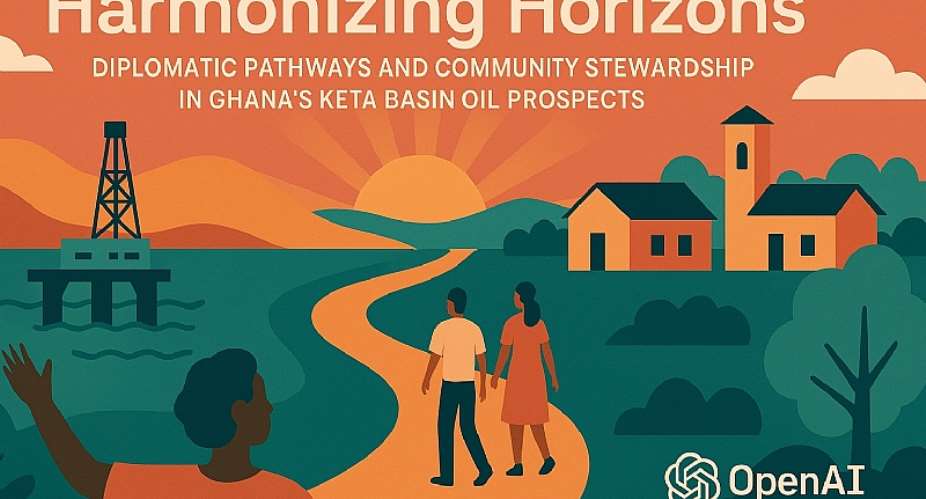
🛢️📚 Educational Context: The Strategic Relevance of the Keta Basin
The Keta Basin is a sedimentary region in southeastern Ghana, extending into the Republic of Togo. It forms part of the Volta Basin complex and has long been identified as a site of untapped hydrocarbon potential. Early geological surveys suggested the presence of oil and gas, but exploration stalled due to insufficient data and infrastructure. Today, seismic mapping and regional energy imperatives have revived interest.
However, an unresolved boundary dispute with Togo, involving maritime and land territories, continues to delay investment and development. According to Ghana’s Boundary Commission, resolving this issue is a prerequisite for resource extraction.
“The matter has reached the Heads of State, and dialogue continues to find an amicable solution.” — Major General Emmanuel Kotia, Ghana Boundary Commission (2024)
🕊️ Diplomatic Pathways: From Borders to Bridges
While international tribunals like the Special Chamber of the International Tribunal for the Law of the Sea (ITLOS) were used in the Ghana–Ivory Coast maritime case, the Keta dispute opens space for a culturally nuanced, cooperative approach.
Key Recommendations:
ECOWAS Mediation
- The Economic Community of West African States (ECOWAS) should facilitate a neutral, bilateral mediation panel. This approach aligns with ECOWAS’s historical role in conflict resolution and reinforces regional integration.
- Pan-African Framing Reframing the resolution as a Pan-African success—not merely a bilateral compromise—can garner support by evoking collective liberation narratives and promoting continental solidarity.
- Boundary Literacy Initiatives Universities and civil society groups can run public education campaigns on maritime law, using local languages, radio, and visual storytelling formats like Adinkra symbolism to deepen public understanding.
🤝 Civic Inclusion: Empowering the Coastal Voice
Coastal communities near Keta have long histories of fishing, spiritual practices, and artisanal livelihoods linked to the ocean. Exclusion from decision-making not only threatens legitimacy—it undermines peace.
Strategic Engagements:
- Community Oil Councils (COCs) Modeled after Ghana’s CHPS (Community-based Health Planning and Services) compounds, these local forums would include chiefs, youth, elders, and professionals to deliberate on oil exploration plans and impacts.
- Youth Legacy Dialogues Cultural storytelling, digital exhibitions, and poetry circles rooted in Ewe traditions and Adinkra motifs could foster civic ownership and eco-conscious pride.
- Cross-Border Cultural Diplomacy Establish annual festivals that bring together Ghanaian and Togolese communities. Shared Kente weaving, Agbadza dance, and culinary exchanges build cultural trust far more effectively than political rhetoric.
🌊 Environmental Stewardship: Protecting the Coastal Soul
The Keta region suffers from coastal erosion, illegal sand mining, and habitat degradation. These challenges underscore the need for environmental integration in oil governance.
Proposed Safeguards:
- Participatory Environmental Impact Assessments (EIAs) Involve local communities in identifying sacred groves, fish habitats, and vulnerable zones through oral histories, satellite mapping, and digital tools.
- Greenbelt Restoration Projects Dedicate portions of future oil revenue to mangrove rehabilitation, community shoreline protection, and indigenous tree planting.
- Transparent Data Portals Develop open-access platforms showing oil contracts, compliance records, and ecological benchmarks. Include translations in Ewe and English for accessibility.
⚖️ Legal and Policy Coherence: Institutional Strength for Resource Justice
While Ghana’s Petroleum Revenue Management Act (PRMA) lays the foundation for accountability, the transboundary nature of the Keta Basin demands legal innovation.
Policy Recommendations:
- Joint Resource Frameworks Ghana and Togo should draft inter-state protocols governing shared oil zones, modeled after cooperation in Uganda–DR Congo’s Lake Albert region.
- Asset Reinvestment Trusts Any abuse of oil revenue or verified ecological damage should trigger a reinvestment mechanism directly benefitting affected communities.
- Parliamentary Oversight Forums Regular bipartisan forums involving youth, cultural custodians, environmental experts, and MPs would ensure transparency and policy alignment.
🎯 Conclusion: A Legacy of Unity, Dignity, and Innovation
Oil is the fuel of modernity, but coastal heritage is the conscience of the future. The Keta Basin holds potential not just for economic growth, but for redefining African diplomacy, stewardship, and civic unity.
Through trust-building, cultural affirmation, and inclusive governance, Ghana and Togo can transcend boundary disputes and offer a blueprint for how Africa develops its resources—with equity, empathy, and elegance.
“When the drumbeat of diplomacy matches the heartbeat of the people, resolution becomes rhythm.” — Atitso Akpalu
📖 References
1. Ghana Boundary Commission. (2024). Press Statement on Ghana–Togo Maritime Boundary Dispute.
2. African Union Commission. (2023). Inter-African Dialogue Models for Regional Disputes.
3. Lake Albert Basin Protocol. (2021). Joint Resource Management Agreement between Uganda and DR Congo.
Retired Senior Citizen
Teshie-Nungua
[email protected]


 ‘Too arrogant, too sure of itself’ France confronts its legacy in Africa
 Nigeria's unwritten power-sharing rule looms over presidential race
 Several killed, dozens wounded in Jordan church shooting
 ‘I killed lots of terrorists, but it didn’t make me feel better’: The trauma hau...
 Casualties feared as multi-storey building collapses in Nairobi
 Cabinet approves bill to regulate public relations practice – Shamima Muslim
 Bawumia was right; NDC's economy is only on paper, not in people's pockets – Kwa...
 NDC should credit Bawumia for introducing gold-for-reserves policy – Kwadwo Poku
 Obuasi SHTS sex scandal: Gender Ministry deploys team to support affected studen...
 Adwoa Safo's Dome-Kwabenya comeback bid must push Elikplim Akurugu to deliver mo...


