




After years of missed opportunities and economic missteps, Ghana’s renewed commitment to fiscal discipline may finally be paying off, according to Professor Godfred Bokpin of the University of Ghana Business School.
Professor Bokpin attributes the recent appreciation of the cedi to tough but necessary fiscal reforms that, in his view, should have been implemented at the onset of the COVID-19 crisis.
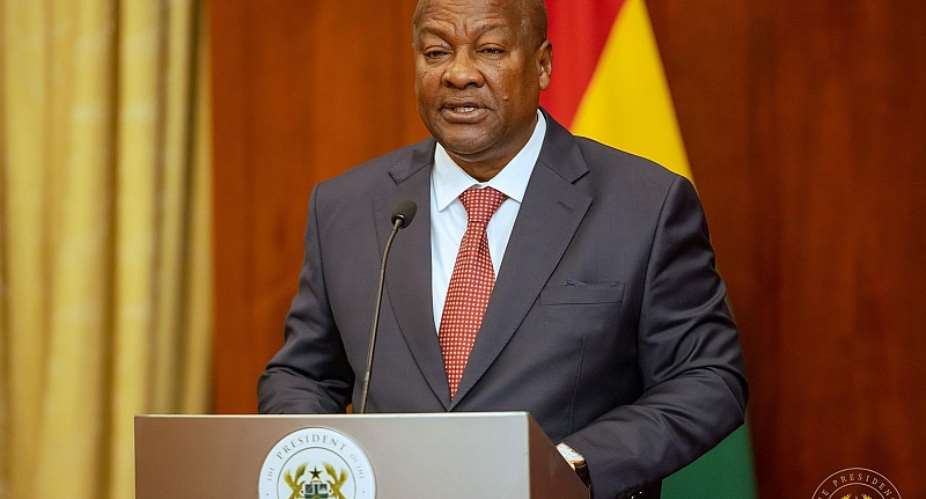
He commended the leadership of President John Mahama, noting that the current administration has demonstrated the resolve to steer the country in a new direction, in line with its 2024 campaign promises.
"You can observe leadership from the top. You can see tough decisions that are reflected in what we are witnessing," Prof. Bokpin stated during a panel discussion on TV3’s KeyPoints on May 24.
He recalled that since the COVID outbreak in 2020, economists and policy analysts had consistently called for reduced government spending and a gradual path to fiscal consolidation. Instead, the government at the time opted for massive spending that, according to Bokpin, worsened inflation and deepened economic hardship.
"In 2022, the Bank of Ghana took decisive action with excess liquidity that led to inflationary pressures, pushing over 800,000 people into poverty," he remarked, noting that poor coordination between fiscal and monetary policies had significantly weakened the economy’s stability.
Professor Bokpin also criticized Ghana’s performance under the 2024 IMF program, stating that the country fell short of several critical benchmarks, apart from GDP growth and international reserves.
"When it comes to the primary anchor for fiscal consolidation, we fell short," he continued. "We were expected to achieve a primary surplus of 0.5% of GDP, but instead, we recorded a negative of over 3%."
Despite these setbacks, he acknowledged a shift in the government’s fiscal strategy in 2025, suggesting that the administration is now taking corrective measures.
"They have utilized the 2025 budget to effectively address some of these imbalances. They have managed to realign the IMF program by shifting from a negative surplus of over 3% of GDP to a positive primary balance of 1.5% of GDP," he concluded.

 President Mahama urges African countries to fund own peace operations, warns aga...
 Govt to borrow GHS15.38 billion from domestic market, plans DDEP bond buyback
 Finance Ministry says all 2026 ABFA allocations reserved for Accra-Kumasi expres...
 'Surprised and disappointed' — GTA CEO Efua Houadjeto responds to Abeiku Santana...
 Police arrest NDC delegates for allegedly photographing ballots at Bimbilla cons...
 Gambia’s Chief Justice pays courtesy call on Asantehene at Manhyia Palace
 NDC Constituency polls: Delegates invoke 'Antoa' deity over alleged album manipu...
 NDC Oforikrom constituency election stalls over ballot paper delays
 Former NDA CEO Sumaila Abdul-Rahman, three others fined GH¢84,000 each over proc...
 Wa: Abandoned newborn baby boy rescued at Sombo


