




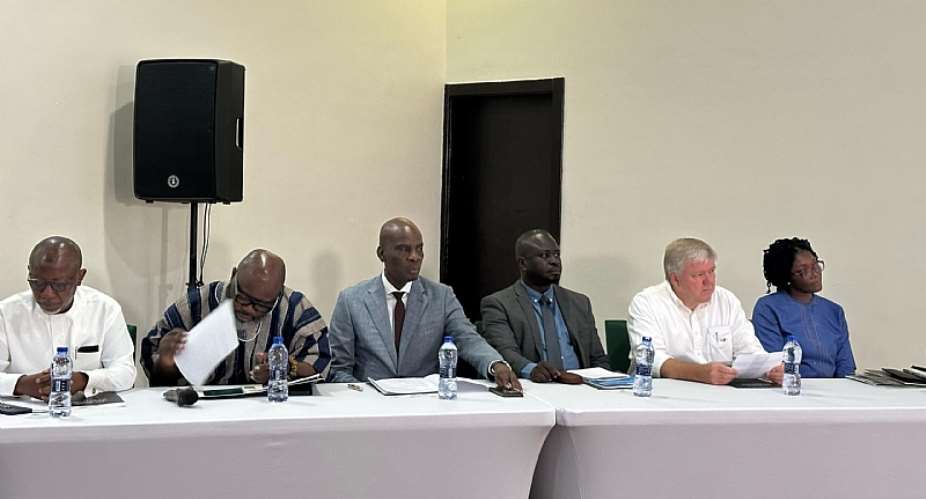
A report by the Ghana Statistical Service has revealed that access to education in the country has steadily increased, while quality has fluctuated.
The report showed that the gross enrolment rate at the kindergarten level more than doubled over the last two decades, from 51 per cent to 122 per cent.
Professor Samuel Kobina Annim, the Government Statistician, presented the findings in the report titled “Access to and Quality of Basic and Secondary Education in Ghana (2000–2023).”
The report provides statistics on enrolment, teacher availability, and student performance in core subjects at JHS and SHS, using data from the Education Management Information System.
It was conducted by the Ghana Statistical Service in collaboration with the Ministry of Education.
The enrolment trend analysis showed that between 2001 and 2003, the Kindergarten Gross Enrolment Rate (GER) doubled from 51 per cent to 122 per cent.
Primary GER increased from 80 per cent to 90 per cent, JHS GER rose from 64 per cent to 98 per cent, and SHS GER tripled from 25 per cent to 72 per cent.
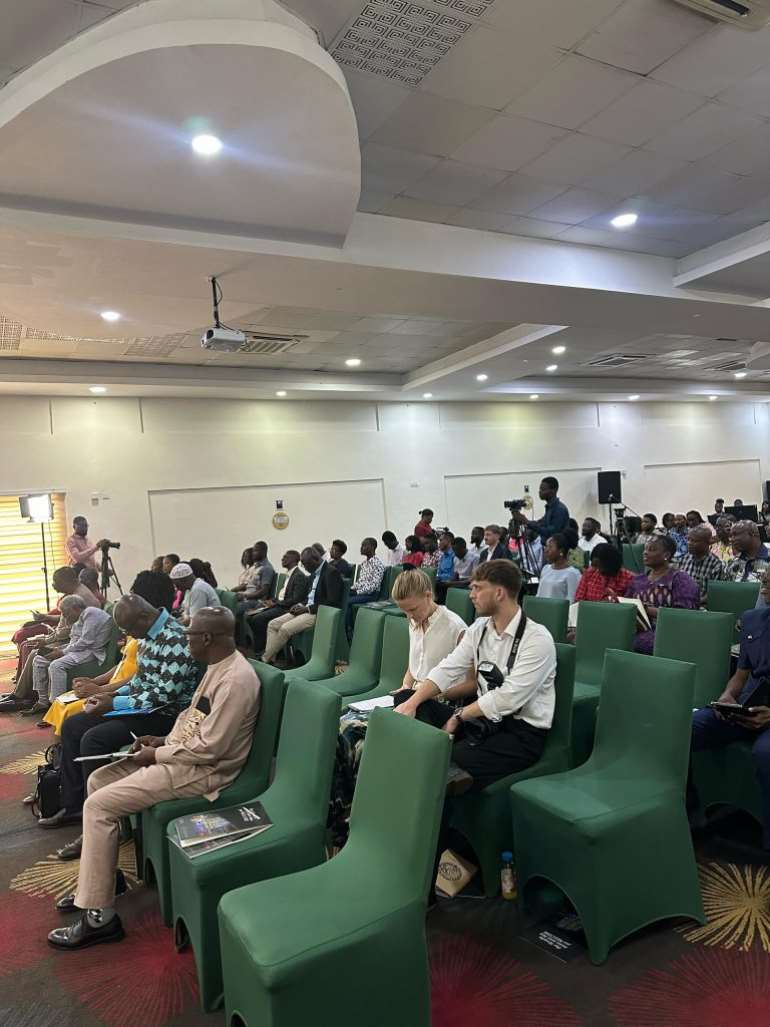
Despite high Gross Enrolment Rates, Net Enrolment Rates (NER), which measure age-appropriate enrolment, showed significant proportions of pupils at all four education levels were not within expected age ranges.
In 2023, kindergarten NER was 66 per cent, meaning two in three children aged four to five years were enrolled in kindergarten.
Eight in 10 children (80 per cent) aged six to11 were enrolled in primary school.
However, only 47 per cent of children aged 12 to 14 were enrolled at the JHS level.
Gender disparities in education access have decreased, with gender parity achieved at the primary level.
But gaps persist in educational quality, as measured by core subject pass rates.
Gender differences in pass rates were more pronounced in English and Mathematics than in Science and Social Studies at JHS and SHS levels.
The 2021 WASSCE results showed boys (70 per cent) outperformed girls (60 per cent) in Mathematics, while girls (60 per cent) outperformed boys (50 per cent) in English.
The report also highlighted regional variations in education quality compared to access.
For instance, the pupil-to-trained-teacher ratios in the Northern, North East, and Savannah regions exceed 50 pupils per trained teacher, more than double the ratio in Greater Accra (25 pupils per trained teacher).
Disparities in pass rates were also evident.
The Bono Region recorded the highest WASSCE Mathematics pass rates in 2019, almost five times higher than the North East Region (21 per cent).
For English, Bono (75.3 per cent) had pass rates more than 10 times higher than the North East (5.1 per cent) and Savannah (8 per cent).
Mr. Haruna Iddrisu, the Minister of Education, stated that the report’s findings would provide valuable insights for the National Education Forum Planning Committee, ensuring strategies are data-driven and aligned with national priorities.
The report tracks progress toward achieving Sustainable Development Goals four (Quality Education), five (Gender Equality), and ten (Reduced Inequalities), focusing on access, gender parity, and learning outcomes.
GNA

 AMA directs closure of shops, markets for October 3 National Cleanup Day
 ‘We will resist it’ – NUGS kicks against proposed 26% UG accommodation hike
 ‘Fake’ – EOCO denies GH¢50m bail report on Baffour Awuah
 ‘The NPP I seek to lead will stand by every member’ – Boakye Agyarko
 ‘Keeping Baffour Awuah in custody serves no purpose’ – Boakye Agyarko tells EOCO
 GACL announces enhanced security screening at Accra International Airport
 Pursue drug kingpins, not political opponents — Afenyo-Markin tells EOCO
 Over 130 courts are without magistrates – JUSAG President
 We demand immediate, unconditional release of Baffour Awuah from EOCO custody – ...
 COMAC gives Finance Ministry 14-day ultimatum to suspend new fuel tax rule


