




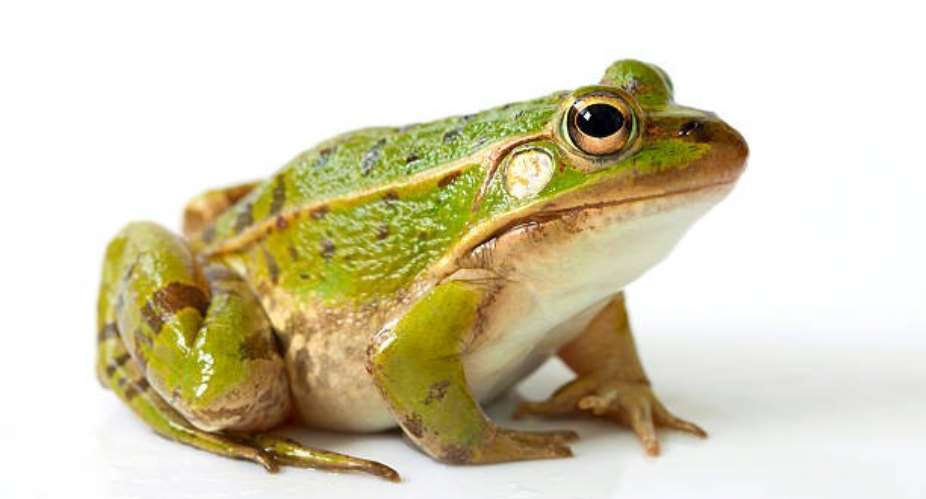
Research conducted by the Forestry Research Institute of the Council for Scientific and Industrial Research (CSIR-FORIG) has led to the discovery of two potentially new frog species from the genus Phrynobatrachus, which are now being considered for formal scientific description.
Phrynobatrachus is a genus of Sub-Saharan frogs belonging to the monogenetic family Phrynobatrachidae.
In addition to these possible new species, the research also identified the male form of a previously described species from Ankasa, which was previously known only from two female specimens and one juvenile.
This marks a significant step toward fully understanding the species’ biology.
The study was led by a team of three research scientists from CSIR-FORIG in collaboration with Herp Conservation Ghana, an NGO dedicated to amphibian conservation.
They are Dr. Bright Obeng Kankam, Senior Research Scientist, Dr. Caleb Ofori-Boateng, Senior Research Scientist and Mrs. Hamdia Mahama Wumbeidow, Research Scientist.
The research aimed to improve the conservation status of Ghana's endemic, rare, and threatened amphibians, thereby increasing their chances of survival amid growing environmental threats.
According to the CSIR-FORIG Annual Report, half of all amphibian species worldwide face an imminent risk of extinction.
Despite this, amphibians have received the least conservation attention—particularly in Africa.
Southern Ghana’s forests serve as a critical stronghold for amphibians, hosting a high number of rare and endemic species.
However, these forests are among the most threatened ecosystems especially when Over 80 per cent of Ghana's forests have been lost, and deforestation continues at an alarming rate.
The research was driven by concerns that continued forest loss could have severe consequences for amphibians, many of which remain poorly studied.
It is feared that some species could go extinct before they are even formally discovered—a phenomenon known as crypto-extinction.
With funding from the National Geographic Society, the project surveyed five previously understudied forest sites for amphibian diversity: Cape Three Points, Onepone Endangered Species Refuge (near Amedzofe), Ankasa Conservation Area, Kakum National Park, Pra-Suhien Forest Reserve & Ebonloa Community Forest (Southwestern Ghana)
To validate and describe the newly discovered species, the project's lead researcher visited the Museum für Naturkunde in Berlin to compare specimens with existing type materials and begin drafting scientific manuscripts.
This groundbreaking research provides crucial insights into Ghana's amphibian biodiversity and underscores the urgent need for stronger conservation efforts to protect these fragile ecosystems.
GNA

 Dr. Bomfeh opposes calls to restore Acheampong’s military rank posthumously
 Mahama pledges to translate Africa’s migration commitments into practical action
 Majority, Minority clash over Mahama’s New Economy agenda during 2027 Budget deb...
 V/R: Rare dolphin washes ashore at Kedzikope after decades
 Dutch court approves extradition of Asante Akim North MP to US over fraud allega...
 Mahama says new DNA laboratory will help resolve paternity, inheritance disputes
 Two remanded over murder of woman in attempt to GH¢19,000 owed her at Dormabin
 Hegseth makes surprise trip to Venezuela, renews military cooperation
 Anthropic prices blockbuster IPO, defying broader AI stock slump
 Xi, Trump and Putin prepare for historic summit, but will it reset the world ord...


