




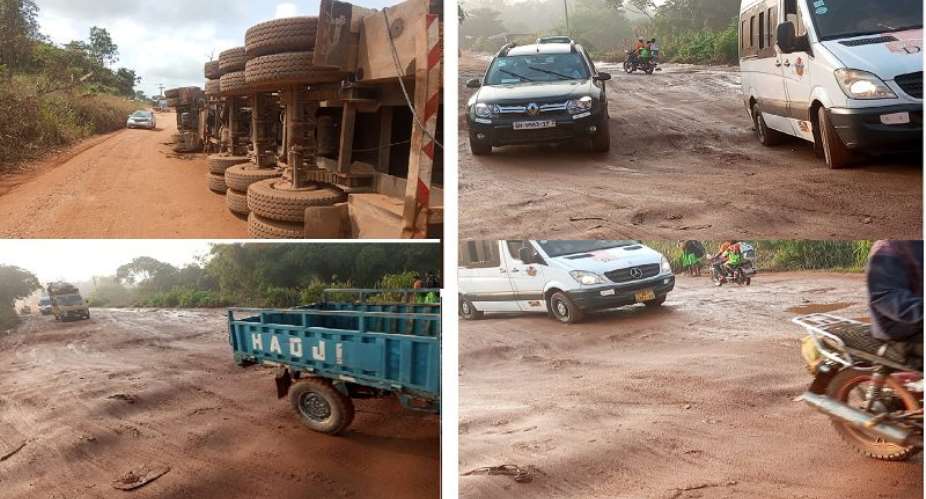
Ghana, a country known for its rich natural resources, vibrant culture, and resilient people, is facing a major infrastructure challenge: bad roads. The deplorable state of roads in Ghana is not only a nuisance but also a significant threat to economic growth, human life, and national development.
The State of Roads in Ghana
Ghana's road network is estimated to be around 72,000 kilometers, with only about 23% of these roads being paved. The majority of the roads are in a poor state, characterized by potholes, cracks, and erosion. The situation is particularly dire in rural areas, where roads are often unpaved and unmaintained.
Several factors contribute to the poor state of roads in Ghana. These include:
- Inadequate funding: Insufficient budget allocation for road maintenance and construction has led to a backlog of road projects.
- Lack of maintenance: Poor maintenance culture and inadequate equipment have resulted in roads deteriorating rapidly.
- Overloading: Overloading of vehicles, particularly trucks, has caused excessive wear and tear on roads.
- Climate change: Ghana's tropical climate, characterized by heavy rainfall and high temperatures, accelerates road deterioration.
The consequences of bad roads in Ghana are far-reaching and devastating. Some of the impacts include:
- Economic losses: Bad roads increase transportation costs, reduce productivity, and hinder economic growth.
- Road accidents: Poor road conditions contribute to a high number of road accidents, resulting in loss of life and property.
- Health risks: Bad roads can lead to increased travel times, which can exacerbate health conditions, particularly for pregnant women and people with chronic illnesses.
- Food insecurity: Bad roads can hinder the transportation of food, leading to food insecurity and price increases.
To address the challenge of bad roads in Ghana, the following measures are necessary:
- Increased funding: Allocate sufficient funds for road maintenance and construction.
- Improved maintenance: Develop a regular maintenance schedule and invest in equipment and personnel.
- Enforce traffic regulations: Implement and enforce laws to prevent overloading and reckless driving.
- Community involvement: Engage local communities in road maintenance and construction efforts.
- Invest in alternative transportation: Develop alternative transportation modes, such as rail and water transportation, to reduce reliance on roads.
The state of bad roads in Ghana is a pressing national issue that requires immediate attention. It is imperative that the government, private sector, and civil society work together to address this challenge. By investing in road infrastructure, improving maintenance, and enforcing traffic regulations, Ghana can reduce the economic, social, and human costs of bad roads and promote sustainable development.
SOLOMON LARWEH (JOURNALIST)


 Israel must win 'because we’ve got no other choice’, PM Netanyahu tells UN
 Mahama reiterates Ghana's commitment to two-state solution to Palestine-Israel c...
 Ablakwa calls for Return of African Artefacts held abroad
 Madina MP Francis-Xavier Sosu reportedly collapses while speaking at GIMPA
 Kumasi drivers, passengers react to 8% transport fare increase
 I will unite Africa, Caribbean and Latin America into world's biggest trading bl...
 Mahama petitioned to halt Sentuo Airport Garden City construction after sod cutt...
 Government should not fund the $4 billion Accra-Kumasi Expressway project — Alan
 Democracy must deliver tangible social benefits to citizens – Mahama
 Court to rule on bail applications of six accused in 3.9-tonne cocaine seized in...


