




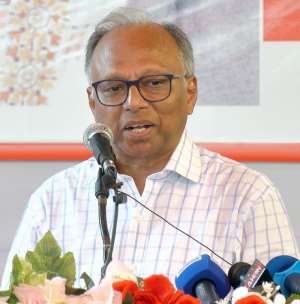
The relaunch of Amar Desh on December 22, 2024, marks a significant moment in the history of Bangladesh's media landscape. After years of suppression, persecution, and relentless adversity, the return of this iconic daily newspaper signals not only the resilience of its editor, Mahmudur Rahman, but also a triumph for freedom of the press and expression in the country.
Mahmudur Rahman’s journey as a journalist has been nothing short of extraordinary. Despite repeated government crackdowns, including the closure of Amar Desh in 2010 and 2013 by the Awami League regime, he has remained steadfast in his commitment to exposing corruption, standing against fascism, and upholding the rights of the people. His unwavering resolve, in the face of immense challenges, positions him as a visionary leader for press freedom—a phoenix who has risen from the ashes of oppression.
A Courageous Battle Against Suppression
The journey of Amar Desh has been fraught with challenges. Twice shut down under the Awami League government, the newspaper became a symbol of defiance against censorship. Mahmudur Rahman’s arrest in 2010 and 2013 highlighted the severe constraints faced by journalists in Bangladesh, particularly those who dare to speak truth to power. His exposés on corruption and human rights abuses, as well as the publication of leaked Skype conversations revealing judicial impropriety, underscored his fearless commitment to accountability.
Rahman’s courage and conviction stand as a beacon of hope for independent journalism. His struggle serves as a stark reminder of the importance of safeguarding press freedom in a democracy. Despite lacking financial backing and facing a deeply entrenched and well-funded opposition, Rahman has shown unparalleled bravery in relaunching Amar Desh, demonstrating his unwavering belief in the power of truth and justice.
A Leader for Freedom of Press
Mahmudur Rahman’s leadership transcends the realm of journalism. He understands the complex dynamics of power in Bangladesh, particularly the pervasive influence of Indian hegemony in various facets of the country's system. This influence, deeply ingrained over decades, poses a formidable challenge. Yet, Rahman’s ability to persist against such an organized and well-funded adversary speaks volumes about his determination and strategic foresight.
In relaunching Amar Desh, Rahman has not only revived a newspaper but also reignited a platform for the people of Bangladesh. His vision for Amar Desh as a vehicle for exposing corruption, protecting national interests, and amplifying the voices of ordinary citizens aligns with the core principles of journalism. His work demands international recognition for its role in championing press freedom under dire circumstances.
The Future of Amar Desh
The relaunch of Amar Desh is an opportunity to redefine its role in Bangladesh’s media ecosystem. While its association with the BNP and like-minded political parties may attract criticism, the newspaper has the potential to transcend partisan boundaries by adhering to the highest journalistic standards. Honesty, fairness, balance, and independence must remain at the core of its operations.
To resonate with the younger generation and the broader public, Amar Desh must prioritize stories that reflect the aspirations and struggles of ordinary people. Moving beyond political rhetoric, the newspaper can position itself as a credible and influential voice by embracing multimedia journalism and diversifying its content.
A New Chapter in Press Freedom
The resurgence of Amar Desh is a victory not only for Mahmudur Rahman and his colleagues but for the principles of free speech and independent journalism in Bangladesh. It serves as a reminder that the truth cannot be silenced indefinitely. In celebrating this moment, we acknowledge the sacrifices made by Rahman and his team, who endured persecution and injustice to uphold the ideals of a free press.
As Amar Desh begins its new chapter, it carries the hopes and expectations of a nation yearning for transparency, accountability, and justice. Under the resilient leadership of Mahmudur Rahman, the newspaper has every potential to become a powerful and influential force in Bangladesh’s media landscape. This is not just a relaunch—it is a testament to the enduring spirit of journalism and a beacon for those who dare to challenge the status quo.
Congratulations, Mahmudur Rahman, on this remarkable achievement. May Amar Desh continue to shine as a symbol of hope, courage, and integrity for generations to come.
Given Mahmudur Rahman’s stance and his context as a journalist standing for press freedom and resisting oppression, he can be compared to Malcolm X. Malcolm X is a globally recognized leader who stood for justice, was unapologetic in his beliefs, and worked tirelessly to expose systemic oppression, even when facing immense adversity. Like Malcolm X, Rahman embodies resilience, courage, and a relentless pursuit of truth.
This is a leader whose legacy will endure. Fifty years from now, students in universities will read Mahmudur Rahman’s writings, study his works, and admire his indomitable spirit. His contributions will not only be remembered but also cherished, as future generations learn from his unwavering commitment to justice, integrity, and the ideals of a free press.
William Gomes, a British-Bangladeshi anti-racism campaigner, advocate for the rights of displaced people, and a contributor to various publications. He can be reached at [email protected]. Follow him on Facebook at https://www.facebook.com/williamnicholasgomes, on X at https://twitter.com/Wnicholasgomes, and visit his website at https://www.williamnicholasgomes.com.


 NDC not worried about NPP’s Kojo Bamba, he is small boy – Azorka
 Obuasi SHTS: 'Children are not buffet' – NPP’s Fatimatu confronts Zuba
 'I didn’t know I was supposed to chop and not work' – Blakofe on her time at GTD...
 Resource exploitation fuelling Africa’s conflicts – Mahama
 Our ports' growth always depended on collaboration across maritime, logistics va...
 Stranded Ghanaian fishermen narrate how they ate fresh fish, drunk sea water to ...
 How notorious armed robber died on the way whiles leading police to arrest accom...
 'We must continuously improve cargo handling, coordination among port operators'...
 Nii Lante Vanderpuye confident of winning NDC national chairmanship despite Gold...
 Agalga dismisses critics, assures Builsa North of progress on Sandema–Wiaga Road


