




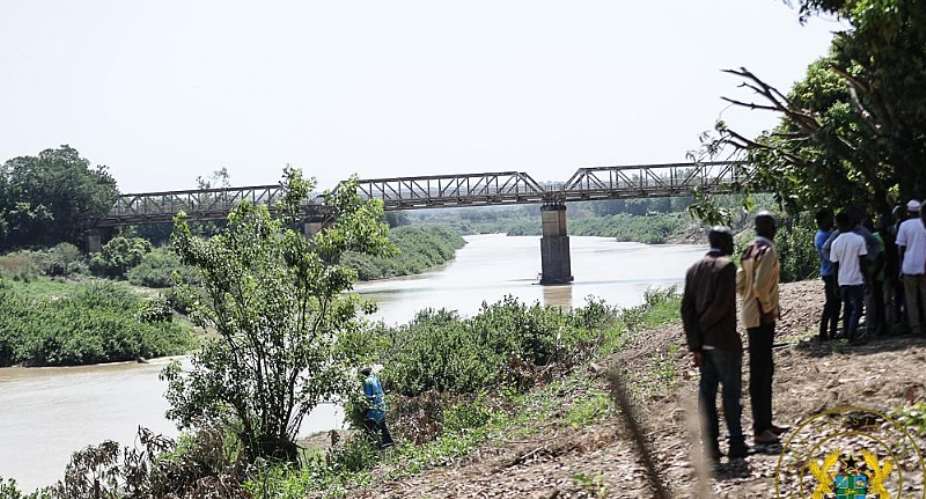
The recent controversy surrounding the $12 million payment for the Pwalugu Multipurpose Irrigation Dam project has raised significant concerns about transparency and accountability in public projects. This project, intended to provide irrigation, flood control, and hydropower benefits to the Upper East Region of Ghana, has become a focal point of scrutiny.
THE PAYMENT AND ITS JUSTIFICATION
The Ghana Irrigation Development Authority (GIDA) has defended the $12 million payment made to the contractor, Power Construction Corporation of China (POWERCHINA), as a necessary mobilization fee. This payment, part of a larger $48.57 million mobilization fund, was made upon the provision of an advance payment guarantee from a reputable bank. GIDA insists that this payment was legitimate and secured by a bank guarantee worth $60.7 million.
ALLEGATIONS AND CONCERNS
Despite these assurances, allegations have surfaced regarding the lack of progress on the project. Some Members of Parliament have claimed that the contractor has abandoned the site and sold off project materials. These accusations have fueled public outcry and demands for greater transparency in the use of public funds.
THE ROLE OF THE BANK OF GHANA
The Bank of Ghana has clarified its role, stating that it acted on government authorization to release the funds. The Central Bank emphasized that its responsibility does not extend to verifying the progress of work post-payment. This clarification, however, has done little to quell the concerns of those who feel that the project has not advanced as expected.
A CALL FOR STRINGENT OVERSIGHT
This situation underscores the critical need for stringent oversight and accountability in public projects. The Pwalugu Dam project, with its potential to significantly benefit the region, must not become another example of mismanaged public funds. It is imperative that the government and relevant authorities ensure that such projects are executed with the highest standards of transparency and efficiency.
IMPACT OF THE PWALUGU MULTIPURPOSE IRRIGATION DAM PROJECT
1. Agricultural Boost: The project is expected to significantly enhance agricultural production. It aims to irrigate about 25,000 hectares of farmland, potentially producing 117,000 tons of rice and 49,000 tons of maize annually. This could reduce Ghana's rice and maize imports by 16% and 32%, respectively.
2. Flood Control: The dam will help mitigate the frequent flooding in the White Volta Basin, protecting lives and properties downstream.
3. Hydropower Generation: The project includes a hydropower component that will generate 60 MW of electricity, contributing to Ghana's renewable energy goals. This aligns with Ghana's commitment to achieving 10% renewable energy by 2030 under the United Nations Framework for Climate Change.
4. Displacement and Social Impact: Unfortunately, the project will displace over 4,200 people across 20 communities and affect over 3,200 farmers. This highlights the need for comprehensive resettlement and compensation plans to mitigate the social impact.
5. Economic Growth: By boosting agricultural production and providing reliable electricity, the project is expected to stimulate economic growth in the region.
COMPARISON WITH SIMILAR PROJECTS
BUI DAM PROJECT
- - Location: Bui National Park, Ghana
- - Purpose: Hydropower generation, irrigation, and flood control
- - Capacity: 400 MW of electricity
- - Impact: The Bui Dam has significantly contributed to Ghana's electricity supply and provided irrigation for agricultural activities. However, it also led to the displacement of about 1,216 people and affected the local ecosystem.
AKOSOMBO DAM
- - Location: Volta River, Ghana
- - Purpose: Hydropower generation
- - Capacity: 1,020 MW of electricity
- Impact: The Akosombo Dam has been a cornerstone of Ghana's energy infrastructure, providing a substantial portion of the country's electricity. It created Lake Volta, the world's largest man-made lake, which has facilitated transportation and fishing. However, it displaced approximately 80,000 people and had significant environmental impacts.
Conclusion
The $12 million payment for the Pwalugu Multipurpose Irrigation Dam project has highlighted significant issues in the management of public funds. As citizens, we must demand accountability and transparency to ensure that such projects fulfill their intended purposes and contribute to the development of our nation. The government must take decisive action to address these concerns and restore public trust in the management of public resources.
The Pwalugu Dam project, like the Bui and Akosombo dams, has the potential to bring substantial benefits in terms of agricultural productivity, flood control, and renewable energy generation. However, it also poses significant social and environmental challenges that must be carefully managed. Ensuring transparent and effective implementation, along with adequate compensation and resettlement plans, is crucial for maximizing the project's positive impact while minimizing its adverse effects.
#Retired Senior Citizen
Teshie-Nungua


 Claim I have ignored EOCO's invitation is false – Manhyia South MP
 'This is a retrogression’ – Martin Kpebu condemns EOCO's attempted arrest of MP
 EOCO must follow lawful procedure in dealing with Baffour Awuah – Dafeamekpor
 8% transport fare hike is not justified – Kwame Owusu Danso
 We'll take action against two individuals who helped Manhyia South MP escape arr...
 'Baffuor Awuah ignored two invitations since February' – EOCO explains attempted...
 'EOCO wanted to abuse his rights' – Minority Leader on attempted arrest of Manhy...
 'I feared I was being kidnapped' – Manhyia South MP explains clash with EOCO off...
 Tension at Accra High Court as EOCO officials reportedly attempt to arrest Manhy...
 Gender Ministry commiserates with family of child killed in Cantonments fire


