




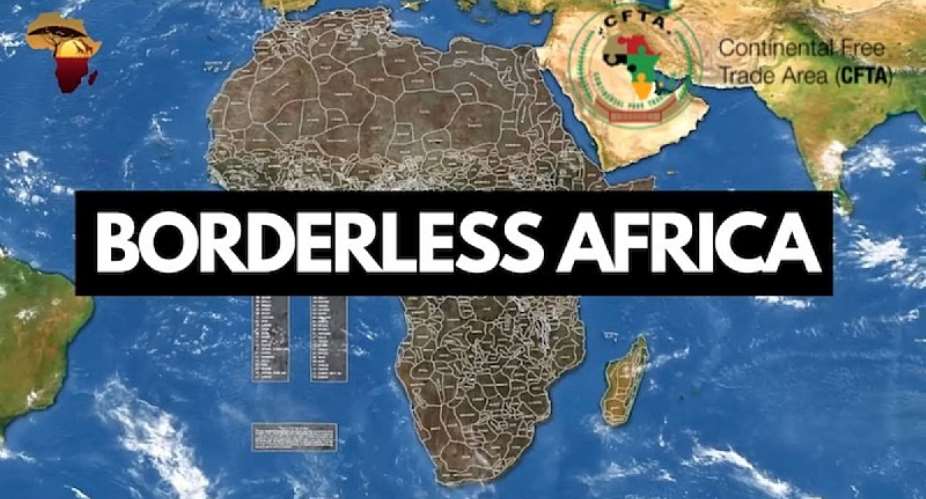
A borderless Africa, where barriers to the movement of people, goods, services, and capital are minimized, holds immense potential for transforming the continent. The vision of a borderless Africa is rooted in the idea of fostering greater unity, economic integration, and development among African nations.
Here’s why this concept is crucial and how it can propel the continent toward a more prosperous future.
Economic Integration and Growth
One of the most significant benefits of a borderless Africa is enhanced economic integration. By removing trade barriers and facilitating the free flow of goods and services, countries can:
Boost Intra-African Trade: Currently, trade between African countries is relatively low compared to other regions. A borderless Africa can significantly increase intra-African trade, leading to more diversified economies and reduced dependency on external markets.
Create Economies of Scale: A larger, unified market allows businesses to scale up production, reduce costs, and become more competitive globally.
Attract Investment: Harmonized regulations and integrated markets make Africa more attractive to foreign investors, encouraging investments in infrastructure, manufacturing, and technology.
Job Creation and Mobility
A borderless Africa can address the pressing issue of unemployment by creating new job opportunities and facilitating labor mobility.
Labor Mobility: Allowing the free movement of labor across borders enables skilled workers to find employment opportunities, filling gaps in various sectors and enhancing productivity.
Entrepreneurship and SMEs: Reducing barriers to business operations can encourage entrepreneurship and the growth of small and medium-sized enterprises (SMEs), which are crucial for job creation and economic resilience.
Innovation Hubs: Cross-border collaborations can lead to the establishment of innovation hubs, where talent from different countries can come together to develop new technologies and solutions.
Social and Cultural Integration
Beyond economic benefits, a borderless Africa can foster greater social and cultural integration among African nations.
Cultural Exchange: The free movement of people promotes cultural exchange, understanding, and unity, strengthening the sense of African identity and solidarity.
Educational Opportunities: Students can access educational institutions across the continent, promoting academic collaboration and knowledge sharing.
Healthcare Access: A borderless Africa can improve access to healthcare services, enabling patients to seek treatment in neighboring countries and enhancing regional health outcomes.
Addressing Common Challenges
A unified approach can help African countries tackle common challenges more effectively.
Infrastructure Development: Collaborative efforts can lead to the development of cross-border infrastructure projects, such as roads, railways, and energy networks, enhancing connectivity and supporting economic activities.
Climate Change: Coordinated strategies can address environmental challenges, promoting sustainable development and resilience against climate change impacts.
Security and Stability: Joint efforts can enhance regional security, combating transnational threats such as terrorism, human trafficking, and organized crime.
Political and Institutional Cooperation
A borderless Africa requires strong political and institutional cooperation to ensure seamless implementation.
Policy Harmonization: Harmonizing policies, regulations, and standards across countries can facilitate smoother integration and reduce bureaucratic hurdles.
Regional Organizations: Strengthening regional organizations, such as the African Union (AU) and regional economic communities (RECs), can provide the necessary frameworks and support for integration efforts.
Public-Private Partnerships: Collaboration between governments and the private sector can drive investment and innovation, supporting the vision of a borderless Africa.
Conclusion
The relevance of a borderless Africa lies in its potential to unlock unprecedented economic growth, social integration, and regional cooperation. By removing barriers and fostering unity, African nations can create a more prosperous and resilient continent. Achieving this vision requires concerted efforts from governments, businesses, and civil society to build the necessary infrastructure, policies, and partnerships. As Africa moves toward greater integration, the benefits of a borderless continent will become increasingly evident, paving the way for a brighter and more inclusive future.
About The Author
Victor Yao Nyakey: A Dual Force in Education and Journalism
Contact Victor at [email protected] / [email protected]


 SkyTrain trial: High Court adjourns case management conference to October 19
 Edudzi Tameklo recalls how Duffuor was slapped with GH¢100 million bail in 2020,...
 About 800 Director I and II applicants unreachable due to invalid contact number...
 'Boakye Agyarko was seen as anti-Bawumia' – Lecturer on John Boadu’s victory
 'NPP delegates made wrong choice electing John Boadu as chairman' — Political Sc...
 MTN Ghana secures new 5G spectrum in 700 MHz and 3 GHz bands
 Bawumia explains NPP hunt for winnable parliamentary candidates, not deep-pocket...
 Ghana to tap Egypt’s expertise for new capital city, housing projects – Mahama
 Ghana, Egypt deepen cooperation in health, defence and housing
 NDC Women’s Organiser Abigail Mensah condemns alleged pepper spray plot by Hawa ...


