




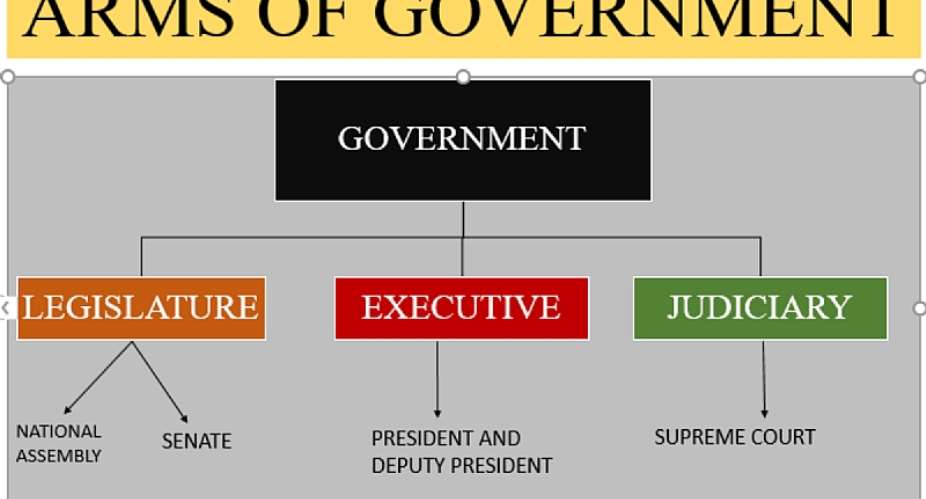
The success and stability of any nation largely depend on the effective collaboration of its three arms of government: the executive, the legislature, and the judiciary. Each arm has distinct roles and responsibilities, but their interdependence is crucial for fostering a well-functioning democracy and ensuring the holistic development of the country.
Here’s why these branches must work hand-in-hand to propel nation-building:
1. Checks and Balances
One of the fundamental principles of a democratic system is the separation of powers, which aims to prevent the concentration of power in any single branch. The three arms of government must collaborate to provide checks and balances, ensuring that:
Executive actions are reviewed and authorized by the legislature, preventing misuse of power.
Legislative decisions are scrutinized by the judiciary for constitutional compliance, and protecting citizens' rights.
Judicial rulings are respected and implemented by the executive, maintaining the rule of law.
This system of checks and balances is essential for maintaining accountability and transparency in government operations.
2. Effective Policy Implementation
For policies to be effective, they must be well-crafted, passed into law, and properly implemented. This requires:
Legislative Process: The legislature must draft and pass laws that address the needs of the population and reflect public interests.
Executive Execution: The executive branch is responsible for the implementation of these laws, translating legislative intent into practical actions and programs.
Judicial Oversight: The judiciary ensures that the implementation of these laws adheres to constitutional guidelines, addressing any legal disputes or ambiguities.
Collaboration among these branches ensures that policies are not only created but also effectively executed and upheld.
3. Socio-Economic Development
Nation-building requires comprehensive socio-economic development, which is facilitated through coordinated efforts:
Legislative Support: The legislature can pass laws that promote economic growth, social welfare, and infrastructure development.
Executive Action: The executive branch can implement developmental programs, manage resources, and drive economic policies.
Judicial Assurance: The judiciary safeguards the legal framework, ensuring that development initiatives are fair, just, and inclusive.
By working together, these branches can address socio-economic challenges and create an environment conducive to sustainable development.
4. Crisis Management and Stability
In times of crisis, such as natural disasters, economic downturns, or social unrest, the collaboration of governmental arms is vital for maintaining stability:
Executive Leadership: The executive must take swift action to address the immediate needs of the population, provide relief, and restore order.
Legislative Backing: The legislature can pass emergency measures, allocate resources, and provide the necessary legal support for crisis management.
Judicial Integrity: The judiciary ensures that emergency actions respect human rights and constitutional principles, preventing the abuse of power.
Effective crisis management requires a coordinated response, where each branch leverages its strengths to protect the nation and its citizens.
5. Upholding Democratic Values
A thriving democracy relies on the balance and collaboration of its branches of government:
Transparency and Accountability: By working together, these branches can hold each other accountable, promoting transparency in governance.
Public Trust: Effective collaboration fosters public trust in government institutions, essential for a stable and participatory democracy.
Rights Protection: The judiciary's role in upholding constitutional rights ensures that legislative and executive actions align with democratic values.
When these branches collaborate, they reinforce the principles of democracy, ensuring that governance is fair, just, and representative of the people's will.
Conclusion
The interplay between the executive, legislative, and judicial branches is fundamental to nation-building. By working hand-in-hand, these branches can create a robust framework for governance that addresses the needs of the population, promotes socio-economic development, manages crises effectively, and upholds democratic values. The collaboration of these governmental arms is not just a matter of constitutional necessity but a cornerstone of a thriving and resilient nation.
Contact Victor at [email protected] / [email protected]


 SkyTrain trial: High Court adjourns case management conference to October 19
 Edudzi Tameklo recalls how Duffuor was slapped with GH¢100 million bail in 2020,...
 About 800 Director I and II applicants unreachable due to invalid contact number...
 'Boakye Agyarko was seen as anti-Bawumia' – Lecturer on John Boadu’s victory
 'NPP delegates made wrong choice electing John Boadu as chairman' — Political Sc...
 MTN Ghana secures new 5G spectrum in 700 MHz and 3 GHz bands
 Bawumia explains NPP hunt for winnable parliamentary candidates, not deep-pocket...
 Ghana to tap Egypt’s expertise for new capital city, housing projects – Mahama
 Ghana, Egypt deepen cooperation in health, defence and housing
 NDC Women’s Organiser Abigail Mensah condemns alleged pepper spray plot by Hawa ...


