




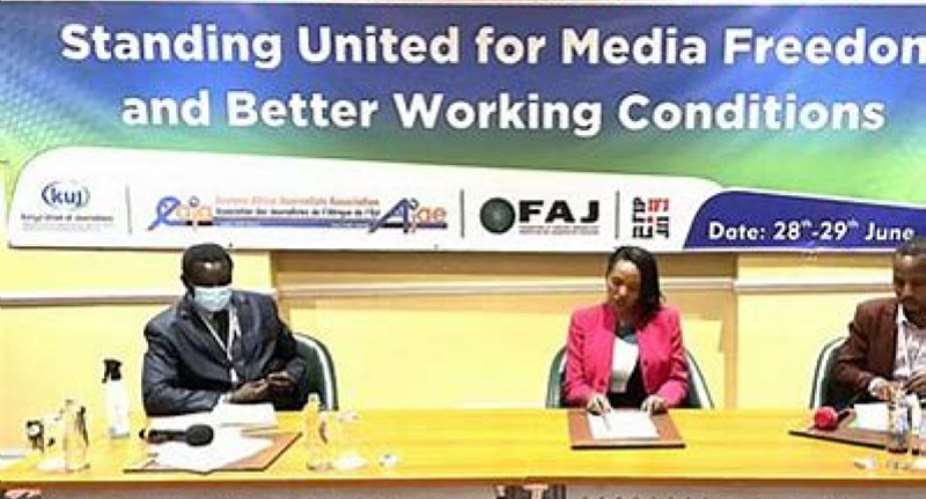
Journalists in Africa play a crucial role in informing the public, holding leaders accountable, and fostering democratic discourse. However, their working conditions are often fraught with challenges that can hinder their ability to perform these vital functions effectively.
Addressing these challenges requires a multifaceted approach that involves governments, media organizations, civil society, and international partners.
1. Enhancing Safety and Security
The safety of journalists is a pressing concern, with many facing threats, harassment, and violence.
Strengthen Legal Protections: Governments should enact and enforce laws that protect journalists from violence and harassment. This includes ensuring that perpetrators are held accountable.
Training on Safety Protocols: Media organizations should provide regular training on safety protocols and digital security to help journalists protect themselves in hostile environments.
Establish Support Mechanisms: Creating dedicated support networks and rapid response mechanisms can offer immediate assistance to journalists in danger.
2. Improving Financial Stability
Financial instability can undermine journalistic integrity and sustainability.
Fair Compensation: Media organizations should ensure fair and timely compensation for journalists, reflecting the risks and challenges of their work.
Diversify Revenue Streams: Encouraging media outlets to explore diverse revenue streams, such as digital subscriptions, grants, and partnerships, can provide financial stability.
Support Freelancers: Establishing funds or grants for freelance journalists can help them sustain their work and reduce vulnerability to economic pressures.
3. Promoting Ethical Journalism
Maintaining high ethical standards is crucial for credibility and public trust.
Ethics Training: Regular training on journalistic ethics and best practices can help journalists navigate complex situations and maintain integrity.
Internal Accountability: Media organizations should establish clear codes of conduct and mechanisms for addressing ethical violations.
4. Enhancing Professional Development
Continuous learning and professional growth are essential for effective journalism.
Training Programs: Investing in continuous training programs on new technologies, investigative techniques, and multimedia storytelling can enhance journalistic skills.
Mentorship Opportunities: Creating mentorship programs where experienced journalists guide and support newcomers can foster talent and growth.
Access to Resources: Providing access to research databases, tools, and resources can help journalists produce high-quality work.
5. Strengthening Press Freedom
Press freedom is the foundation of a healthy journalism ecosystem.
Advocacy and Awareness: Civil society and international organizations should advocate for press freedom and raise awareness about the importance of a free press.
Supportive Legal Framework: Governments should create and uphold laws that guarantee press freedom and protect journalists from undue interference.
International Solidarity: Building strong networks with international journalism organizations can provide solidarity and support in times of crisis.
6. Facilitating Access to Information
Access to information is crucial for accurate and comprehensive reporting.
Transparency Laws: Governments should enact and enforce transparency and freedom of information laws that ensure journalists have access to public information.
Open Data Initiatives: Encouraging open data initiatives can provide journalists with valuable data for investigative reporting.
Collaboration with Institutions: Strengthening collaboration between media organizations and academic or research institutions can enhance access to expert knowledge and resources.
Conclusion
Improving the working conditions of African journalists requires a comprehensive approach that addresses safety, financial stability, ethical standards, professional development, press freedom, and access to information. By taking these steps, stakeholders can create an environment where journalists can thrive and continue their crucial work in informing the public and fostering democratic discourse.
Contact Victor at [email protected] / [email protected]


 SkyTrain trial: High Court adjourns case management conference to October 19
 Edudzi Tameklo recalls how Duffuor was slapped with GH¢100 million bail in 2020,...
 About 800 Director I and II applicants unreachable due to invalid contact number...
 'Boakye Agyarko was seen as anti-Bawumia' – Lecturer on John Boadu’s victory
 'NPP delegates made wrong choice electing John Boadu as chairman' — Political Sc...
 MTN Ghana secures new 5G spectrum in 700 MHz and 3 GHz bands
 Bawumia explains NPP hunt for winnable parliamentary candidates, not deep-pocket...
 Ghana to tap Egypt’s expertise for new capital city, housing projects – Mahama
 Ghana, Egypt deepen cooperation in health, defence and housing
 NDC Women’s Organiser Abigail Mensah condemns alleged pepper spray plot by Hawa ...


