




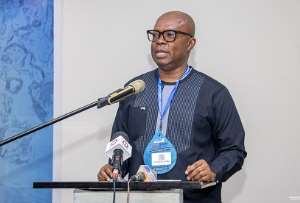
Ing. Harold Esseku, Senior Water and Sanitation Specialist at the World Bank Ghana office has disclosed that Ghana seeks to improve water quality by reducing pollution, eliminating dumping, and minimizing the release of hazardous chemicals and materials by 2030.
He said Ghana also seeks to halve the proportion of untreated wastewater and substantially increase recycling and safe reuse globally within the same period.
In the urban areas, Ing. Esseku said the country has achieved some improvement in the provision of infrastructure for wastewater treatment.
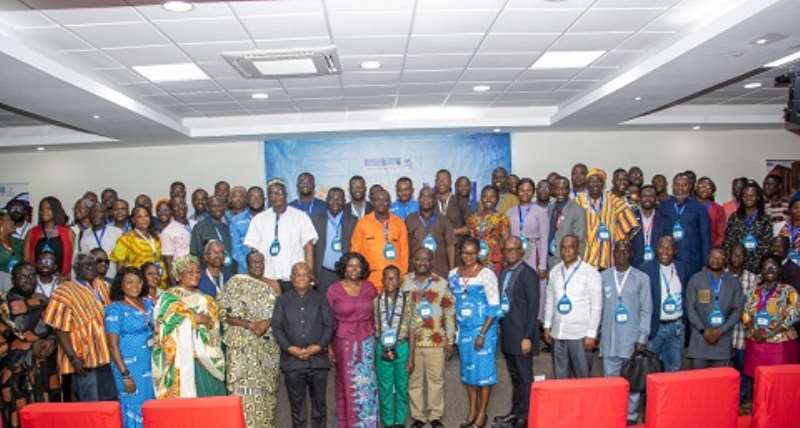
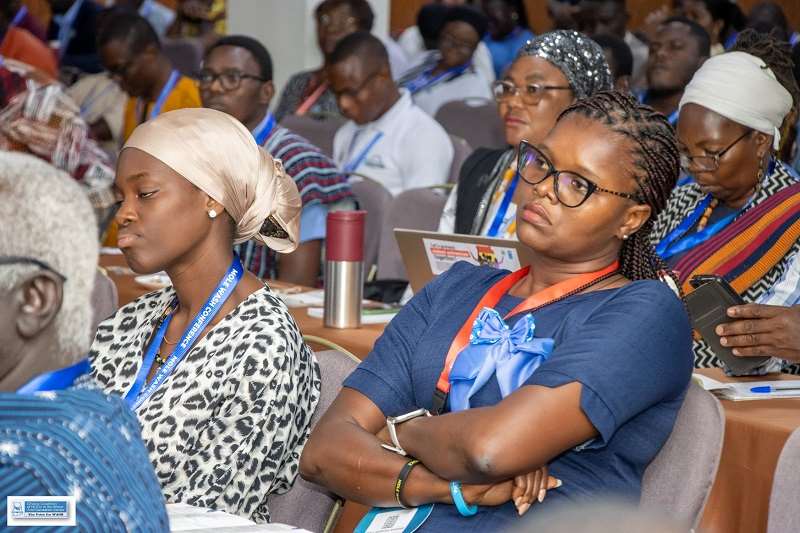
Ing. Esseku stated at the just-ended MOLEXXXV conference organized by the Ghana Coalition of NGOs in Water and Sanitation (CONIWAS), with support from the Ministry of Sanitation and Water Resources, UNICEF, and the GAMA/GKMA Sanitation and Water Project, among others.
The conference held at Ho, Volta Regional capital from October 6th ended on October 11th was on the general theme, “Looking Back on SDG 6 Implementation in Ghana: Progress, Challenges, and Ways Forward."
The four main thematic subjects are institutional alignments and policies, approaches, strategies, and methods towards the attainment of Sustainable Development Goal 6 (SDG6) in Ghana.
Speaking on the conference theme, Ing Esseku said the country is working to substantially increase water-use efficiency across all sectors and ensure sustainable withdrawals and supply of freshwater to address water scarcity and substantially reduce the number of people suffering from water scarcity.
“This addresses water scarcity, aiming to ensure enough water for people and the economy, as well as for the environment, by increasing water-use efficiency across all sectors of society,” Ing. Esseku stated.
“By 2030, implement integrated water resources management at all levels, including through transboundary cooperation as appropriate,” he said.
He acknowledged also that the Ghana Presidential Compact on WASH was signed by the President, which is one of the key source documents for the sector.
He said statistically: “By 2030, achieve universal and equitable access to safe and affordable drinking water for all.” Basic Access is 44 percent; Safely Manage Access is 44 percent; and Limited Access is 6 percent.
“By 2030, achieve access to adequate and equitable sanitation and hygiene for all and end open defecation, paying special attention to the needs of women and girls and those in vulnerable situations.”
He also disclosed that currently, basic access is 13 percent; Safely Managed is 16 percent and limited access is 44 percent; basic access to hygiene is 42 percent.
Ing. Esseku said there have been marginal improvements and the definitions of the targets have been revised; “we developed the golden indicators to enable us to focus on some key targets.”
In an interview with the Media Coalition Against Open Defecation (M-CODe), the Chairperson of CONIWAS, Ms. Beata Awinpoka Akanyani, said the 2024 MOLE WASH Conference reflected on Ghana’s SDG six implementation progress and approaches towards achieving national and SDG six targets for water, sanitation, and hygiene in the country.
She said the MOLEXXXV WASH conference also reviewed the country’s progress, approaches, and methods to service delivery that address equity concerns and promote climate-resistant WASH service delivery for everyone everywhere.
“We discussed options for institutional alignment and realignment for delivering safe and sustainable WASH services to deprived and underserved communities that will respond to climate change and health concerns.
“Reviewed existing innovative financing approaches that are inclusive, sustainable, and capable of long-term impact,” she said.
Ms. Awinpoka Akanyani said the MOLEXXXV WASH conference also looked at cutting-edge partnerships across sectors such as education, health, and economic and environmental sectors in delivering cost-effective, affordable, and inclusive WASH services.
“We explored appropriate technology and innovations for delivering safe WASH services equitably and inclusively and developed practical and actionable recommendations to address the challenges and accelerate access to sustainable WASH service,” the CONIWAS Chairperson stated.
The opening ceremony was chaired by Togbe Tepre Hodo IV, Paramount Chief of Anfoega, and the President of the Volta Regional House of Chiefs, and graced by Dr. Archibald Yao Letsa, Volta Regional Minister, Child Sanitation Diplomat, Master Abdul Yazid Faraj Timtoni Wumbei, and Development Partners.
Among the institutions and organizations participating in the five-day MOLE35 Conference are IRC Ghana, World Vision Ghana, GAMA/GKMA Sanitation and Water Project, the Media Coalition Against Open Defecation (M-CODe), and the Ghana WASH Journalists Network.
The rest are WASH experts and practitioners, the Council of Elders of CONIWAS, CONIWAS members, and civil society representatives.

 Ivorian footballer Malick Yalcouyé falsely accused of lying about his age
 South Africa's president taken ill after BRICS summit
 Chief Justice praising government policies is problematic – Kwesi Pratt
 Police interdict seven officers for allegedly forcing victim to withdraw money f...
 GAF ready to deepen defence cooperation with Russia – Major General Annan
 WHO sees 'encouraging signs' in DR Congo Ebola response but says outbreak 'far f...
 GRA challenges GH¢79.65m Servestar Minwax judgment debt
 Government allocates GH¢1.98bn to school feeding programme in 2026 — Gender Mini...
 DVLA boss calls for modernisation of learner’s licence acquisition process
 EPA shuts down Empire Cement over alleged environmental breaches


