




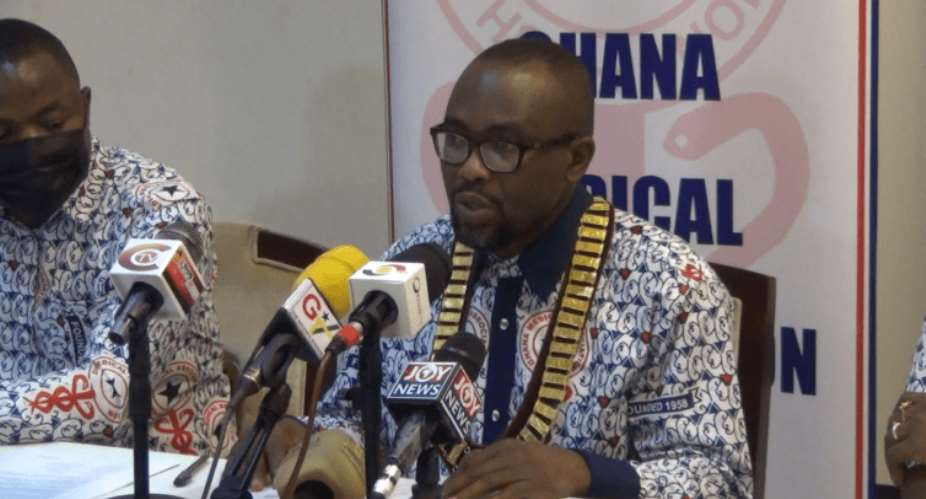
The push for the Ghana Medical Association (GMA) to join the ongoing strike by the Trade Union Congress (TUC) has sparked heated debate, with influential voices like Manasseh Azure urging the GMA to align with other unions in what is being portrayed as a collective stand against the government. But amidst this fervour, one crucial question must be asked: Who will bear the brunt if the health sector shuts down?
Every day, lives hang in the balance in hospitals across the country. Pregnant women rush to operating rooms, stroke victims in need of swift intervention, and victims of road traffic accidents cling to life. These are not distant, hypothetical tragedies; they are the daily realities of our healthcare system. The notion that the GMA joining the strike will be the tipping point in forcing government action is dangerously misguided. GMA strikes are impactful precisely because they affect the health sector, where disruptions almost definitely lead to immediate loss of life. But using this potential harm as leverage, when the very people being harmed are those we claim to protect, is deeply callous, insensitive, and irresponsible.
It is essential to recognize that the most immediate and devastating impact of a healthcare system shutdown will be borne by the poor and vulnerable, who lack the means to seek care outside public hospitals. While politicians, the wealthy, and the well-connected can access private care or seek treatment abroad, it is the ordinary citizens, those for whom this strike is supposedly intended who will pay the heaviest price.
The likes of Manasseh Azure and others advocating for the GMA’s involvement must acknowledge their own position of privilege. Perhaps some are unperturbed by the effects of a strike on the have-nots because they have the means to navigate a healthcare crisis by accessing private medical care, unlike the many who are under-resourced. If this strike is meant to benefit the general population, why must we sacrifice the most disadvantaged in the process? Urging the GMA to strike, fully aware of the deadly consequences, is not solidarity; it is perverse cruelty.
The failure to see the fatal consequences of this call on the lives of citizens makes me wonder what the real motives of those calling for the shutdown of the health system are. In the past, GMA strikes have often been over conditions of service, and it has often been doctors versus the government, with the public caught in the middle. This time, however, citizens and the GMA stand together for a common cause, and one would wonder why some are pushing to unleash such fatal suffering upon the same ordinary citizens. The poor and vulnerable cannot be collateral damage. In any case, were we expecting the GMA to ask UTAG, NAGRAT, or POTAG to strike on behalf of GMA for their conditions of service rather than making the painful decision to strike? We have so many groups going on strike to make the same point, so why the bloodthirsty call?
I don’t think any reasonable Ghanaian supports the ongoing environmental degradation. However, if you had a mother, father, son, or daughter in need of critical care, I doubt you would be making this bloodthirsty call. Again, if you are willing to play a card that would certainly result in the death of the same people in whose interest this strike is supposedly intended, then perhaps you are worse than those in the galamsey pits.
Kwesi Boakye
Health equity advocate
[email protected]
 GWL resumes production at Barekese Water Treatment Plant after completion of rep...
 Economic performance most powerful source of Mahama’s goodwill — IEA
 Nyinahini SHS assault: Court strikes out case, urges reconciliation
 Even traffic lights in front of police headquarters are being stolen — Roads Min...
 One major cause of Ablekuma North rerun violence was lack of security coordinati...
 BTU Council divided as Chairman rejects parliamentary mediation in VC dispute
 Roads Ministry needs 1,000 additional staff — Governs Agbodza
 Stop tweeting and brief Parliament on South Africa situation — Patrick Boamah to...
 Roads Minister reassigns Bogoso–Prestea road project to new contractor over dela...
 President Mahama’s approval rate remains positive at 58.9% — IEA survey shows



Comments
It is all politics